CM Fadnavis meets UK ministers in Mumbai, sets 3-track partnership
Synopsis
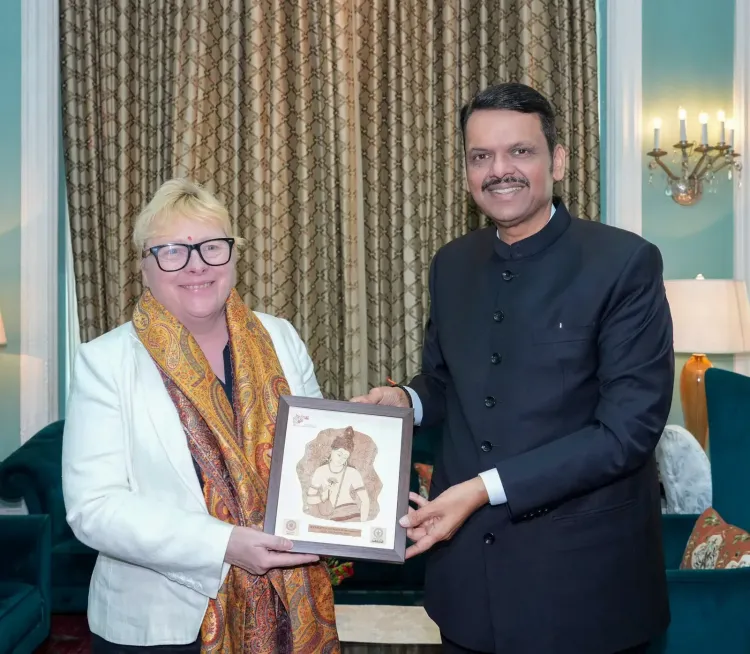
Maharashtra CM Devendra Fadnavis hosted UK DEFRA Secretary Dame Angela Eagle and Scotland Secretary Douglas Alexander in Mumbai on 13 October 2026, agreeing on three time-bound workstreams — agriculture and food processing, water and climate resilience, and the circular economy — aimed at boosting farmer incomes and climate readiness.
Key Takeaways
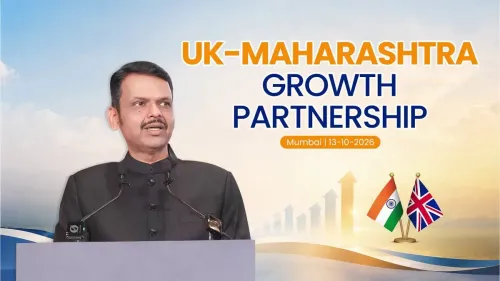
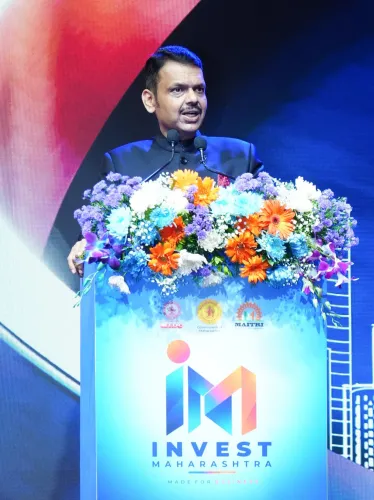
CM Devendra Fadnavis held his first bilateral meeting of the day in Mumbai on 13 October 2026 with UK DEFRA Secretary Dame Angela Eagle and Scotland Secretary Douglas Alexander .
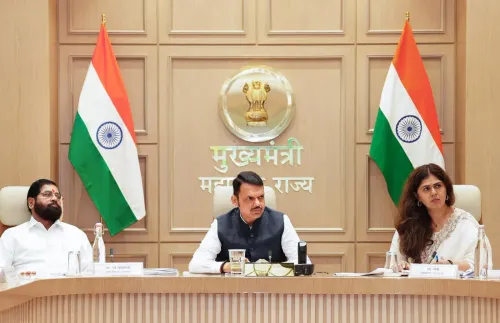
Maharashtra minister Jaykumar Rawal joined the Chief Minister for the discussions.
Talks covered education, trade and investment, agriculture, food processing, water, climate resilience, and the circular economy .
Three time-bound workstreams were agreed: agriculture and food processing , water and climate resilience , and the circular economy .
The partnership targets better farmer incomes, dependable water supply, and climate-resilient communities in Maharashtra.
The engagement fits within India's broader post-Brexit, sub-national outreach to the UK alongside the ongoing central-track India-UK CETA negotiations launched in 2022 .
Three workstreams, one city, and a clear agenda: Maharashtra Chief Minister Devendra Fadnavis opened his bilateral meeting calendar in Mumbai on 13 October 2026 with British counterparts, anchoring the state's global agricultural and climate ambitions squarely in a time-bound partnership with the United Kingdom.
UK's DEFRA and Scotland at the table in Mumbai
The meeting brought together Dame Angela Eagle, Secretary of State at the UK Department for Environment, Food and Rural Affairs (DEFRA), and Douglas Alexander, Secretary of State for Scotland. Maharashtra's own Jaykumar Rawal joined Fadnavis at the table. The Chief Minister framed the morning simply: 'I welcome them both to Mumbai, Maharashtra.'
The conversation ranged wide — education, trade and investment, agriculture, food processing, water, climate resilience, and the circular economy — but it did not stay wide for long. By the end of the discussion the two sides had narrowed to three concrete workstreams: agriculture and food processing, water and climate resilience, and the circular economy, all to be pursued 'in a time-bound manner.'
Why Maharashtra is pitching British and Scottish expertise
Fadnavis spelled out the state's logic directly. Maharashtra's headline priorities — better farmer incomes, dependable water supply, and communities resilient to climate-related shocks — map closely onto domains where British technical institutions and Scottish universities have built globally recognised depth. The Chief Minister noted that 'British expertise and Scottish institutions have a lot of potential to add value to our goals,' a signal that implementation will draw on institutional partnerships, not just government-to-government dialogue.
The engagement fits Maharashtra's established pattern of direct foreign outreach on agriculture and water, bypassing the slower cadence of central-government negotiations. It also slots into India's broader post-Brexit strategy of building sectoral and state-level links with London even as the India-UK Comprehensive Economic and Trade Agreement (CETA) — formally launched in 2022 — continues its central-track negotiation.
What the three workstreams could mean for Maharashtra's farmers
The agriculture and food processing track is the one with the most direct reach into rural Maharashtra. Improved post-harvest technology, cold-chain investment, and food-safety standard alignment with UK markets could lift returns for the state's farming communities — the explicit beneficiaries Fadnavis named. The water and climate resilience stream addresses a chronic pressure point: Maharashtra's dependence on monsoon patterns that are increasingly erratic. The circular economy workstream, the newest vocabulary in the three, points toward waste management, resource efficiency, and low-carbon supply chains — areas where UK regulatory and industry experience is substantial.
The decisive test now is whether these workstreams produce concrete project proposals or institutional MoUs before the next meeting window. Time-bound framing is only as strong as the follow-up it generates.
Point of View
Time-bound workstreams, Fadnavis is applying a project-management frame to diplomacy — a move designed to generate deliverables within the state's own political cycle. Scotland's inclusion alongside DEFRA is notable: it broadens the institutional base beyond Whitehall and taps universities and agencies with strong agriculture-and-water research records. Whether this translates into real MoUs or stays at the level of intent will be the measure of whether India's sub-national diplomacy is maturing into genuine delivery.
NationPress
13 Oct 2026
Frequently Asked Questions
Who did CM Devendra Fadnavis meet in Mumbai on 13 October 2026?
CM Fadnavis met Dame Angela Eagle, UK Secretary of State for DEFRA, and Douglas Alexander, Secretary of State for Scotland, at a bilateral meeting in Mumbai. Maharashtra minister Jaykumar Rawal also attended.
What is DEFRA and why does it matter for Maharashtra?
DEFRA stands for the UK Department for Environment, Food and Rural Affairs. It oversees UK environmental policy, food standards, and rural affairs — areas directly relevant to Maharashtra's goals around farmer incomes, water security, and climate resilience.
What were the three workstreams agreed upon at the Maharashtra-UK meeting?
The two sides agreed to work on agriculture and food processing, water and climate resilience, and the circular economy — all in a time-bound manner.
How does this meeting connect to the India-UK CETA trade deal?
India-UK CETA negotiations were formally launched in 2022 at the central government level. The Maharashtra meeting runs on a parallel state-led track, targeting specific sectoral partnerships in agriculture, water and clean economy rather than waiting for the broader FTA to conclude.
How will Maharashtra farmers benefit from the UK partnership discussed in Mumbai?
Fadnavis cited better farmer incomes as a headline priority. The agriculture and food processing workstream is expected to explore improved post-harvest technology, value-chain investments, and potential food-safety alignment with UK markets to lift returns for Maharashtra's farming communities.