CM Fadnavis Meets UK Regional Leaders in Mumbai for Trade Push
Synopsis
Maharashtra CM Devendra Fadnavis hosted UK BIST Secretary Jonathan Reynolds and regional mayors from Greater Manchester, Liverpool and the North East in Mumbai, pitching GCCs, life-sciences ties and a Sunderland–Pune industrial link as both sides push for time-bound outcomes.
Key Takeaways
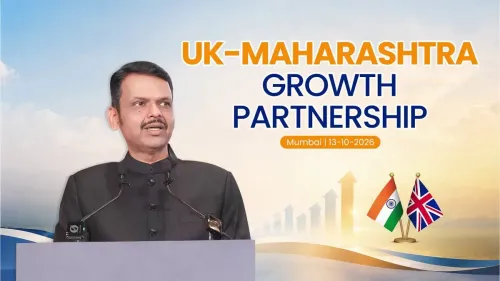
Devendra Fadnavis held a bilateral meeting with a UK delegation on 13 October 2026 in Mumbai as his second bilateral of the day.
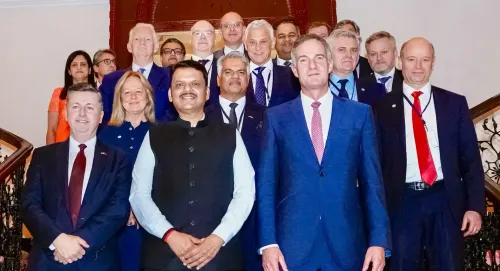
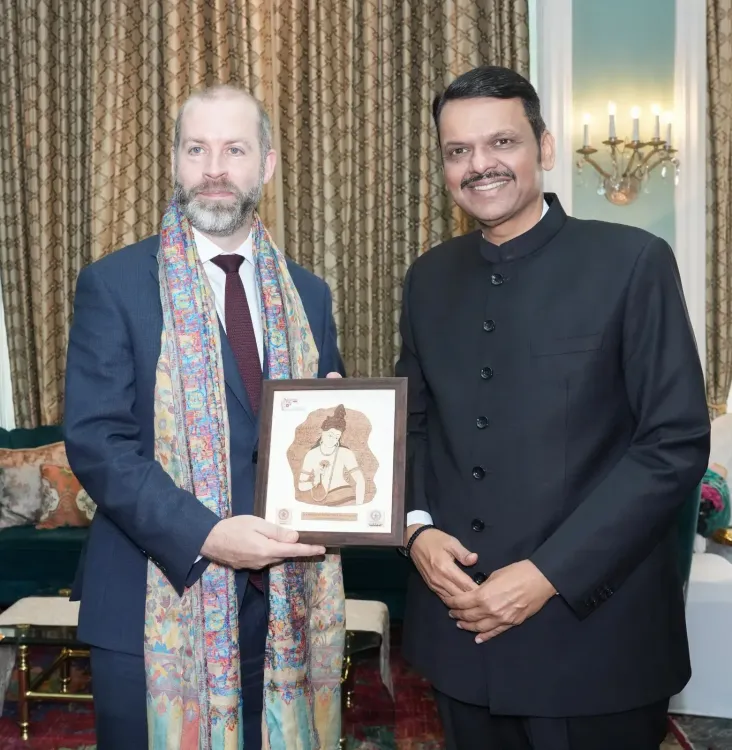
The UK side included BIST Secretary of State Jonathan Reynolds and mayors of Greater Manchester, Liverpool City Region and the North East .
Talks covered advanced manufacturing, financial services, life sciences, artificial intelligence and clean technology .
Maharashtra invited British companies to set up research, engineering and Global Capability Centres with local partnership and HR support.
A specific Sunderland–Pune link was floated to connect the North East's automotive and clean-energy strengths with Maharashtra's industrial base.
Both sides committed to advancing discussions 'in a time-bound manner,' signalling intent for concrete follow-up rather than ceremonial outcomes.
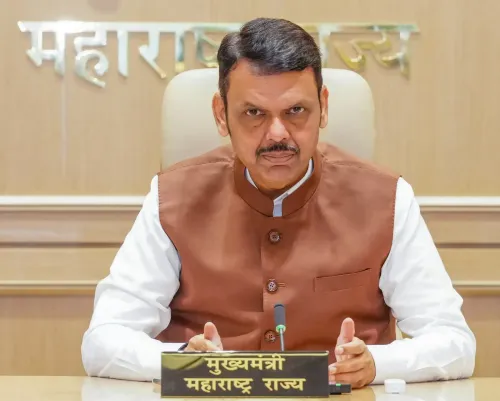
British trade ministers and regional mayors landed in Mumbai on Tuesday, 13 October 2026, and Maharashtra Chief Minister Devendra Fadnavis made sure the conversation went well beyond pleasantries — straight into sectors, city pairings, and a clear invitation for British companies to set up shop in the state.
Who was in the room — and why it matters
The UK delegation was led by BIST Secretary of State Jonathan Reynolds, accompanied by Greater Manchester Mayor Bev Craig, Liverpool City Region Mayor Steve Rotheram, and North East Mayor Kim McGuinness. Maharashtra Minister Jaykumar Rawal also joined the talks. The gathering was Fadnavis's second bilateral meeting of the day, signalling a structured, agenda-driven diplomatic sprint rather than a ceremonial courtesy call.
The composition of the delegation is itself a story. Post-Brexit, UK regional mayors have aggressively pursued their own overseas economic partnerships — no longer content to wait for central government to broker deals. Bringing the mayors of Greater Manchester, Liverpool and the North East directly to Maharashtra compresses the distance between British industrial capability and Indian investment decisions.
Sector by sector: where the connections are drawn
The discussion covered advanced manufacturing, financial services, life sciences, artificial intelligence and clean technology — five of the highest-value arenas in both economies. Fadnavis did not leave the alignment abstract. He mapped specific city pairs to specific industries.
Greater Manchester's strengths in life sciences and advanced materials were linked to Maharashtra's pharmaceutical, biotechnology and engineering ecosystem — a pairing that makes geographic and sectoral sense given Mumbai and Pune's dense concentration of drug manufacturers and biotech firms. Liverpool and Mumbai were connected through their shared maritime and commercial identities, with ports, logistics and waterfront regeneration flagged as 'practical opportunities' — a notably grounded phrase in a genre prone to vague ambition. The North East's automotive and clean-energy capabilities were aligned with Maharashtra's industrial priorities, with a specific Sunderland–Pune link floated for exploration — Sunderland being home to a major electric-vehicle manufacturing presence in the UK.
Maharashtra's pitch: GCCs, local partnerships, human capital
Fadnavis extended a direct invitation for British companies to establish research, engineering and Global Capability Centres (GCCs) in Maharashtra, promising 'all local partnership and human resource support.' The GCC pitch is not new — Maharashtra has positioned itself as a preferred GCC destination under state industrial policy — but anchoring it explicitly in a bilateral meeting with UK regional leaders gives it fresh commercial momentum.
The move fits a well-established pattern: Indian states increasingly bypass the slow cadence of national-level negotiations to run their own economic diplomacy. Maharashtra, with Mumbai as India's financial capital and Pune as a manufacturing and IT hub, has more leverage than most to make those direct pitches credible.
India-UK trade talks as the bigger frame
The meeting sits inside a larger negotiating arc. India and the UK formally launched Free Trade Agreement talks in January 2022, aiming to significantly expand bilateral commerce. Progress at the national level has moved in fits and starts, making sub-national engagements like this one more strategically valuable — they build commercial constituency on both sides that can push the broader deal forward. Fadnavis closed by calling for both teams to advance discussions 'in a time-bound manner,' a pointed signal that this round is meant to produce deliverables, not just goodwill.
The Sunderland–Pune corridor, the GCC pipeline, the waterfront-to-waterfront Liverpool–Mumbai logistics tie — each of these is a thread. Whether they become a fabric depends on what the working groups produce next.
Point of View
Manchester–Maharashtra on life sciences, Sunderland–Pune on clean automotive — signals a shift from aspirational MoU diplomacy toward sector-specific, accountable deal-making. The GCC pitch is Maharashtra's most bankable offer: the state already hosts a large share of India's capability centres, and British firms seeking post-Brexit global footprints are a natural fit. Whether this round produces signed investments or remains at the 'explore' stage will test whether sub-national economic diplomacy can genuinely substitute for the wider trade agreement both countries have yet to close.
NationPress
13 Oct 2026
Frequently Asked Questions
Who were the UK leaders who met CM Fadnavis in Mumbai?
The UK delegation included BIST Secretary of State Jonathan Reynolds , Greater Manchester Mayor Bev Craig , Liverpool City Region Mayor Steve Rotheram and North East Mayor Kim McGuinness .
What is the Sunderland–Pune link mentioned by Fadnavis?
Fadnavis proposed exploring a Sunderland–Pune collaboration to leverage the North East UK's automotive and clean-energy capabilities alongside Maharashtra's industrial base in Pune .
What sectors were discussed in the Maharashtra-UK bilateral meeting?
The talks covered advanced manufacturing, financial services, life sciences, artificial intelligence and clean technology , with city-specific sector pairings also identified.
What is a Global Capability Centre and why is Maharashtra promoting them?
A Global Capability Centre (GCC) is an offshore unit set up by a multinational to handle research, engineering or business processes. Maharashtra is pitching GCCs to British firms as a structured investment pathway backed by local partnerships and skilled human resources.
How does this meeting relate to the India-UK Free Trade Agreement?
India-UK FTA negotiations were launched in January 2022 but have moved slowly. State-level engagements like this one build commercial momentum and constituency on both sides, effectively complementing — and pressuring — the national-level talks.