Tejashwi Yadav accuses Election Commission of rigging polls

Synopsis
RJD leader Tejashwi Yadav launched a sharp attack on the Election Commission of India on October 13, 2026, accusing it of electoral fraud and demanding answers on why it is reversing its own earlier rules and decisions — framing the rollback as an implicit admission of guilt.
Key Takeaways
Tejashwi Yadav publicly accused the Election Commission of India of rigging elections, dishonesty, and looting electoral mandates in a post on October 13, 2026 .
He specifically named and called out Chief Election Commissioner Gyanesh Kumar over the reversal of earlier rules and decisions.
Tejashwi framed the Commission's own policy U-turn as a self-incriminating contradiction — 'either he was right then or he is right now.' The post used charged language — 'murder of public trust' and 'killing of democracy' — marking one of the sharpest opposition attacks on the Commission in recent memory.
No formal response from the Election Commission or the Chief Election Commissioner's office had been issued at the time of posting.
The RJD's criticism fits a broader pattern of Indian opposition parties alleging Electoral Commission bias, particularly after results favouring the ruling central coalition.
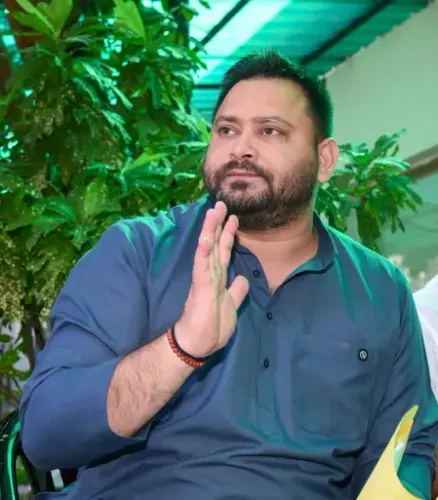
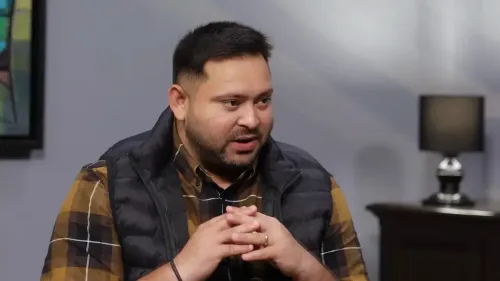
A blistering indictment of India's constitutional election body landed on social media on Tuesday, October 13, 2026, as RJD leader and Bihar Leader of the Opposition Tejashwi Yadav accused the Election Commission of India of fraud, dishonesty, and what he called an outright 'looting' of electoral mandates — then demanded to know why the Commission is now quietly reversing the very rules it once defended.
Posting in Hindi, Tejashwi wrote: 'चुनाव आयोग ने किसके कहने पर चुनावों में धांधली की, बेईमानी की, डकैती की?' — 'On whose orders did the Election Commission rig elections, act dishonestly, commit robbery?' The post escalates sharply from there, targeting what he called 'Chief Election Commissioner thief Gyanesh Kumar' and asking why the official is now walking back his own earlier decisions.The reversal question at the heart of the attack
Tejashwi's central charge is not merely that the Commission erred — it is that the Commission's own about-turn exposes guilt. 'If Chief Election Commissioner Gyanesh Kumar was right then, why is he retreating from his own decisions now? Either he was right then or he is right now,' he wrote, framing the contradiction as a confession. The post closes with some of the sharpest language yet deployed by an opposition leader against a constitutional body: 'These dacoits have looted elections. They have murdered public trust and killed democracy.' The imagery — janaviswas ka qatl (murder of public trust), loktantra ki hatya (killing of democracy) — is deliberate and operatic, designed to force a response.Opposition vs. the Commission — a recurring Bihar fault line
Criticism of the Election Commission of India from non-BJP opposition leaders is not new, but the intensity of Tejashwi's language marks a notable escalation. Indian opposition parties have periodically alleged irregularities in the conduct of elections, with allegations typically sharpening after results that favour the ruling coalition at the centre. In Bihar specifically, the Rashtriya Janata Dal and allied parties have long accused the Commission of systemic bias — claims the Commission has consistently denied. What makes this post structurally different is the specific allegation of a policy reversal: that rules or decisions the Commission once upheld are now being quietly amended, which Tejashwi reads as an implicit acknowledgment of wrongdoing. Neither the Commission nor the Chief Election Commissioner's office had issued a public response as of the time of posting.What the RJD wants the public to ask
The post's rhetorical architecture is worth noting. Each sentence is framed as a question or a logical trap — if the Commission was right before, it is wrong now; if it is right now, it was corrupt before. This is a classic accountability frame, designed to dominate news cycles and force either a denial (which amplifies the allegation) or a silence (which implies admission). Tejashwi Yadav, as Leader of the Opposition in the Bihar Legislative Assembly, carries institutional standing that gives the charge weight beyond a social media post. Any formal legislative or legal follow-through — a privilege motion, a petition to the Supreme Court, or a coordinated opposition statement — would mark the next chapter. For now, the challenge is public, pointed, and on the record. The Election Commission's next move will define whether this stays a political broadside or becomes a constitutional moment.Point of View
Using the Commission's own reported rule reversal as the sharpest available evidence. The rhetorical move — forcing a binary where either the old decision or the new one must be corrupt — is designed to make silence as damaging as a response. For the RJD, keeping electoral integrity questions alive is both a political strategy and a mobilisation tool heading into the next Bihar cycle. The broader implication is significant: when a constitutionally recognised opposition leader publicly brands the Chief Election Commissioner a 'thief,' the threshold for institutional accountability discourse in Indian democracy has moved to a new and more volatile register.
NationPress
13 Oct 2026
Frequently Asked Questions
Why is Tejashwi Yadav criticising the Election Commission of India?
Tejashwi Yadav accused the Election Commission of rigging elections and asked why it is reversing its own earlier rules and decisions, arguing the reversal amounts to an admission of wrongdoing.
What did Tejashwi Yadav say about Chief Election Commissioner Gyanesh Kumar?
Tejashwi Yadav directly called out Gyanesh Kumar, questioning whether he was correct in his earlier decisions or his current reversal, and using sharp language to characterise the contradiction as evidence of electoral fraud.
Has the Election Commission of India responded to Tejashwi Yadav's allegations?
As of the time of posting on October 13, 2026, no formal public response had been issued by the Election Commission or the Chief Election Commissioner's office.
Is opposition criticism of the Election Commission common in India?
Yes. Indian opposition parties have periodically alleged irregularities in the Election Commission's conduct, with criticism typically intensifying after election results that favour the ruling coalition at the centre.
What is Tejashwi Yadav's political position in Bihar?
Tejashwi Yadav is the Leader of the Opposition in the Bihar Legislative Assembly and a senior Rashtriya Janata Dal leader, as well as a former Deputy Chief Minister of Bihar.