Tejashwi Demands Bihar Poll Cancellation, CEC Arrest

Synopsis
RJD leader Tejashwi Yadav has alleged the Election Commission rigged the Bihar election in BJP's favour, demanding the result be cancelled and the Chief Election Commissioner arrested — the opposition's sharpest attack on the constitutional poll body yet.
Key Takeaways
Tejashwi Yadav posted on 25 September 2026 alleging the Election Commission committed fraud to hand the Bihar election to the BJP.
He demanded the Bihar election result be cancelled outright .
Yadav called for the Chief Election Commissioner to be arrested and jailed — a demand without modern Indian precedent.
The post claims public protests against the Election Commission are already under way on Bihar's streets.
The Election Commission of India is a constitutional body whose head can only be removed through a process equivalent to that for a Supreme Court judge.
No formal court petition or legal challenge has been confirmed alongside the social-media post.
A blistering demand to cancel the Bihar election and jail the Chief Election Commissioner has landed from RJD leader Tejashwi Yadav on Friday, 25 September 2026 — escalating the opposition's post-result offensive to its most confrontational pitch yet.
What Tejashwi said — and what it means
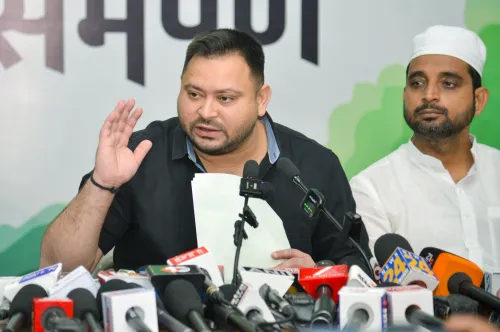
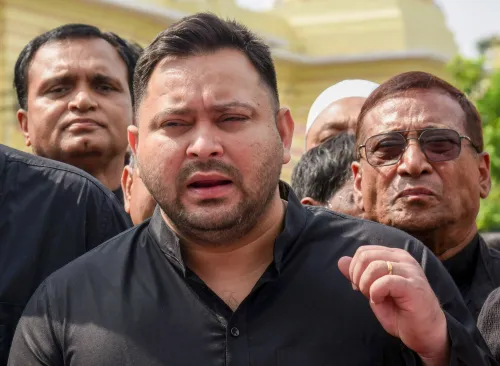
In a Hindi post on X, Yadav made four blunt charges: that the Election Commission 'rigged' the Bihar election to hand victory to the BJP; that the result must be annulled; that people are already on the streets against the Commission's 'dark deeds' (kaale karnaame); and that the Chief Election Commissioner should be arrested and imprisoned. Translated in full: 'The Election Commission has committed fraud to get the BJP elected. The Bihar election must be cancelled. The public has taken to the streets against the Election Commission's dark deeds. The Chief Election Commissioner should be arrested and sent to jail.'
The language is extraordinary even by the combative standards of Indian opposition politics. Demanding the criminal arrest of a sitting Chief Election Commissioner (CEC) — a constitutional appointee with security of tenure — is not a routine protest slogan. It signals that the Rashtriya Janata Dal (RJD) intends to frame this not as an electoral dispute but as a constitutional crisis.
Bihar's long history of contested results
Bihar elections have rarely ended without allegations from at least one side. The 2020 Bihar Assembly election saw the NDA alliance of BJP and JD(U) defeat the Mahagathbandhan — the Grand Alliance led by Tejashwi Yadav — by a razor-thin margin, producing weeks of complaints about booth-level irregularities. Opposition parties across India have repeatedly questioned the Election Commission's neutrality after electoral losses, citing procedural anomalies, EVM reliability, and voter roll concerns. None of those challenges, however, reached the pitch of demanding the CEC's arrest.
The Election Commission of India is a constitutional body established under Article 324, and its commissioners are appointed by the President and can be removed only through a process akin to that for a Supreme Court judge. Any criminal prosecution of the CEC would require extraordinary legal and constitutional steps — a reality that frames Yadav's demand as a political and mobilisation statement rather than a concrete legal roadmap.
Street protests and what the RJD is building toward
Yadav's post explicitly references ongoing street protests — 'the public has taken to the streets' — suggesting the party is either organising or seeking to channel on-ground anger into sustained pressure. Whether those protests translate into formal election petitions before the courts, complaints before the Commission itself, or purely political agitation will determine how much institutional traction this challenge carries.
The sharpest next question: does the RJD follow the post with a legal petition challenging the Bihar result, or does the confrontational rhetoric remain on social media? A court challenge would force specifics — named constituencies, documented irregularities, sworn affidavits. The arrest demand, by contrast, costs nothing and tests the waters for public resonance. Bihar is watching to see which path Tejashwi chooses.
Point of View
But the explicit demand for a sitting Chief Election Commissioner's arrest marks a qualitative leap in rhetoric that could either energise RJD's base or invite a backlash over constitutional overreach. The post lands within a broader national pattern in which losing parties increasingly frame Election Commission conduct as partisan rather than procedural — a trend that corrodes institutional legitimacy over time regardless of which party benefits. For the RJD, the test is whether combative social-media framing converts into concrete legal action; without a court petition naming specific irregularities, the demand risks being read as theatre. Bihar's fractured coalition arithmetic and the state's history of tight, contested results mean the political soil is fertile — but 'arrest the CEC' is a line few mainstream parties have crossed, and how the phrase ages will depend entirely on what evidence, if any, the RJD places before a court.
NationPress
25 Sept 2026
Frequently Asked Questions
What did Tejashwi Yadav say about the Bihar election result?
Tejashwi Yadav alleged that the Election Commission rigged the Bihar election to ensure a BJP victory, demanded the result be cancelled, and called for the Chief Election Commissioner to be arrested and imprisoned.
Can the Chief Election Commissioner be arrested in India?
The Chief Election Commissioner is a constitutional appointee who can only be removed through a parliamentary process similar to that for a Supreme Court judge, making a criminal arrest legally and constitutionally unprecedented under normal circumstances.
What is RJD's basis for calling the Bihar election rigged?
Tejashwi Yadav's post does not specify detailed evidence; it makes a broad allegation of fraud. Any formal challenge would require specific documented irregularities to be placed before the courts or the Election Commission.
Has the Election Commission responded to RJD's allegations?
No official response from the Election Commission of India to Yadav's post has been confirmed at the time of publication.
What happens next if RJD wants to legally challenge the Bihar election?
The RJD would need to file an election petition before the relevant High Court within the statutory period, providing evidence of specific irregularities in named constituencies — a more exacting standard than a social-media post.