Tejashwi Yadav calls Election Commission a 'cancer' for democracy

Synopsis
RJD leader Tejashwi Yadav on 27 September 2026 branded the Election Commission a 'cancer for democracy,' alleging PM Modi's wins are manufactured through media capture and institutional bias, not genuine popular support — and cited CM appointments in five states as proof.
Key Takeaways
Tejashwi Yadav has levelled the 'cancer for democracy' charge against the Election Commission of India consistently for six years, escalating on 27 September 2026 .
He alleged that BJP wins are secured by 'fixing the match referee and umpire' — not through public mandate.
Yadav named Rajasthan, Delhi, Haryana, Bihar, and Bengal as states where 'selected puppet' CMs were installed, which he says is evidence of illegitimate wins.
He accused the establishment of purchasing godi media broadcasting rights to control the information environment around elections.
The Election Commission is a constitutional body that has denied all allegations of bias; the BJP has previously dismissed such opposition claims.
The broader opposition campaign against electoral fairness has intensified since 2014 , evolving from EVM-specific complaints to a systemic institutional critique.
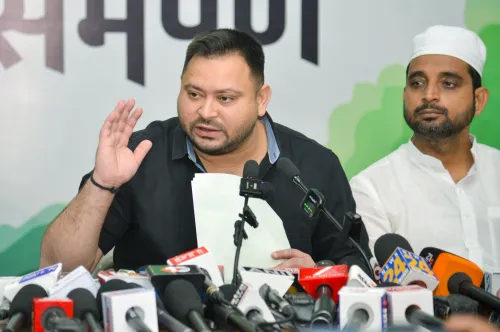
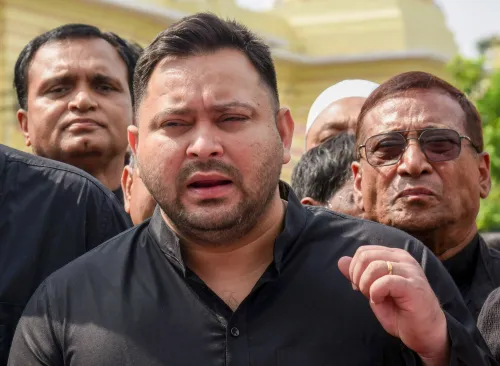
Six years of the same charge, sharpened to a scalpel: RJD leader Tejashwi Yadav on Sunday, 27 September 2026 took his most pointed swipe yet at the Election Commission of India, calling it a 'cancer for the country and democracy' and accusing the ruling establishment of winning elections not through public support but by 'fixing the match referee and umpire.'
Posting in Hindi on X, Yadav charged that Prime Minister Narendra Modi commands 'no genuine popularity anywhere on the ground,' and that the Bharatiya Janata Party has compensated for that deficit by purchasing the broadcasting rights of what he called 'godi media' — a colloquial term critics use for outlets perceived as sympathetic to the government — while relying on the Election Commission's 'unwavering support and enormous cooperation' to secure what he termed 'so-called victories.'The puppet-CM argument: Rajasthan, Delhi, Haryana, Bihar, Bengal
Yadav's sharpest rhetorical move was a pointed question: if the BJP truly won these states on popular mandate, why did Modi and Home Minister Amit Shah install 'selected puppets' as Chief Ministers rather than the party's most grassroots-popular regional faces? He named Rajasthan, Delhi, Haryana, Bihar, and Bengal as states where, in his telling, CMs were chosen precisely because the leadership knows the wins were engineered — not earned. It is a line of attack designed to undercut not just electoral credibility but internal BJP legitimacy in those states.
The argument carries a particular edge in Bihar, where Yadav leads the opposition and where the Rashtriya Janata Dal has long positioned itself as the authentic voice of the state's backward communities against what it describes as upper-caste, Delhi-driven political management.
A six-year drumbeat — and why it keeps getting louder
Yadav's complaint is not new. Indian opposition parties have raised questions about the Election Commission's independence and about Electronic Voting Machines after nearly every major election since 2014. What has evolved is the rhetorical sophistication: where early critiques focused on EVMs, the current framing indicts the entire electoral ecosystem — media, institutional referees, and candidate selection — as a coordinated system rigged against democratic competition.
The Election Commission is a constitutional body mandated with the 'superintendence, direction and control' of elections to Parliament and state legislatures. It has consistently denied charges of bias and defended the integrity of its processes. The BJP has also rejected opposition allegations as sore-loser politics.
Still, the opposition's persistence on this theme reflects something real about Indian democratic anxiety: when the gap between a party's perceived ground strength and its election results appears wide, institutional trust erodes — and those who lose have every incentive to keep asking why.
Whether the Election Commission responds to this latest salvo, or whether the BJP fires back before the next round of assembly elections, the battle over India's electoral credibility is far from settled. Tejashwi Yadav has made very clear he intends to keep making it the central question.
Point of View
The RJD insulates its political brand from defeat and keeps its base mobilised between election cycles. The 'puppet CM' framing is an evolution — it attacks not just the electoral process but the quality of governance that follows, arguing that unearned wins produce unaccountable leaders. For the broader opposition, this kind of institutional critique is both a rallying cry and a liability: it energises loyalists but risks being dismissed as defeatism by swing voters. The real test will come when election results either validate or complicate the narrative.
NationPress
27 Sept 2026
Frequently Asked Questions
Why did Tejashwi Yadav call the Election Commission a 'cancer'?
Tejashwi Yadav called the Election Commission a 'cancer for the country and democracy' on 27 September 2026, alleging it provides 'unwavering support' to the BJP and helps it win elections without genuine public backing — a charge he says he has been making for six consecutive years.
What states did Tejashwi Yadav mention in his BJP puppet CM allegation?
Yadav named Rajasthan, Delhi, Haryana, Bihar, and Bengal as states where he claims Modi-Shah installed 'selected puppet' Chief Ministers rather than popular local BJP leaders — which he argues is proof the wins were not earned through real voter support.
What is 'godi media' and why did Tejashwi mention it?
'Godi media' is a colloquial Hindi phrase — literally 'lap media' — used by government critics to describe outlets perceived as sympathetic to the ruling establishment. Yadav alleged the BJP buys such media's broadcasting rights to control election narratives.
Has the Election Commission responded to opposition bias allegations?
The Election Commission of India, a constitutional body, has consistently denied charges of institutional bias and defended the integrity of its electoral processes. The BJP has also rejected such opposition claims as sore-loser politics.
How long have opposition parties been questioning the Election Commission's independence?
Indian opposition parties have raised questions about the Election Commission's independence and about Electronic Voting Machines after nearly every major election since 2014 — roughly twelve years of sustained institutional critique.