EPFO urges PF trusts to seek exempt status before 28 December amnesty deadline
Synopsis
EPFO's one-time amnesty window for PF trusts — opened under the EPF Scheme 2026 — closes on 28 December 2026, and eligible establishments risk losing income tax benefits if they miss it. The scheme waives minimum headcount, corpus size, and the three-year compliance rule for trusts that regularise now.
Key Takeaways
The EPFO amnesty window for retrospective regularisation of exempt status closes on 28 December 2026 .
The window opened on 11 July 2026 , offering a six-month one-time opportunity under the EPF Scheme 2026 , notified on 29 June 2026 .
Eligible PF trusts recognised by the Income Tax Act but lacking a formal Section 17 EPFO exemption order can apply for regularisation.
Benefits include waivers on minimum headcount , corpus size , and the three-year compliance rule , plus post-regularisation operational flexibility.
EPFO has partnered with CII , ICAI , and BSE , and is coordinating with the Income Tax Department to identify non-compliant trusts before the deadline.
The Employees' Provident Fund Organisation (EPFO) on Tuesday, 13 October 2026, issued a nationwide appeal to eligible establishments, urging them to expedite applications for retrospective regularisation of exempt status under the EPF Scheme 2026 — with fewer than three months left before the one-time amnesty window closes on 28 December 2026.
What the Amnesty Window Offers
The amnesty provisions were introduced as a transitional measure in the Employees' Provident Fund (EPF) Scheme 2026, notified on 29 June 2026. The six-month window, which opened on 11 July 2026, gives Provident Fund (PF) Trusts recognised under the Income Tax Act — but lacking a formal exemption order under Section 17 of the Employees' Provident Funds and Miscellaneous Provisions Act or the Code on Social Security — a one-time opportunity to regularise their status.
Key benefits include waivers of statutory requirements such as minimum employee headcount, minimum corpus size, and the three-year compliance rule. Post-regularisation, establishments also gain complete operational flexibility to function either as exempt or un-exempt entities, according to an official statement.
EPFO's Outreach Drive
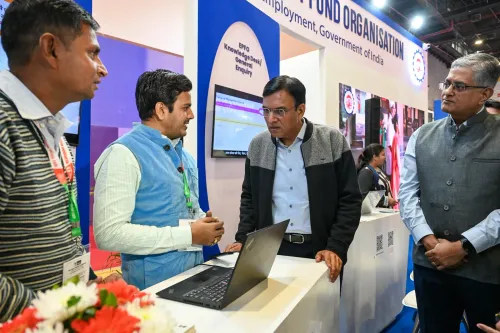
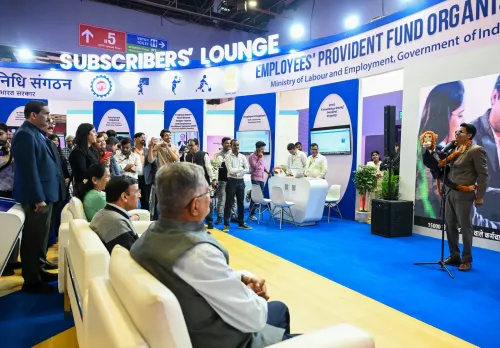
To maximise awareness, the EPFO has deployed a multi-channel campaign across the country. Strategic seminars and meetings have been held in coordination with apex industry bodies including the Confederation of Indian Industry (CII), the Institute of Chartered Accountants of India (ICAI), and the Bombay Stock Exchange (BSE). Chartered Accountants and statutory auditors have been specifically engaged to identify qualifying PF Trusts and assist them through the application process.
Simultaneously, EPFO Zonal and Regional Offices across India have organised seminars and workshops targeting local establishments, employers, and trust members, complemented by multimedia campaigns, social media outreach, and explanatory infographics simplifying compliance procedures.
Training and Institutional Support
The Exemption Division (Head Office) has conducted dedicated hybrid training programmes for EPFO field officials nationwide. Dual-track institutional training — both online and in-person — has been carried out at the Pandit Deendayal Upadhyaya National Academy of Social Security for departmental officers and employers.
Notably, the EPFO has also coordinated with the Income Tax Department to institutionalise data sharing of exempted establishment records. This cross-verification exercise aims to identify unnotified or non-compliant PF trusts and bring them under the statutory umbrella before the deadline.
Why Eligible Trusts Should Act Now
PF Trusts that regularise their status stand to preserve income tax benefits currently available to Income Tax Department-recognised trusts. EPFO Regional Offices are conducting active follow-ups with potentially eligible establishments to ensure applications are submitted within the stipulated timeframe.
With the 28 December 2026 deadline now less than three months away, the EPFO has emphasised that this is a non-renewable, one-time opportunity — and that trusts which miss the window risk losing their tax-recognised benefits and facing future compliance complications.
Point of View
Effectively operating in a compliance grey zone. The scheme's waiver of the three-year compliance rule and corpus floor is significant, as these requirements have historically been the chief deterrents to formalisation. What is less clear is how many trusts actually remain unnotified, and whether the EPFO's data-sharing exercise with the Income Tax Department will surface a larger-than-expected universe of non-compliant entities. If uptake is low despite the outreach blitz, that itself will be a signal about deeper structural barriers to PF trust regularisation in India.
NationPress
13 Oct 2026
Frequently Asked Questions
What is the EPFO amnesty window for exempt status?
It is a one-time opportunity under the EPF Scheme 2026 for PF Trusts recognised by the Income Tax Act — but lacking a formal EPFO exemption order — to retrospectively regularise their exempt status. The window opened on 11 July 2026 and closes on 28 December 2026.
Who is eligible to apply under the EPFO amnesty scheme?
Provident Fund Trusts that are recognised under the Income Tax Act but do not hold a formal exemption order granted under Section 17 of the Employees' Provident Funds and Miscellaneous Provisions Act or the Code on Social Security are eligible. Such trusts are encouraged to apply before the 28 December 2026 deadline.
What are the key benefits of regularising under the EPF Scheme 2026?
Eligible trusts receive waivers of statutory requirements including minimum employee headcount, minimum corpus size, and the three-year compliance rule. After regularisation, establishments also gain full flexibility to operate either as exempt or un-exempt entities.
What happens if a PF trust misses the 28 December 2026 deadline?
Trusts that do not regularise before the deadline risk losing the income tax benefits available to Income Tax Department-recognised trusts and may face future compliance complications under the Code on Social Security. The EPFO has stressed this is a non-renewable, one-time window.
How is EPFO helping trusts apply before the deadline?
EPFO has launched a multi-channel outreach drive involving seminars with CII, ICAI, and BSE, and has engaged Chartered Accountants to identify qualifying trusts. Zonal and Regional Offices are conducting workshops nationwide, and the organisation is coordinating with the Income Tax Department to cross-verify and identify non-compliant trusts.