CM Nayab Saini Launches SANKALP Society to Fight Drug Abuse in Haryana
Synopsis
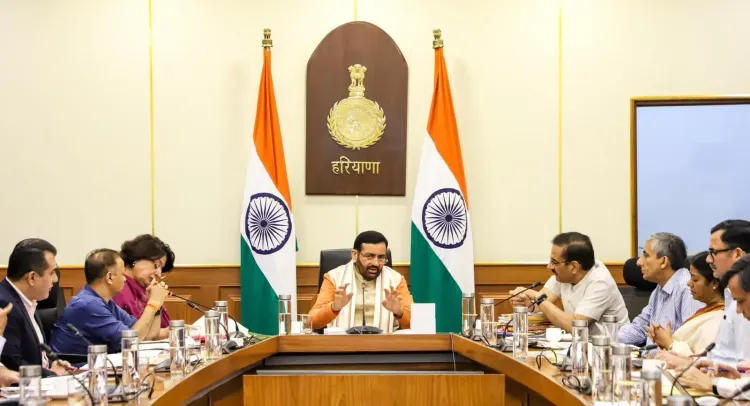
Haryana CM Nayab Singh Saini chaired the inaugural SANKALP Society meeting in Chandigarh on 13 October 2026, issuing directives on seven resolutions combining trafficking crackdowns, youth rehabilitation, and sports engagement to achieve a drug-free Haryana.
Key Takeaways
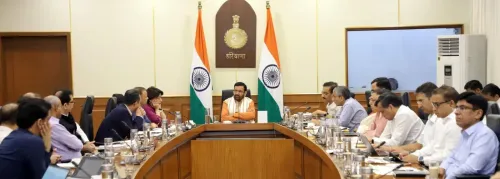
SANKALP Society held its first formal meeting in Chandigarh on 13 October 2026 , chaired by CM Nayab Singh Saini.
CM Saini directed action on seven core resolutions aimed at achieving a drug-free Haryana.
The three-pillar strategy covers: dismantling drug-trafficking networks , treatment and rehabilitation of addicted youth, and linking young people to sports and positive activities .
CM Saini explicitly called on families, teachers, panchayats , and civil-society bodies to share ownership of the anti-drug mission.
The initiative aligns with the national Nasha Mukt Bharat Abhiyan launched in 2020 , extending its framework through a dedicated state-level institution.
District-level rollout and follow-up SANKALP meetings will be the key indicators of implementation progress.
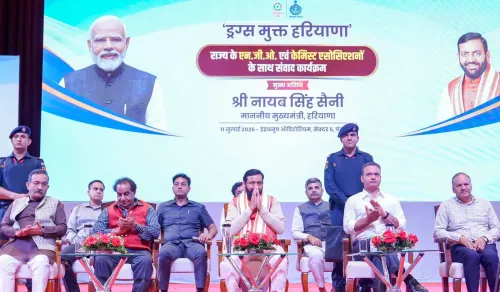
Drug trafficking networks, youth rehabilitation, and the power of community — Haryana Chief Minister Nayab Singh Saini put all three at the centre of a major new state-level push on Tuesday, 13 October 2026, chairing the inaugural meeting of the SANKALP Society in Chandigarh and directing action on seven core resolutions toward a drug-free Haryana.
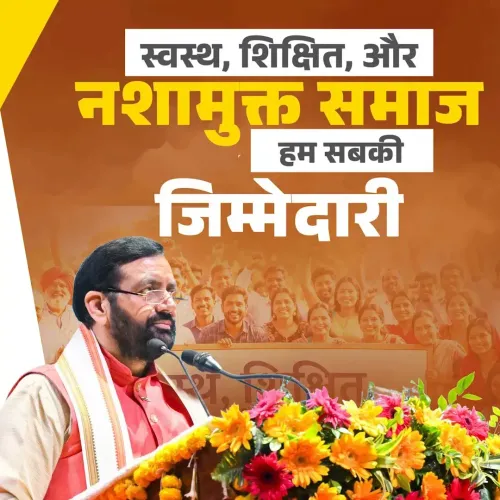
Posting in Hindi on X, CM Saini framed the mission with characteristic directness: 'नशे को हराना है, युवाओं का भविष्य बचाना है' — 'We must defeat addiction and save the future of our youth.' The resolve, he wrote, is threefold: a hard crackdown on the entire drug-trafficking network, proper treatment and rehabilitation for youth already caught in addiction's grip, and channelling young energy toward sports and constructive activities.
What SANKALP Puts on the Table
The SANKALP Society — its name itself meaning 'resolve' or 'pledge' — held its first formal meeting at Chandigarh, making it the institutional anchor for Haryana's anti-narcotics drive. While the exact text of the seven resolutions has not been made public, the CM's direction signals a deliberate move away from a purely enforcement-led model. Treatment and rehabilitation sit alongside crackdowns as explicit priorities — a nuanced stance that acknowledges addiction as both a law-and-order problem and a public health crisis.
This architecture echoes the Nasha Mukt Bharat Abhiyan, the national campaign launched in 2020 that has pushed states to combine demand-reduction programmes with supply-side enforcement. Haryana's SANKALP framework appears to operationalise that spirit at the state level with a dedicated coordinating body.
Why Haryana, Why Now
Drug abuse among youth has been a persistent and documented concern across Haryana, a state that shares a long border — and, critics argue, supply chains — with Punjab, itself long grappling with a narcotics crisis. State-level anti-narcotics drives in Haryana have historically combined police action with de-addiction camps, but a structured multi-stakeholder society represents a more formal institutional step.
CM Saini was explicit that this fight cannot belong to the government alone. His post named families, teachers, panchayats, and civil society organisations as co-owners of the mission — a political signal that the state intends to decentralise both responsibility and accountability down to the village level.
Sports and Positive Engagement as the Third Pillar
The emphasis on connecting youth to sports and positive activities is not incidental. Haryana has a proud tradition of producing Olympic and Commonwealth Games medallists, and successive state governments have leaned into that identity. Framing athletic participation as an anti-drug strategy gives the campaign a forward-looking, aspirational dimension — not just pulling youth away from substances but pulling them toward something.
With the SANKALP Society now formally constituted and seven resolutions in motion, the next test is district-level rollout and whether follow-up meetings translate intent into measurable outcomes.
Point of View
Multi-stakeholder governance model — a political calculation that distributes credit and accountability beyond the police machinery. Naming panchayats and teachers as co-stakeholders also insulates the campaign from the charge that enforcement alone defines the BJP's social agenda in Haryana. The emphasis on sports as a counter-drug lever dovetails neatly with Haryana's identity as India's medal factory, giving the initiative a positive cultural frame that purely punitive campaigns lack. Whether seven resolutions and one inaugural meeting translate into measurable reductions in youth drug use will define whether SANKALP becomes a legacy plank or a press-release moment.
NationPress
13 Oct 2026
Frequently Asked Questions
What is SANKALP Society in Haryana?
SANKALP Society is a newly constituted body in Haryana set up to coordinate efforts toward a drug-free state, combining enforcement against drug traffickers, youth rehabilitation, and community engagement under a framework of seven core resolutions.
What did CM Nayab Saini announce at the SANKALP meeting?
At the inaugural SANKALP Society meeting in Chandigarh on 13 October 2026, CM Nayab Singh Saini directed action on seven resolutions covering crackdowns on drug-trafficking networks, treatment and rehabilitation for addicted youth, and connecting young people to sports and positive activities.
What is Nasha Mukt Bharat Abhiyan and how does SANKALP relate to it?
Nasha Mukt Bharat Abhiyan is a national anti-drug campaign launched in 2020 to reduce drug demand through awareness, treatment and rehabilitation. Haryana's SANKALP Society operationalises that spirit at the state level with a dedicated coordinating institution.
Why is drug abuse a concern in Haryana?
Drug abuse among youth has been a persistent public health and social concern in Haryana, partly linked to its proximity to Punjab, which has faced a well-documented narcotics crisis. The state has run anti-narcotics drives combining police action with de-addiction initiatives for several years.
Who are the stakeholders in Haryana's anti-drug campaign under SANKALP?
CM Saini has named families, teachers, panchayats, and civil-society organisations as co-owners of the campaign alongside government agencies, signalling a community-centred model rather than a purely enforcement-led approach.