CM Dhami Links Uttarakhand's Growth to Viksit Bharat 2047
Synopsis
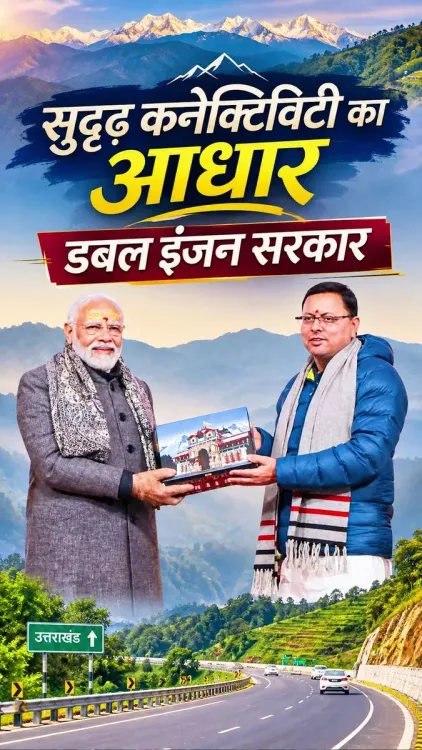
Uttarakhand CM Pushkar Singh Dhami on 18 November 2026 reaffirmed the state's commitment to the Viksit Bharat 2047 vision, citing BJP's 'double engine' central-state coordination as the engine driving the Himalayan state's connectivity and infrastructure growth.
Key Takeaways
CM Pushkar Singh Dhami posted on 18 November 2026 reaffirming Uttarakhand's resolve to contribute to the Viksit Bharat 2047 national vision.
He credited the 'double engine' governance model — aligned BJP governments at the Centre and in the state — for accelerating connectivity and development.
The Char Dham Pariyojana , launched in 2016 , remains a key pillar of Uttarakhand's infrastructure push, upgrading roads to four major pilgrimage sites.
Viksit Bharat 2047 is the national framework targeting developed-country status by the centenary of India's independence.
Uttarakhand, formed in 2000 , faces distinct terrain-driven connectivity challenges that make central-state coordination especially consequential.
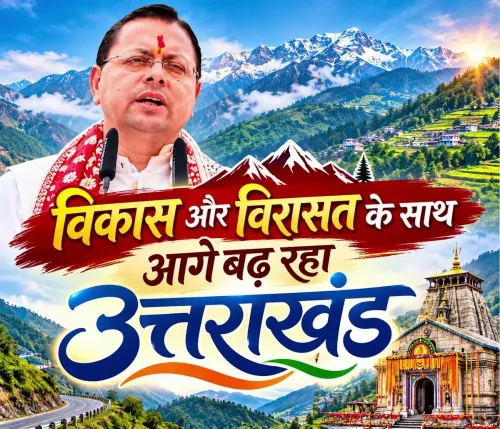
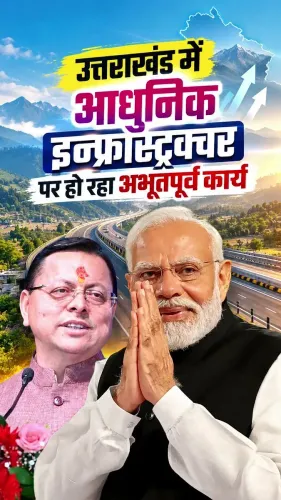
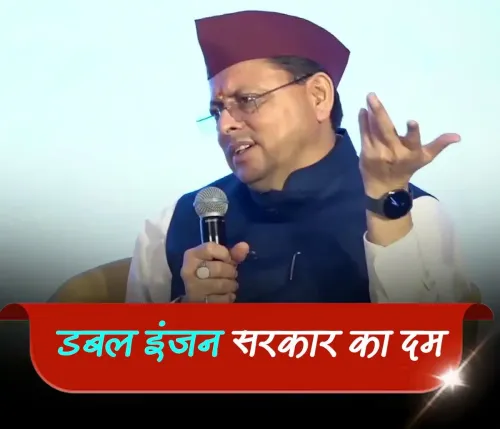
Uttarakhand's connectivity drive is not a state story alone — it is, increasingly, the centrepiece of a national ambition. Uttarakhand Chief Minister Pushkar Singh Dhami on Wednesday, 18 November 2026, invoked the 'double engine' government framework to declare that the Himalayan state is steadily advancing toward contributing to India's Viksit Bharat 2047 vision, crediting coordinated efforts between the central and state governments under Prime Minister Narendra Modi.
The 'Double Engine' Pitch and What It Means for Uttarakhand
In his post, CM Dhami wrote — 'केंद्र एवं राज्य सरकार के समन्वित प्रयासों से उत्तराखंड वर्ष 2047 तक विकसित भारत के निर्माण में महत्वपूर्ण योगदान देने के संकल्प के साथ निरंतर आगे बढ़ रहा है' — meaning: 'Through the coordinated efforts of the central and state governments, Uttarakhand is continuously moving forward with the resolve to make an important contribution to building a developed India by 2047.'
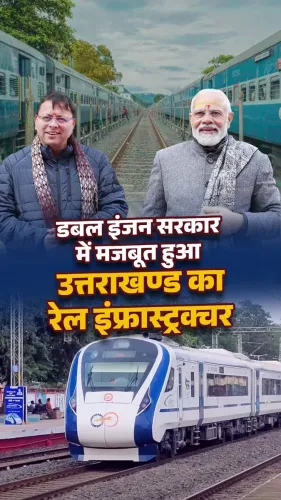
The 'double engine' formulation is BJP's signature governance pitch: when the same party holds power at both the Centre and the state, it argues, infrastructure pipelines unclog, funds flow faster, and execution accelerates. For Uttarakhand — a 2000-born Himalayan state whose terrain makes connectivity a perennial challenge — that argument carries particular weight.
Char Dham Roads to 2047: Uttarakhand's Connectivity Spine
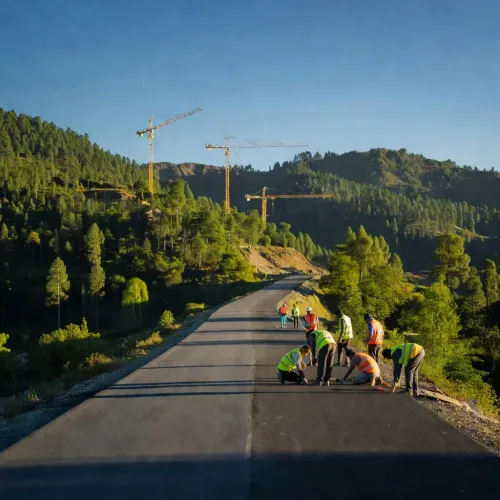
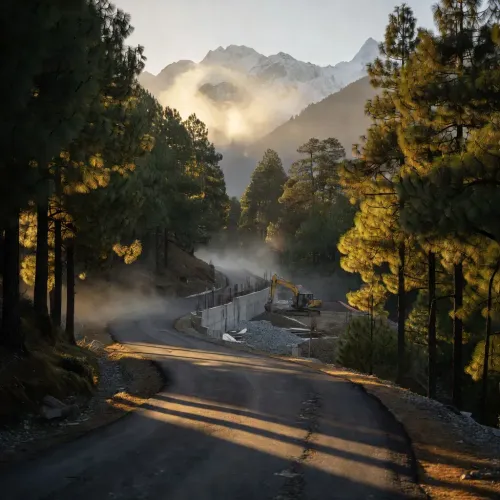
The policy lineage here runs back to 2016, when the Char Dham Pariyojana was launched to widen and upgrade the highway network reaching Uttarakhand's four sacred pilgrimage sites — Badrinath, Kedarnath, Gangotri, and Yamunotri. The project reshaped the state's economic logic: better roads mean more pilgrims, more pilgrims mean more revenue, and sustained revenue means a credible path toward the development benchmarks the Viksit Bharat 2047 framework demands.
Viksit Bharat 2047 — the national vision to achieve developed-country status by the centenary of India's independence — sets an ambitious ceiling. For hill states like Uttarakhand, reaching it requires closing the infrastructure gap with the plains at an accelerated pace. Dhami's framing positions the state not as a recipient of central largesse, but as an active, willing partner in that national project.
A Familiar BJP Script, With Real Infrastructure at Stake
The messaging is deliberate and well-worn: BJP-governed states routinely link local progress to PM Modi's national vision, reinforcing the party's unified-command narrative ahead of electoral cycles. But behind the political framing sit real, ongoing questions — highway widths, rail connectivity through difficult mountain passes, and tunnel projects whose timelines matter to millions of Uttarakhand residents and the state's tourism-dependent economy.
The video attached to Dhami's post signals this is not a text-only affirmation but a visual statement of intent, likely showcasing infrastructure milestones or project footages — a format that travels well on social media and with voters in the state.
Uttarakhand has set its sights on 2047. How much of the road gets built by then is the question that will outlast every political slogan.
Point of View
Where terrain limits infrastructure pace and tourism revenue depends heavily on road quality, the connectivity angle is not mere rhetoric — it tracks a genuine policy priority with the Char Dham Pariyojana as its anchor. The broader takeaway is that BJP-ruled hill states are increasingly required to demonstrate measurable 2047 progress benchmarks, raising the stakes for project delivery timelines over the next two decades.
NationPress
18 Nov 2026
Frequently Asked Questions
What is the 'double engine' government concept in India?
The 'double engine' government refers to the BJP's argument that when the same party governs both the central government and a state, development accelerates because funds flow faster and policy coordination is tighter — eliminating friction between Delhi and state capitals.
What is Viksit Bharat 2047?
Viksit Bharat 2047 is India's national vision to achieve developed-country status by 2047, the centenary of independence. It sets economic, infrastructure, and social development benchmarks that all states are expected to contribute toward.
What is the Char Dham Pariyojana and why does it matter for Uttarakhand?
Launched in 2016, the Char Dham Pariyojana is a central government scheme to widen and upgrade highways connecting Uttarakhand's four major pilgrimage sites — Badrinath, Kedarnath, Gangotri, and Yamunotri. Better roads boost pilgrimage tourism, which is a core driver of the state's economy.
Who is Pushkar Singh Dhami?
Pushkar Singh Dhami has been Chief Minister of Uttarakhand since 2021 and is a BJP leader. He is known for aligning state governance closely with the central BJP government's development agenda.
How is Uttarakhand contributing to India's development goals?
Uttarakhand is focusing on improving road and infrastructure connectivity — particularly through projects like the Char Dham Pariyojana — to boost tourism, reduce isolation of hill communities, and meet national development targets under the Viksit Bharat 2047 framework.