CM Nayab Saini chairs Green Climate Resilience Fund meet in Chandigarh
Synopsis
Haryana CM Nayab Saini chaired a Chandigarh meeting on 18 November 2026 to advance the Green Climate Resilience Fund, directed formation of a new company called 'Prithvi' for its transparent management, and highlighted that farmers are converting stubble into additional income instead of burning it.
Key Takeaways
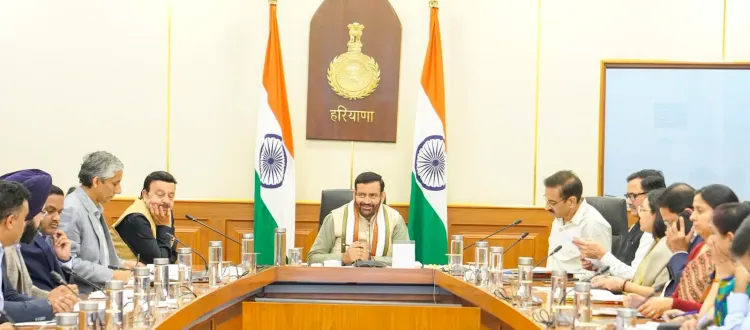
CM Nayab Saini chaired a meeting in Chandigarh on 18 November 2026 on the Green Climate Resilience Fund with national and international representatives.
A new company named 'Prithvi' is to be formed to operationalise the fund with mandated transparency and accountability.
National and international organisations expressed willingness to provide technical cooperation and financial contributions to Haryana's climate initiatives.
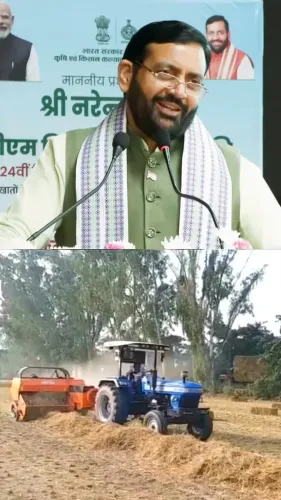
The Haryana government highlighted that farmers are now using stubble as an additional income source rather than burning it, a shift backed by state subsidies from 2018 onward.
The initiative aligns with India's National Clean Air Programme (2019) and Supreme Court directions to northern states on reducing crop-residue burning.
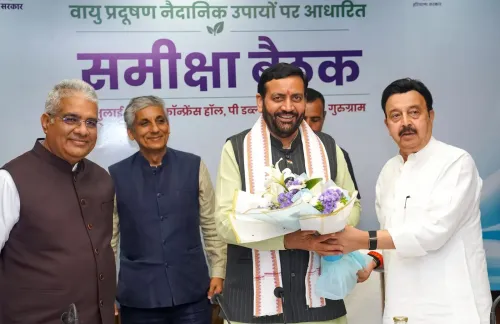
Stubble smoke has choked Delhi-NCR skies every October and November for years — and now Haryana is betting on international climate money and a new state-owned company to change that story for good. Chief Minister Nayab Saini chaired a high-level meeting in Chandigarh on Wednesday, 18 November 2026, bringing together state officials and representatives of national and international organisations to chart the course for the Green Climate Resilience Fund.
What the meeting decided: 'Prithvi' company and a mandate for transparency
The single most concrete outcome of the day's deliberations was an instruction to establish a new company under the name 'Prithvi' to operationalise and manage the Green Climate Resilience Fund. The Chief Minister directed that the company's functioning must guarantee transparency and accountability at every level — a signal that the government wants external confidence, not just external funds.
National and international organisations present at the meeting expressed appreciation for Haryana's existing climate initiatives and indicated willingness to extend technical cooperation and financial contributions, adding weight to the fund's potential scale.
Stubble as income, not smoke: how Haryana's farmer pivot is working
CM Saini underlined that the state government has been continuously working to promote paryavaran sanrakshan, jalvayu anukulan aur parali prabandhan (environmental protection, climate adaptation, and crop-residue management). The more striking claim: farmers are now treating stubble not as a liability to be burned, but as an additional source of income.
That shift did not happen overnight. Haryana introduced subsidies for crop-residue management machinery and bio-decomposers from 2018 onward, acting on Supreme Court directions tied to northern India's catastrophic winter air-quality crisis. India's National Clean Air Programme (2019) and the Commission for Air Quality Management reinforced those directives, pushing the state toward incentive-based alternatives alongside regulatory penalties.
The result has been a gradual ecosystem of stubble-to-income pathways — selling residue to biomass plants, using bio-decomposers to convert it into soil nutrients, or baling it for industrial use — all of which the new fund is designed to accelerate and scale.
Why a dedicated fund matters for northern India's air
Haryana and Punjab together account for the bulk of the seasonal crop-residue burning that sends particulate levels in Delhi-NCR into hazardous territory each post-harvest window. State-level schemes have made a dent, but the scale of machinery deployment, farmer outreach, and technology transfer required is beyond routine budget lines.
A ring-fenced Green Climate Resilience Fund — backed by international technical partners — could provide the sustained, predictable financing that one-off subsidy schemes cannot. The 'Prithvi' company model also suggests the government wants a dedicated institutional vehicle rather than routing money through existing departments, which often dilutes accountability.
The next milestones to watch: formal incorporation of Prithvi, publication of fund guidelines, and the signing of any technical-partnership agreements with the organisations that signalled interest at today's meeting. If those pieces fall into place, Haryana's climate pivot moves from intent to infrastructure — and Delhi's winters may eventually feel the difference.
Point of View
The Saini government is signalling a governance-first approach designed to attract cautious international donors who demand ring-fenced accountability. The move also hands Haryana a political answer to perennial criticism over stubble fires: rather than defending inaction, the state can now point to a funded, structured programme with international co-ownership. If Prithvi operationalises successfully, it could become a template for other agriculturally intensive northern states grappling with the same air-quality and farm-income tensions — but the credibility of the model rests entirely on how quickly concrete agreements and transparent fund guidelines follow today's meeting.
NationPress
18 Nov 2026
Frequently Asked Questions
What is Haryana's Green Climate Resilience Fund?
It is a proposed dedicated fund to finance environmental protection, climate adaptation, and crop-residue management in Haryana, intended to attract national and international technical and financial partners.
What is the 'Prithvi' company announced by CM Nayab Saini?
'Prithvi' is a new company that the Haryana government has been directed to form specifically to operationalise and manage the Green Climate Resilience Fund with transparency and accountability.
How are Haryana farmers earning from stubble instead of burning it?
Through state-supported schemes involving crop-residue management machinery, bio-decomposers, and biomass supply chains, farmers can sell or convert stubble into usable material, earning additional income instead of incurring the cost of burning.
Why does Haryana stubble burning matter for Delhi air quality?
Post-harvest stubble burning in Haryana and Punjab is a major contributor to seasonal spikes in particulate pollution across Delhi-NCR, making it a regional public-health issue under active Supreme Court and regulatory scrutiny.
What comes next after the 18 November 2026 Chandigarh meeting?
Key next steps include the formal incorporation of the 'Prithvi' company, publication of fund operating guidelines, and the signing of technical-partnership or contribution agreements with the national and international organisations that expressed interest at the meeting.