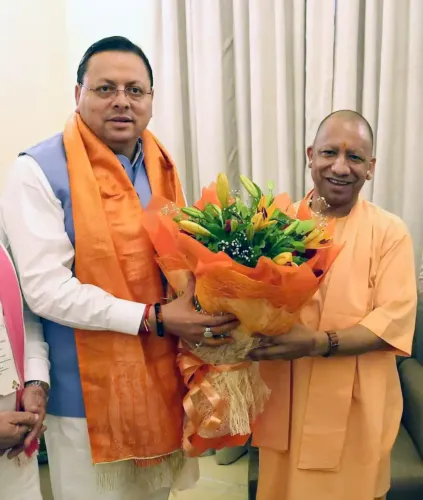
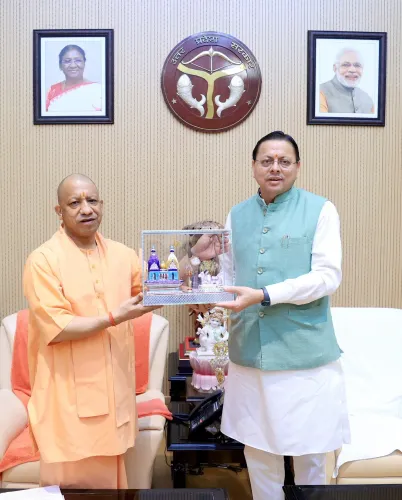
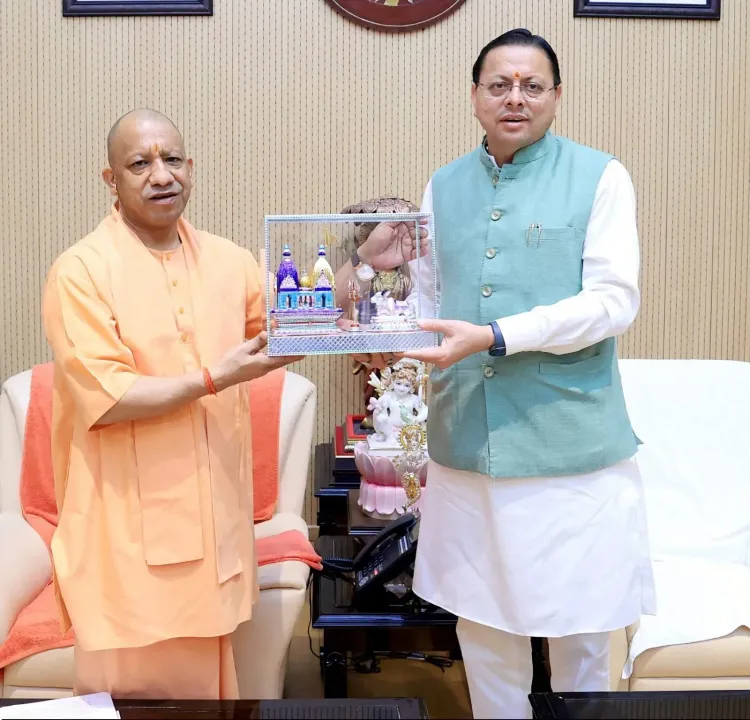
CM Dhami meets CM Yogi in Lucknow over UP-Uttarakhand asset row
Synopsis
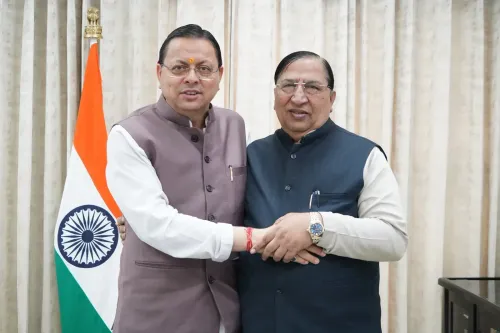
Uttarakhand CM Pushkar Singh Dhami met UP CM Yogi Adityanath in Lucknow on 18 November 2026, pressing for priority action on the Banbasa Barrage, Nagara Bypass Canal, and ageing border bridges — reviving the long-running post-bifurcation asset-division process between the two states.
Key Takeaways
CM Dhami travelled to Lucknow on 18 November 2026 for a bilateral courtesy meeting with CM Yogi Adityanath .
Discussions focused on pending asset disputes across multiple departments, with the irrigation department at the forefront.
Banbasa Barrage , Nagara Bypass Canal , Jhankaia Bridge , and Sukha Bridge were specifically flagged for repair, strengthening, or reconstruction.
The asset-division backlog stems from the Uttar Pradesh Reorganisation Act, 2000 , which created Uttarakhand but left shared infrastructure in legal and administrative limbo.
Dhami acknowledged progress on several earlier cases and thanked CM Yogi for UP's cooperation, while calling for time-bound resolution of remaining disputes.
Follow-up action is expected from irrigation and public works officials of both states on inspection and repair timelines.
Twenty-six years after Uttarakhand was carved out of Uttar Pradesh, the two states still share canals, barrages, and bridges that neither fully owns — and on Wednesday, 18 November 2026, Uttarakhand Chief Minister Pushkar Singh Dhami travelled to Lucknow to push those unresolved files off the shelf.
What brought Dhami to Lucknow
The Chief Minister's Office of Uttarakhand confirmed that CM Dhami held a courtesy meeting with Uttar Pradesh Chief Minister Yogi Adityanath at Lucknow, describing discussions as 'detailed and wide-ranging.' The agenda covered pending asset disputes across multiple departments — with the irrigation department taking centre stage — and the effective implementation of decisions already agreed at earlier meetings between the two governments.
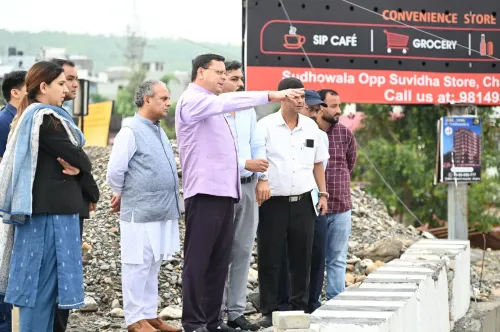
Dhami specifically raised the condition of the Banbasa Barrage and the Nagara Bypass Canal, as well as the Jhankaia Bridge and Sukha Bridge — older, deteriorating structures that fall under the irrigation department's shared jurisdiction. He called the repair, strengthening, and where necessary, reconstruction of these structures a matter of public safety and agricultural need, pressing for them to be treated as priority works.
Banbasa Barrage and the farmers waiting on both sides
The Banbasa Barrage, sitting on the border between the two states, is not an abstract bureaucratic dispute — it regulates water flow for farming communities straddling both sides of the state line. CM Dhami argued that swift execution of repair work would directly benefit local residents and farmers, and that effective coordination between the departments of both states was essential to make it happen.
The barrage and the connected canal infrastructure trace their administrative complexity to the Uttar Pradesh Reorganisation Act, 2000, the legislation that created Uttarakhand. That law set in motion an asset-division process that has never been fully completed — generating a long tail of maintenance responsibilities, ownership questions, and funding disputes that successive bilateral meetings have only partially resolved.
Progress claimed, pending cases still long
CM Dhami acknowledged that mutual cooperation and sustained dialogue had already resolved 'many important cases' related to asset division, with necessary action completed on several fronts based on previously reached agreements. He thanked CM Yogi Adityanath for Uttar Pradesh's cooperation in moving these cases forward.
But the meeting's very existence signals that the remaining list is still substantial. Both chief ministers discussed asset transfer, handover, and disposal of pending cases across departments beyond irrigation as well — signalling the breadth of unfinished business that the 2000 bifurcation left behind. Dhami expressed confidence that remaining issues would be resolved 'soon' through mutual agreement.
What comes next for border infrastructure
The immediate focus now shifts to follow-through: irrigation and public works officials from both states will need to align on inspection schedules, repair timelines, and funding responsibility. The political signal from Wednesday's meeting is clear — both chief ministers want stalled cases moving. Whether that political momentum translates into ground-level action on the Banbasa Barrage and the crumbling border bridges will be the real test.
For the farmers and villagers living in the shadow of these ageing structures, the answer will come not in a press release, but the next time the monsoon arrives.
Point of View
The visit also carries a domestic signal: ahead of local agricultural cycles, visibly pushing UP to act on border barrages and canals lets him demonstrate responsiveness to border-district farmers without waiting for a formal inter-state tribunal. The real measure of this meeting will be whether it produces a joint inspection timeline — or simply another round of well-intentioned communiqués.
NationPress
18 Nov 2026
Frequently Asked Questions
Why did Uttarakhand CM Dhami meet UP CM Yogi Adityanath in Lucknow?
CM Dhami visited Lucknow on 18 November 2026 to discuss resolution of long-pending inter-state asset disputes — particularly in the irrigation department — and to press for priority repair of the Banbasa Barrage, Nagara Bypass Canal, and deteriorating border bridges like Jhankaia and Sukha bridges.
What is the Banbasa Barrage and why is it disputed?
The Banbasa Barrage is a key irrigation structure on the border between Uttarakhand and Uttar Pradesh. Its maintenance and ownership responsibility became contested after Uttarakhand was carved out of UP under the Uttar Pradesh Reorganisation Act, 2000, leaving shared water infrastructure in administrative limbo.
What caused the asset disputes between Uttarakhand and Uttar Pradesh?
When Uttarakhand was created from Uttar Pradesh in 2000, the division of shared infrastructure — canals, barrages, roads, and public assets — was set in motion but never fully completed, generating a backlog of ownership, maintenance, and funding disputes that both states have been resolving piecemeal ever since.
What was agreed at the Dhami-Yogi meeting on 18 November 2026?
No specific new formal agreements were announced. Both chief ministers discussed progress on earlier decisions, identified remaining pending cases for time-bound resolution, and agreed that effective inter-departmental coordination between the two states must continue.
Who benefits from the repair of the Banbasa Barrage and border bridges?
The primary beneficiaries are farmers and local residents in border districts of both Uttarakhand and Uttar Pradesh, who depend on the barrage for irrigation water and on the bridges for safe daily movement.