MSDE meets UN Special Rapporteur on inclusive skilling for disabled persons
Synopsis
India's skilling ministry met the UN's top disability rights envoy to map out how vocational training can genuinely open doors — not just tick boxes — for persons with disabilities. The focus on embedding accessibility into mainstream programmes, rather than siloing it, signals a potential design shift in how India approaches inclusive skilling.
Key Takeaways
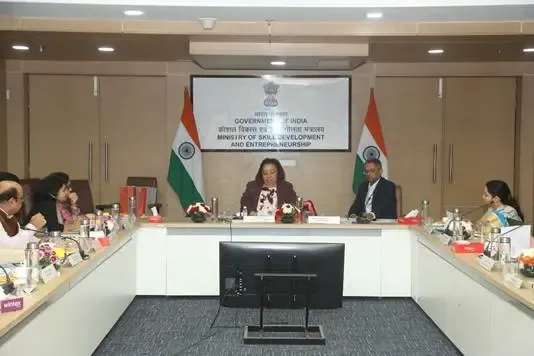
The MSDE held a dialogue with UN Special Rapporteur Heba Hagrass on 18 November 2026 in New Delhi on inclusive skilling for persons with disabilities.
Discussions focused on barriers spanning training access, certification, employment, retention, and career progression under CRPD principles.
Reasonable accommodation , assistive technologies , and trainer capacity-building were identified as key enablers.
Entrepreneurship and self-employment were highlighted as critical pathways to economic independence alongside formal employment.
The meeting did not announce specific policy timelines; Hagrass's findings will be reported to the UN Human Rights Council .
The Ministry of Skill Development and Entrepreneurship (MSDE) on 18 November 2026 held a structured dialogue with Heba Hagrass, the United Nations Special Rapporteur on the Rights of Persons with Disabilities, during her official visit to New Delhi, focusing on expanding employment and entrepreneurship pathways for persons with disabilities. The interaction marks a significant engagement between India's skilling apparatus and the UN's disability rights framework.
What the Dialogue Covered
The discussion centred on dismantling barriers across the full journey of skill development — from access to training and certification through to employment, retention, and career progression. Participants grounded the conversation in the principles of the Convention on the Rights of Persons with Disabilities (CRPD), which India ratified in 2007. The engagement highlighted accessible training infrastructure, digital learning platforms, adaptive learning materials, and inclusive assessment processes as critical enablers.
Key Voices in the Room
Heba Hagrass emphasised that the right to work must begin with a genuine opportunity to learn and choose. 'Inclusive vocational training must equip persons with disabilities for the full range of opportunities in a changing economy, with accessibility and reasonable accommodation built into its design,' she said. Niranjan Kumar Sudhansu, Additional Secretary at MSDE, added: 'For persons with disabilities, access to training must translate into the freedom to choose a vocation, demonstrate competence and progress in the world of work.'
Infrastructure and Technology in Focus
The session identified reasonable accommodation, assistive technologies, and the capacity-building of trainers and assessors as important considerations to enable learners with varying disabilities to participate on an equal footing. Participants stressed the need to embed accessibility within mainstream training programmes rather than treating disability support as a parallel or supplementary system. This approach aligns with global best practices under the CRPD's principle of universal design.
Entrepreneurship as an Economic Pathway
The dialogue also examined entrepreneurship and self-employment as routes to economic independence for persons with disabilities. Access to finance, mentoring, assistive technology, and market linkages were identified as key levers. Notably, the emphasis on entrepreneurship reflects a broader shift in India's skilling policy — moving beyond placement-linked training toward building autonomous economic participation. India's official data has consistently shown that persons with disabilities remain significantly underrepresented in formal employment and organised skilling programmes.
What Comes Next
No specific policy commitments or timelines were announced following the meeting, but the MSDE statement indicated the interaction was aimed at informing future directions in inclusive skilling design. The UN Special Rapporteur's visit to India is expected to include engagements across multiple ministries and civil society organisations before she submits her findings to the UN Human Rights Council.
Point of View
With persons with disabilities consistently underrepresented in Pradhan Mantri Kaushal Vikas Yojana enrolment data. The CRPD framework Hagrass brings is robust, but India's challenge is converting dialogue into retrofitted training centres, screen-reader-compatible digital platforms, and assessors trained in disability inclusion — none of which were committed to in this round. The push toward entrepreneurship is welcome, but without accessible credit and market linkages, it risks becoming another aspirational layer on an inaccessible base.
NationPress
18 Nov 2026
Frequently Asked Questions
What was the MSDE-UN Special Rapporteur meeting about?
The Ministry of Skill Development and Entrepreneurship met UN Special Rapporteur Heba Hagrass on 18 November 2026 to discuss how India's skilling systems can better support the economic participation of persons with disabilities. The dialogue covered training access, certification, employment, and entrepreneurship pathways under the Convention on the Rights of Persons with Disabilities.
Who is Heba Hagrass and why is she in India?
Heba Hagrass is the United Nations Special Rapporteur on the Rights of Persons with Disabilities, an independent expert appointed by the UN Human Rights Council. She is on an official visit to India to assess the country's implementation of disability rights, with engagements across multiple government ministries and civil society groups planned.
What specific issues were raised in the meeting?
Key issues included accessible training infrastructure, digital learning platforms, assistive technologies, reasonable accommodation, and the capacity of trainers and assessors to work with learners with different disabilities. Entrepreneurship and self-employment — including access to finance and mentoring — were also highlighted as important routes to economic independence.
What policy outcomes came from this dialogue?
No specific policy commitments or timelines were announced. The MSDE described the interaction as an opportunity to examine how skill development systems can support persons with disabilities, with the expectation that it will inform future policy directions.
What is India's international obligation on disability inclusion in skilling?
India ratified the Convention on the Rights of Persons with Disabilities in 2007, which obligates it to ensure equal access to vocational training, employment, and reasonable accommodation in the workplace. The CRPD's principles were the stated framework for Wednesday's discussions between MSDE and the UN Special Rapporteur.