Ramdas Athawale Highlights Census 2027 as Key to Recognizing 21 Disabilities
Synopsis
Union Minister Ramdas Athawale emphasizes the critical role of Census 2027 in recognizing all 21 disabilities. The launch of a new handbook aims to empower Parliamentarians in promoting disability inclusion, reflecting India's commitment to rights-based approaches.
Key Takeaways
Census 2027 presents a critical opportunity for recognizing 21 disabilities .
The new handbook for Parliamentarians focuses on disability inclusion .
Accurate data will enable targeted interventions for individuals with disabilities.
Major initiatives are in place to support persons with disabilities in India.
The RPwD Act marks a shift towards a rights-based approach.
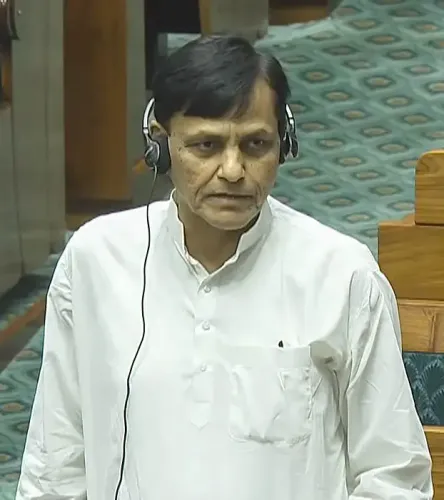
New Delhi, March 17 (NationPress) The Union Minister of State for Social Justice and Empowerment, Ramdas Athawale, emphasized on Tuesday that the forthcoming Census 2027 presents a significant opportunity to officially recognize all 21 categories of disabilities through meticulous enumeration and enhanced data collection methods.
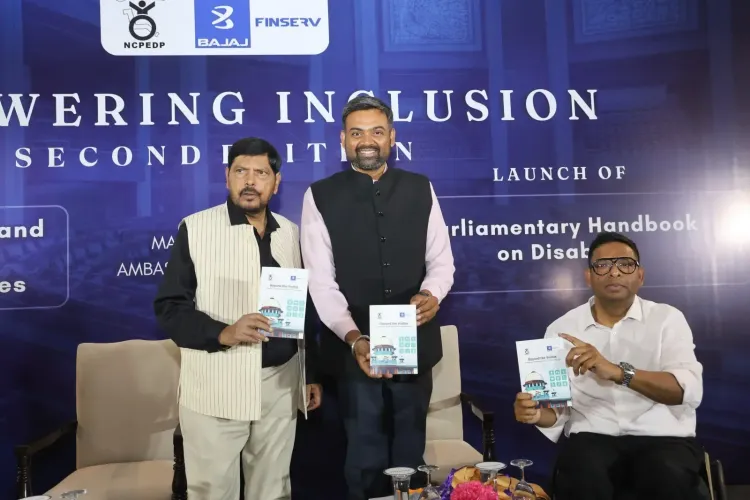
During the unveiling of India's inaugural handbook focused on disability for Parliamentarians, titled 'Beyond the Visible: A Handbook on Disability Inclusion for Parliamentarians', created by the National Centre for Promotion of Employment for Disabled People (NCPEDP), the Minister pointed out that Census 2027 will be the first census conducted post the implementation of the Rights of Persons with Disabilities (RPwD) Act, 2016.
Athawale stated that precise and segmented data will empower the Union government to formulate much more targeted and effective interventions for individuals with disabilities throughout the nation.
The event, which also included a panel discussion on inclusive health coverage and political participation, was graced by notable figures such as E.T. Mohammed Basheer, Indian Union Muslim League Lok Sabha MP and member of the Central Advisory Board on Disability; Eatala Rajender, BJP Lok Sabha MP; Fauzia Khan, NCP Rajya Sabha MP; Guru Prakash Paswan, BJP National Spokesperson; Neha Joshi, Bharatiya Janata Yuva Morcha Vice-President; and Anish Gawande, NCP-SP National Spokesperson.
The Executive Director of NCPEDP, Arman Ali, remarked, "The Handbook signifies a commitment to ensure that Parliamentarians actively participate in dismantling the barriers faced by individuals with disabilities. This resource will aid in transforming the RPwD Act into tangible legislative actions, making inclusion a practical reality within Indian democracy."
Athawale commended Ali, the NCPEDP team, the National Disability Network, and Bajaj Finserv CSR for their timely and impactful contribution, asserting that the handbook will serve as a crucial guide for Parliamentarians to enhance inclusive policymaking across the country.
He highlighted the pivotal measures taken by the Union Government under the visionary leadership of Prime Minister Narendra Modi.
The Minister pointed out several flagship initiatives from Modi's government, including the Accessible India Campaign, the Unique Disability ID (UDID) portal, skill development programs under PM-DAKSH, and the focused efforts under Ayushman Bharat, which are progressively integrating individuals with disabilities into the national development agenda.
The RPwD Act, 2016, marked a significant reform that expanded recognition to 21 disabilities, transitioning from a welfare-based to a rights-based framework, and aligning India with the United Nations Convention on the Rights of Persons with Disabilities (UNCRPD).
For the first time, the law distinctly acknowledged political barriers as a significant challenge for individuals with disabilities.
Ali raised concerns regarding the current state of health coverage, noting that a recent NCPEDP survey indicated that over 80 percent of individuals with disabilities do not possess any health insurance, primarily due to high premiums, exclusion of disability-related treatments, and denial of coverage.
"In line with Prime Minister Narendra Modi's vision for inclusive healthcare, schemes like Ayushman Bharat must explicitly include individuals with disabilities, providing comprehensive, lifelong support, including assistive devices, rehabilitation, and disability-specific care. The Union government is dedicated to eliminating these barriers to ensure that no person with a disability faces devastating out-of-pocket expenses," he added.
Athawale asserted that the launch of the handbook and the roundtable discussion will further integrate the conversation around disability rights and inclusive policymaking within Parliament and public life, marking this event as a crucial milestone in India's journey towards an inclusive and Viksit Bharat.
Reiterating the Union government's vision of 'Sabka Saath, Sabka Vikas, Sabka Vishwas', the Minister of State assured that every initiative will strive to ensure no citizen is left behind.
Congress Rajya Sabha MP, Jebi Mather, stated: "This handbook will significantly aid in sensitizing us toward the language we employ for differently-abled individuals and how to pose questions during Zero Hour."
Point of View
Aligning with the rights-based framework established by the RPwD Act. This initiative reflects a growing recognition of the importance of inclusivity in policymaking.
NationPress
23 Sept 2026
Frequently Asked Questions
What is the significance of Census 2027 for disabilities?
Census 2027 is crucial as it allows for the official recognition of all 21 categories of disabilities, enabling better data collection and targeted interventions for individuals with disabilities.
What does the new handbook for Parliamentarians focus on?
The handbook, titled 'Beyond the Visible', aims to guide Parliamentarians on disability inclusion and legislative action to support individuals with disabilities.
How does the RPwD Act relate to the Census?
The RPwD Act, enacted in 2016, provides a rights-based framework for disability recognition, making the upcoming Census the first to operate under this new legal context.
What initiatives support individuals with disabilities in India?
Initiatives like the Accessible India Campaign, Unique Disability ID portal, and Ayushman Bharat aim to mainstream individuals with disabilities in national development.
What are the key challenges faced by individuals with disabilities regarding health coverage?
Many individuals with disabilities lack health insurance due to high premiums and the exclusion of disability-related treatments, highlighting a need for comprehensive healthcare solutions.