Census 2027: Two-Phase Plan for Housing and Disability Data

Synopsis
The Census 2027 will be executed in two phases, starting with a focus on house listing and transitioning to population enumeration, which will incorporate disability data. This groundbreaking initiative aims to improve data collection and representation for individuals with disabilities in India.
Key Takeaways
The Census 2027 will be executed in two phases: housing census and population enumeration.
Data on disabilities will be included in the second phase.
Self-enumeration will be available for respondents.
Training for enumerators will be organized to ensure effective data collection.
The initiative aims to improve recognition and representation for individuals with disabilities.
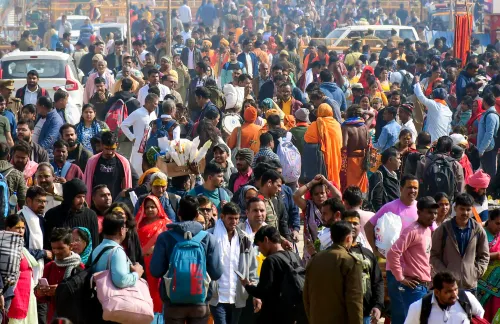
New Delhi, March 17 (NationPress) The Census 2027 is set to unfold in two distinct phases. The initial phase will concentrate on house listing and the housing census, while the subsequent phase will focus on population enumeration, including the collection of disability data, as disclosed in the Lok Sabha on Tuesday.
The Minister of State for Home Affairs, Nityanand Rai, provided this information in a written statement, noting that the questions for the first phase of Census 2027 have already been established.
In contrast to previous censuses, where information about disabilities was collected in the second phase, the questions for this subsequent phase will be announced in due time, according to Rai.
Detailing the procedural steps, the Minister explained that once the questions for the second phase are finalized and announced, an instructional manual along with training toolkits will be developed in collaboration with relevant stakeholders, followed by training sessions for census officials, including enumerators and supervisors.
Enumerators are tasked with conducting house-to-house visits within their designated enumeration blocks to gather census data.
Additionally, a provision for self-enumeration will allow respondents to submit their data. Any household member can fill out the self-enumeration portal, as clarified by the Minister.
Previously, the Union Minister of State for Social Justice and Empowerment, Ramdas Athawale, remarked that Census 2027 presents a significant opportunity to identify all 21 categories of disabilities through trained enumeration and enhanced data collection.
At the launch of India's inaugural handbook on disability for Parliamentarians, titled 'Beyond the Visible: A Handbook on Disability Inclusion for Parliamentarians', crafted by the National Centre for Promotion of Employment for Disabled People (NCPEDP), the Union Minister highlighted that Census 2027 will be the first such initiative following the enactment of the Rights of Persons with Disabilities (RPwD) Act, 2016.
Arman Ali, Executive Director of NCPEDP, stated, "This handbook is a pledge to ensure that Parliamentarians actively participate in dismantling barriers faced by persons with disabilities. The book aims to convert the RPwD Act into tangible legislative actions, making inclusion a reality in Indian democracy."
Athawale expressed his appreciation to Ali, the NCPEDP team, the National Disability Network, and Bajaj Finserv CSR for their timely and pragmatic contribution, asserting that the handbook will be an essential resource for Parliamentarians to bolster inclusive policymaking throughout the nation.
Point of View
It is crucial to recognize the importance of accurately capturing housing and disability data. This initiative not only highlights the government's commitment to transparency but also empowers marginalized communities by ensuring their representation in statistical data.
NationPress
26 Sept 2026
Frequently Asked Questions
What are the two phases of Census 2027?
Census 2027 will be conducted in two phases: the first phase will focus on house listing and housing census, while the second phase will involve population enumeration, including disability data.
Who is responsible for conducting the Census?
Enumerators, trained census officials, will be responsible for conducting house-to-house visits to collect the necessary data.
What is the significance of the self-enumeration portal?
The self-enumeration portal allows any member of a household to submit their data, providing convenience and enhancing data accuracy.
How will disability data be collected in Census 2027?
Disability data will be collected in the second phase of the Census, with specific questions to be announced later.
What is the RPwD Act, and how does it relate to the Census?
The Rights of Persons with Disabilities (RPwD) Act, enacted in 2016, aims to protect the rights of individuals with disabilities. Census 2027 will be the first to incorporate this framework in its data collection efforts.