Assam Wins Sant Kabir Award, India's Top Handloom Honour
Synopsis
Assam has won the Sant Kabir Award, India's top handloom honour from the Ministry of Textiles, becoming one of only three states — alongside Odisha and Uttar Pradesh — to secure the recognition in 2026. The award spotlights Assam's celebrated Muga and Eri silk weaving traditions.
Key Takeaways
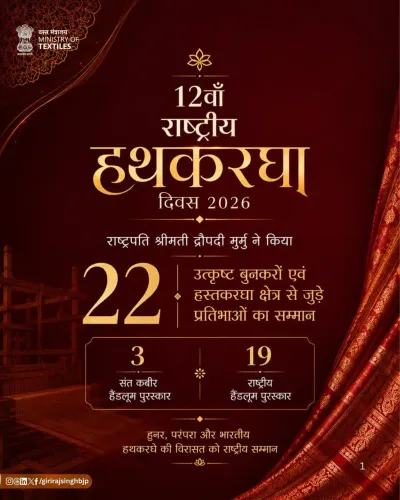
Assam has secured the Sant Kabir Award , India's highest honour for handloom excellence, awarded by the Ministry of Textiles .
Only three states received the award: Assam , Odisha , and Uttar Pradesh .
Assam's handloom identity is anchored in Muga silk (GI-tagged, produced exclusively in Assam) and Eri silk , sustaining thousands of rural weavers.
The award forms part of the central government's periodic recognition programme to sustain traditional textile crafts and artisan economies.
The win could open pathways to cluster development funding and national marketing support for Assam's weaver communities.
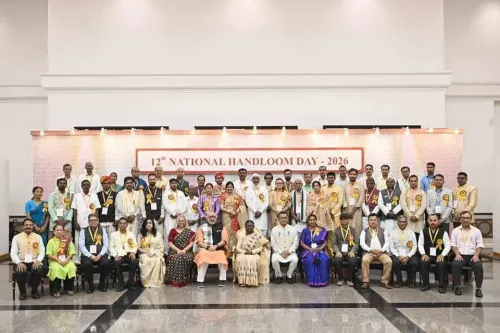
India's highest handloom honour has found its way to the Northeast. Assam has secured the prestigious Sant Kabir Award, joining Odisha and Uttar Pradesh as one of only three states to win the Ministry of Textiles' top recognition for handloom excellence — a moment the Chief Minister's Office of Assam called 'a proud moment for Assam' on Saturday, 8 August 2026.
What the Sant Kabir Award means for Assam's weavers
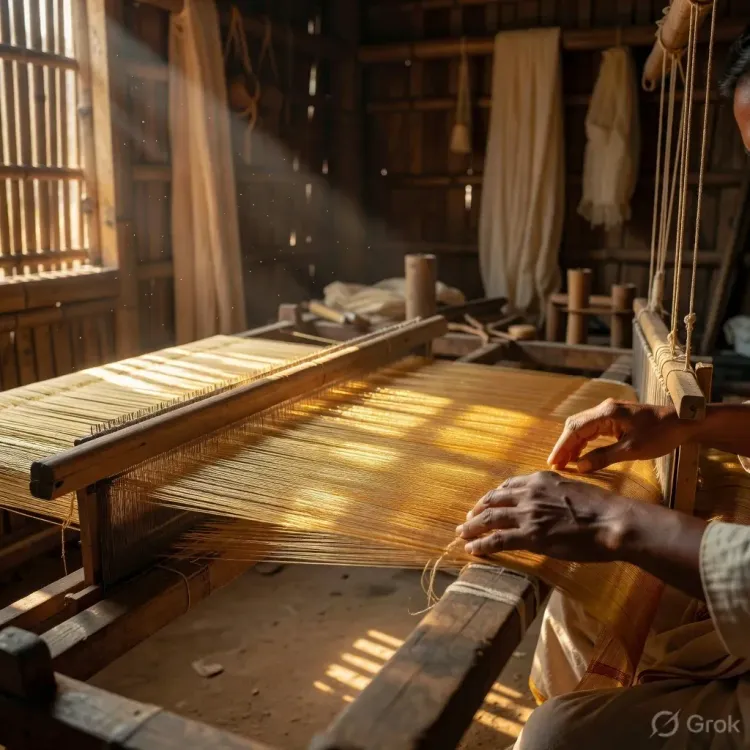
The Sant Kabir Award is India's premier government recognition for outstanding contributions to handloom — conferred by the Ministry of Textiles to honour states, clusters, and weavers who have kept traditional textile crafts alive and commercially viable. For Assam, a state whose weaving identity runs deep — from the golden threads of Muga silk to the warm weaves of Eri — this is not a ceremonial pat on the back. It is a national validation of a living, breathing artisan economy.
The award places Assam in a select tier alongside Odisha, known for its vibrant Sambalpuri and Ikat traditions, and Uttar Pradesh, home to one of India's largest handloom workforces. Three states. One award cycle. A signal that India's handloom map stretches from the Gangetic plains to the Brahmaputra valley.
Assam's handloom heritage on the national stage
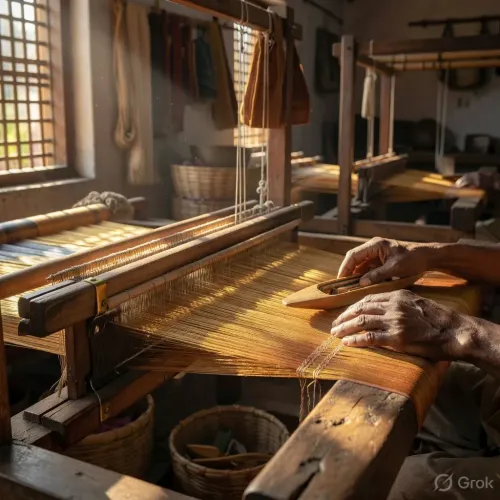
Assam's handloom sector is among the most distinctive in the country. Muga silk — produced exclusively in Assam and known for its natural golden sheen — holds a Geographical Indication tag, making it a globally protected textile. Eri silk, woven by communities across the state, is prized for its peace-silk credentials. Together, these traditions sustain tens of thousands of rural weavers, the majority of them women.
The Sant Kabir Award recognition aligns with the central government's broader push to sustain artisan economies through periodic state-level honours — creating visibility, attracting cluster development funds, and opening doors to national marketing platforms. Whether this win translates into fresh financial incentives or expanded market linkages for Assam's weaver communities is the next question worth watching.
Three states, one shared distinction — and for Assam's weavers, a reminder that the loom is not just heritage. It is leverage.
Point of View
Central recognition of this stature strengthens the case for larger cluster-development allocations and GI-backed export promotion. The fact that only three states were honoured signals a selective, merit-based process, which gives the award real policy weight. Watch whether the Himanta Biswa Sarma government leverages this moment to accelerate Muga silk's global market penetration — a goal that has been on Assam's textile agenda for years.
NationPress
22 Sept 2026
Frequently Asked Questions
What is the Sant Kabir Award for handloom?
The Sant Kabir Award is India's highest government honour for handloom excellence, conferred by the Ministry of Textiles to recognise outstanding contributions by states, weaver clusters, and individual artisans in preserving and promoting traditional textile crafts.
Which states won the Sant Kabir Award in 2026?
Three states secured the Sant Kabir Award in 2026: Assam, Odisha, and Uttar Pradesh, as announced by the Chief Minister's Office of Assam on 8 August 2026.
Why is Assam famous for handloom?
Assam is renowned for Muga silk — a GI-tagged golden silk produced exclusively in the state — and Eri silk, a peace-silk variety. These traditions sustain a large rural weaver economy, predominantly employing women across the Brahmaputra valley.
What is Muga silk and why is it special?
Muga silk is a variety of wild silk produced only in Assam, prized for its natural golden-yellow sheen and durability. It holds a Geographical Indication tag, meaning no other region can market silk under that name, giving it strong intellectual property protection globally.
What benefits come with the Sant Kabir Award for states?
While specific 2026 scheme benefits are yet to be announced, the Sant Kabir Award historically raises the profile of winning states for cluster development funding, national handloom marketing platforms, and policy attention from the Ministry of Textiles.