Dr. Jitendra Singh Launches IISF 2026 Curtain Raiser in Delhi
Synopsis
Union Minister Dr. Jitendra Singh launched the curtain raiser for IISF 2026 in New Delhi on November 18, unveiling the website and brochure for the 12th edition of the festival to be held in Pune from December 19–22 under the theme 'India's Science, World's Future', featuring Nobel laureate Sir Tim Hunt and ISS-linked biotechnology experiments.
Key Takeaways
IISF 2026 will be held in Pune from December 19 to 22, 2026 — the 12th consecutive annual edition of the festival since its 2015 launch.
The festival theme is 'India's Science, World's Future' ( Bharat ka Vigyan, Vishwa ka Bhavishya ), linked to PM Modi's Vishwa Bandhu Bharat vision.
Department of Biotechnology (DBT) research kits carried to the International Space Station by astronaut Shubhanshu Shukla are cited as proof of the theme in action.
Sir Tim Hunt , 2001 Nobel Laureate in Physiology or Medicine , will deliver a special lecture at the festival.
Programme highlights include immersive exhibits on gene editing, antibodies, insulin production, and next-generation energy , plus a walk-through 3D cell model.
Dedicated tracks for youth, women, startups, and entrepreneurs include B2B meetings, hackathons, and science safaris.
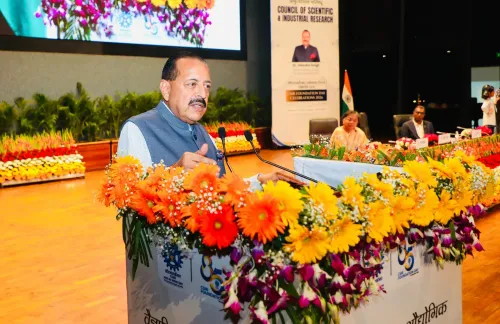
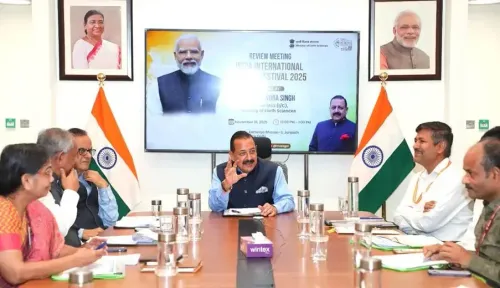
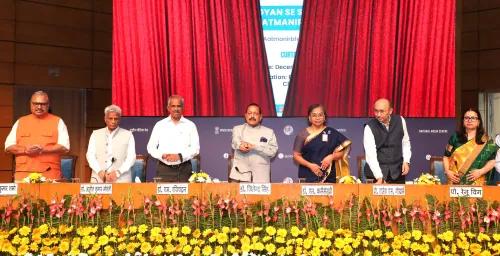
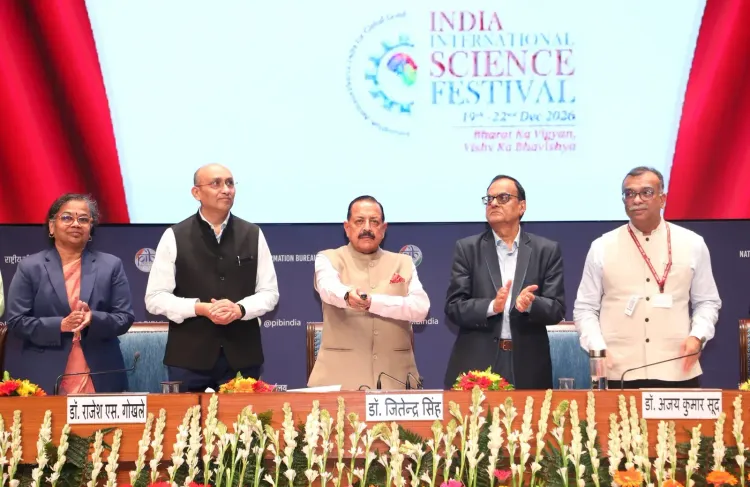
India's largest public science carnival is coming to Pune — and the countdown has officially begun. Union Science and Technology Minister Dr. Jitendra Singh on Wednesday, November 18, 2026, launched the curtain raiser for the 12th edition of the India International Science Festival (IISF 2026) at the National Media Centre, New Delhi, unveiling both the official festival website and its brochure.
Pune, December 19–22: What the 12th IISF Will Look Like
The festival is scheduled to run from December 19 to 22 in Pune under the theme 'India's Science, World's Future' (Bharat ka Vigyan, Vishwa ka Bhavishya). Dr. Singh framed the theme explicitly around Prime Minister Narendra Modi's concept of Vishwa Bandhu Bharat — the idea that India's scientific advances must serve all of humanity, not just domestic priorities. The minister was emphatic that this is no longer aspirational language: 'The theme has already begun to be translated into action rather than remaining a slogan,' he said.
The centrepiece example he cited: indigenous research kits developed by the Department of Biotechnology (DBT) and carried to the International Space Station (ISS) by Indian astronaut Shubhanshu Shukla, whose experimental outcomes, the minister noted, stand to benefit the global scientific community. The specific results of those experiments are still being awaited.
From Gene Editing to a Walk-Through 3D Cell
What sets IISF 2026 apart from a standard academic conference is the deliberate effort to make frontier science viscerally accessible. The programme promises immersive exhibits spanning gene editing, antibody research, insulin production, and next-generation energy sources — all packaged alongside what the minister described as a 'larger-than-life walk-through 3D cell.' The intent is clear: bring lab-level complexity to a lay audience without dumbing it down.
On the academic end, the festival will feature a special lecture by Sir Tim Hunt, the 2001 Nobel Laureate in Physiology or Medicine. That is a significant draw. Beyond the lecture hall, the programme carves out dedicated tracks for children, youth, women, startups, and entrepreneurs, with B2B meetings, hackathons, and science safaris built to convert curiosity into career direction and ideas into enterprises.
IISF's Eleven-Year Arc and the Viksit Bharat 2047 Alignment
The festival has been held annually since its inaugural edition in 2015, steadily broadening its mandate from public science education toward industry linkage and innovation pipeline-building. The 12th edition lands at a pointed moment: India's Viksit Bharat 2047 roadmap — articulated in 2022–23 — explicitly positions science and technology as the backbone of the country's development trajectory over the next two decades.
Dr. Singh's statement that 'Indian science will increasingly shape the global scientific ecosystem' as the country moves toward 'a frontline global position' is a direct signal of that ambition. The arc from a domestic science outreach event to a festival with Nobel laureates, ISS-linked experiments, and international industry connections reflects how the government has deliberately repositioned IISF as a diplomatic and innovation instrument — not just a classroom exercise.
All eyes now turn to Pune in December: how many nations participate, how the DBT's space-kit results are communicated to a public audience, and whether the startup and entrepreneurship tracks produce the tangible enterprise outcomes the minister is promising.
Point of View
The government is consciously elevating what began as a domestic public-outreach event into a vehicle for projecting India's scientific credibility internationally. The explicit Viksit Bharat 2047 framing also reveals how science policy events are increasingly being used as narrative infrastructure — building a continuous public story arc toward 2047 rather than functioning as standalone announcements. The startup and entrepreneurship tracks are the festival's most commercially consequential element to watch, as they represent an attempt to close the persistent gap between India's research output and its innovation-to-enterprise conversion rate. Whether IISF 2026 delivers measurable enterprise outcomes — not just footfalls — will be the real test of this repositioning.
NationPress
18 Nov 2026
Frequently Asked Questions
Where and when is IISF 2026 being held?
IISF 2026 will be held in Pune from December 19 to 22, 2026 . It is the 12th edition of the India International Science Festival, launched annually since 2015.
What is the theme of IISF 2026?
The theme is 'India's Science, World's Future' (in Hindi: Bharat ka Vigyan, Vishwa ka Bhavishya ), reflecting PM Modi's vision of Vishwa Bandhu Bharat — positioning Indian science in service of global human welfare.
Who is Sir Tim Hunt and why is he at IISF 2026?
Sir Tim Hunt is a British biochemist who won the Nobel Prize in Physiology or Medicine in 2001 . He is scheduled to deliver a special lecture at IISF 2026 in Pune.
What is the connection between IISF 2026 and India's space programme?
The Department of Biotechnology (DBT) developed indigenous research kits that were carried to the International Space Station (ISS) by Indian astronaut Shubhanshu Shukla . Dr. Jitendra Singh cited this as a concrete example of the festival's theme — Indian science benefiting the entire world.
What activities are planned for youth and startups at IISF 2026?
IISF 2026 includes dedicated tracks for children, youth, women, startups, and entrepreneurs featuring B2B meetings, hackathons, and science safaris aimed at helping young minds discover aptitudes and turn ideas into enterprises.