Pakistan lawyers jailed 10 years under anti-terror law in 'weaponisation' of justice
Synopsis
A Pakistani anti-terrorism court has handed prominent human rights lawyer Imaan Zainab Mazari-Hazir and her husband Hadi Ali Chattha 10-year prison sentences for what legal experts call a minor public order incident — invoking terror laws against two lawyers who removed barricades during a cricket tour. With Amnesty International and 22 global groups condemning the verdict, and a senior judge resigning over 'prevailing circumstances' the same week, Pakistan's judiciary is under its most intense international scrutiny in years.
Key Takeaways
Imaan Zainab Mazari-Hazir and Hadi Ali Chattha were each sentenced to 10 years in prison under Pakistan's Anti-Terrorism Act (ATA), 1997 .
The charges relate to allegedly removing security barricades at Zero Point, Islamabad during the England cricket team's visit.
Both were also sentenced to three years under the Pakistan Penal Code and fined PKR 1 lakh each.
Amnesty International and 22 other international civil society organisations condemned the verdict on 6 November , citing fair trial violations.
The trial was conducted inside Adiala Prison, Rawalpindi ; the couple was reportedly kept in a cage-like structure throughout proceedings.
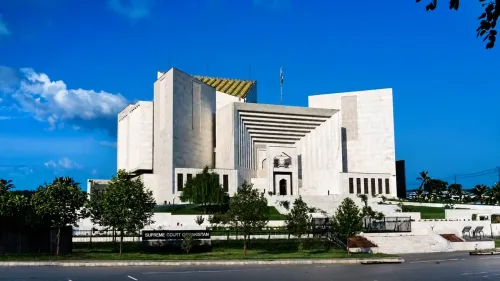
Justice Mohsin Akhtar Kayani resigned citing 'prevailing circumstances' the day before the sentencing, deepening concerns about judicial independence.
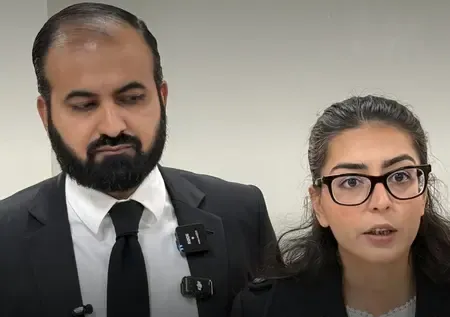
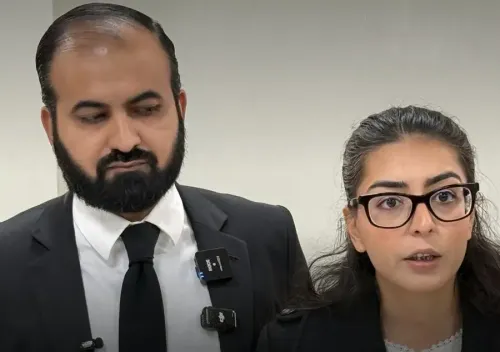
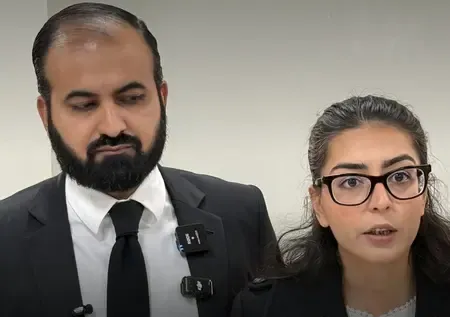
Human rights lawyer Imaan Zainab Mazari-Hazir and her husband Hadi Ali Chattha have been sentenced to 10 years in prison by a Pakistani anti-terrorism court, in a ruling that observers say represents a sharp escalation in the deliberate misuse of the country's legal machinery. The case has reignited urgent concerns about judicial independence and the proportionality of justice in Pakistan.
What the Conviction Involves
The couple were convicted under Pakistan's Anti-Terrorism Act (ATA), 1997, for allegedly removing security barricades and obstructing police at Zero Point, Islamabad, during the England cricket team's visit to the city. Each was also fined PKR 1 lakh and sentenced to an additional three years under the Pakistan Penal Code.
Legal experts have noted that the alleged actions — moving barricades and impeding officers — are typically treated as minor public order infractions. Critics argue that invoking terrorism legislation for such conduct effectively equates civil disobedience with violent extremism, a framing they describe as legally disproportionate and politically motivated.
Amnesty International and Global Condemnation
On 6 November, Amnesty International, alongside 22 other international civil society organisations, issued a joint statement strongly condemning the sentencing. 'We, the undersigned international civil society organisations, strongly condemn the recent sentencing of prominent Pakistani human rights lawyers Imaan Zainab Mazari-Hazir and Hadi Ali Chattha to 10 years' imprisonment under anti-terrorism legislation and three years' imprisonment under the Pakistan Penal Code,' the statement read.
The organisations added: 'The convictions mark a significant escalation in the extensive misuse of the criminal justice system against the two lawyers and raise serious concerns about the anti-terrorism legislation used to criminally punish and intimidate lawyers undertaking permissible human rights work.'
Trial Conditions and Fair Trial Concerns
The trial was held inside Adiala Prison, Rawalpindi — a setting that rights groups say itself undermined due process. According to the joint civil society statement, Mazari-Hazir and Chattha were reportedly kept in a cage-like structure throughout the proceedings, which organisations argue prevented effective communication with their legal counsel and the court, failing internationally recognised fair trial standards.
Judicial Crisis: A Resignation That Deepened the Concern
The sentence came just a day after the resignation of Justice Mohsin Akhtar Kayani, who cited 'prevailing circumstances' as making it impossible to continue in his role. Observers note that a high-ranking judge departing under such conditions signals profound institutional strain. According to reports, when judges resign citing internal pressure, the judiciary's capacity to serve as an independent check on executive power is severely undermined — and in this case, the timing has amplified fears about systemic interference.
Broader Pattern and What Comes Next
This is not an isolated incident. Critics say the use of anti-terrorism statutes against civil society actors, journalists, and opposition-aligned lawyers has become an increasingly routine tool of state control in Pakistan. This case, involving a prominent human rights advocate and her spouse, reportedly marks one of the most high-profile deployments of the ATA against lawyers engaged in what international bodies consider legitimate rights-based work.
With global civil society pressure mounting and questions over the judiciary's independence deepening, the Pakistani government faces growing international scrutiny over whether its legal institutions can deliver impartial justice.
Point of View
The message is not about public order: it is about the cost of dissent. The simultaneous resignation of a sitting judge citing unspecified 'prevailing circumstances' compounds the alarm — it suggests institutional pressure that the judiciary itself can no longer absorb quietly. What mainstream coverage sometimes misses is that the cumulative effect of such prosecutions — even without convictions that survive appeal — is a chilling of advocacy work across Pakistan's entire human rights ecosystem.
NationPress
18 Nov 2026
Frequently Asked Questions
Why were Imaan Zainab Mazari-Hazir and Hadi Ali Chattha sentenced in Pakistan?
They were convicted by a Pakistani anti-terrorism court for allegedly removing security barricades and obstructing police at Zero Point, Islamabad, during the England cricket team's visit. Each received a 10-year sentence under the Anti-Terrorism Act (ATA), 1997, plus three years under the Pakistan Penal Code and a PKR 1 lakh fine.
Why do legal experts and rights groups say the charges are disproportionate?
Legal experts note that removing barricades and impeding officers are ordinarily classified as minor public order offences — not acts of terrorism. Critics, including Amnesty International, argue that applying anti-terror legislation to such conduct equates civil disobedience with violent extremism, undermining the proportionality principle central to fair justice.
What was the response of international organisations to the conviction?
Amnesty International and 22 other international civil society organisations jointly condemned the sentencing on 6 November, calling it a significant escalation in the misuse of Pakistan's criminal justice system. The groups also raised concerns that the trial, held inside Adiala Prison, failed to meet fair trial standards.
What were the concerns about the trial's fairness?
The trial took place inside Adiala Prison in Rawalpindi, an atypical venue. According to civil society groups, Mazari-Hazir and Chattha were reportedly held in a cage-like structure throughout proceedings, which they say prevented the accused from communicating effectively with their legal counsel — a potential violation of internationally recognised fair trial norms.
How does Justice Mohsin Akhtar Kayani's resignation connect to this case?
Justice Mohsin Akhtar Kayani resigned the day before the sentencing was reported, citing 'prevailing circumstances' that made it impossible to continue. Observers say this timing, combined with the conviction of prominent rights lawyers, reflects a deepening crisis in Pakistan's judiciary and its ability to function independently of executive pressure.