Pakistan lawyers jailed 10 years: Rights groups call it 'state vengeance'
Synopsis
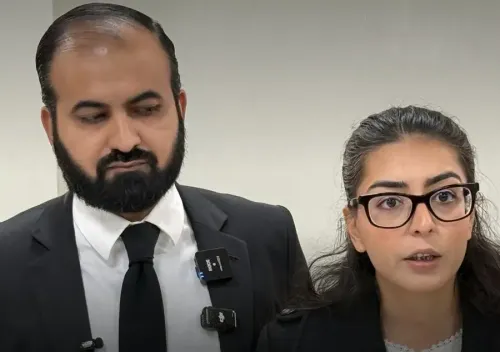
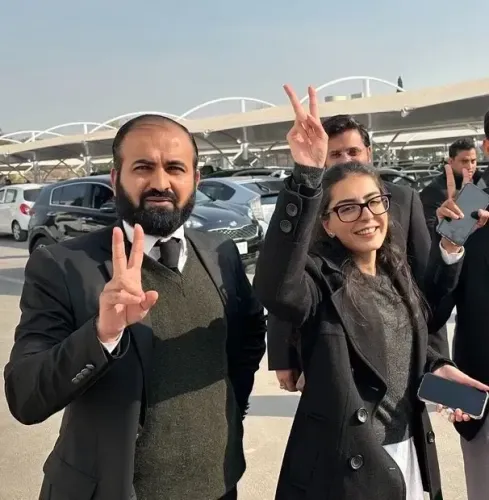
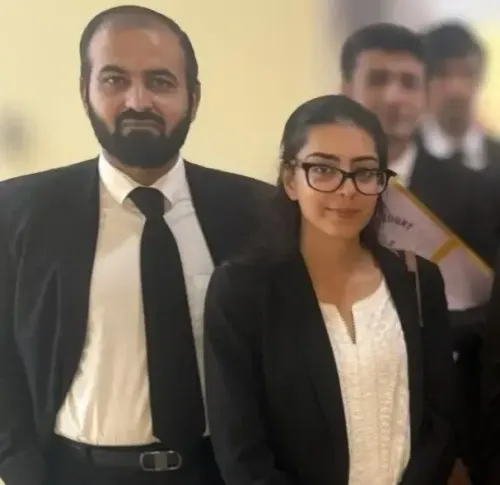
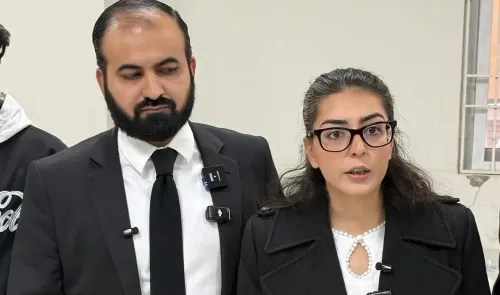
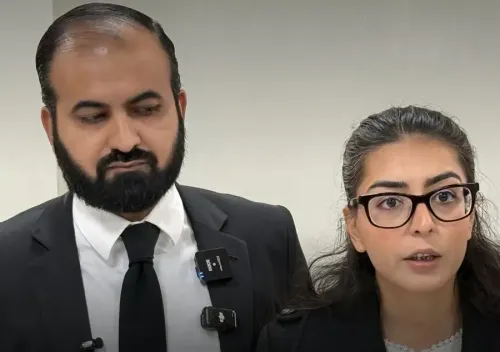
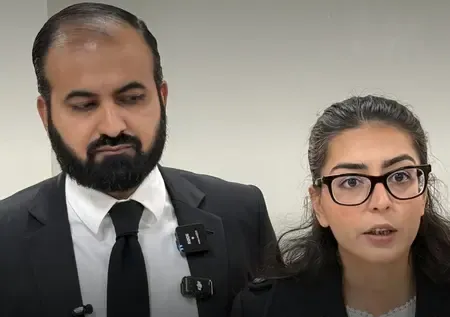
A Pakistani anti-terrorism court has sentenced two prominent human rights lawyers — Imaan Zainab Mazari-Hazir and her husband Hadi Ali Chattha — to 10 years each under the Anti-Terrorism Act, over an alleged security breach during a cricket team's visit. Human Rights Watch and Baloch rights groups are calling it a brazen act of state vengeance against voices that dared to challenge Pakistan's establishment.
Key Takeaways
A Pakistani anti-terrorism court sentenced lawyers Imaan Zainab Mazari-Hazir and Hadi Ali Chattha to 10 years in prison each under the Anti-Terrorism Act (ATA), 1997 .
The couple was also fined Rs 1 lakh each ; the case relates to an alleged security breach during an international cricket team's visit to Pakistan in October 2024 .
Human Rights Watch (HRW) called the sentences 'outrageous' and demanded the convictions be quashed immediately.
The Baloch National Movement (BNM) described the verdict as 'state vengeance rather than justice,' noting the lawyers' work supporting Baloch activists and families of the disappeared.
The Baloch Women Forum (BWF) condemned the use of anti-terrorism laws against human rights defenders as 'a deeply alarming abuse of the legal system.' Rights groups are urging foreign governments to formally press Islamabad for the couple's release.
International human rights organisations and activists on Saturday, 31 October sharply condemned the 10-year prison sentences handed down to Pakistani human rights lawyers Imaan Zainab Mazari-Hazir and her husband Hadi Ali Chattha, describing the verdict as an act of political retribution rather than legitimate justice. The convictions, delivered by a Pakistani anti-terrorism court, have drawn urgent calls from global advocacy groups demanding the couple's immediate release.
The Conviction and the Case
A Pakistani anti-terrorism court on Thursday sentenced Imaan Mazari-Hazir and Hadi Ali Chattha to 10 years in prison each and imposed a fine of Rs 1 lakh each under Pakistan's Anti-Terrorism Act (ATA), 1997. The case was registered at Islamabad's Aabpara Police Station over allegations that the couple threatened national security by interfering in state affairs during an international cricket team's visit to Pakistan in October 2024, according to Pakistani media reports. Critics argue the charges are a pretext to silence vocal human rights defenders.
Human Rights Watch Calls for Immediate Release
US-based advocacy group Human Rights Watch (HRW) called on Pakistani authorities to immediately quash the convictions, release the couple, and cease criminal proceedings against human rights advocates. Patricia Gossman, senior associate Asia director at HRW, said: 'Prosecuting two human rights lawyers for terrorism sends a chilling message to everyone who speaks up for fundamental rights in Pakistan. The authorities should quash the outrageous 10-year sentences handed down to Imaan Mazari-Hazir and Hadi Ali Chattha.' Gossman further warned that 'punishing lawyers and human rights activists for defending rights leaves those they represent without protection,' and urged concerned governments to press Pakistan to end its crackdown on human rights advocacy.
Baloch Groups: 'State Vengeance, Not Justice'
The Baloch National Movement (BNM) raised particular alarm, stating that the verdict demonstrates that those who speak out against Pakistan's repression — especially advocates for the rights of people in Balochistan — are subjected to 'state vengeance rather than granted justice.' The BNM noted that both lawyers had 'stood alongside Baloch political activists, victims of enforced disappearances and their suffering families, providing them with legal assistance and amplifying their voices,' and characterised the sentences as 'an attempt to silence all those who refuse to bow to state repression.'
The Baloch Women Forum (BWF) also issued a sharp rebuke, describing the verdict as 'a blatant assault on fundamental rights, freedom of expression and the very principles of justice.' The BWF stated: 'The use of anti-terrorism laws to punish dissent and target human rights defenders is a deeply alarming abuse of the legal system that must not be tolerated.' It added that 'a system that imprisons those demanding justice while silencing dissent cannot claim to uphold the rule of law.'
Broader Pattern of Civil Society Crackdown
Rights groups characterise the case as part of a wider and escalating crackdown on civil society in Pakistan. Imaan Mazari-Hazir is a prominent voice on enforced disappearances and Baloch rights — causes that have repeatedly put her at odds with Pakistani state institutions. Notably, the application of the Anti-Terrorism Act to what critics describe as lawful advocacy work represents a significant expansion of how security legislation is being deployed against dissent. This is not the first time Pakistani authorities have faced international censure for using anti-terror statutes against lawyers and activists, but the length of the sentence — 10 years — marks a stark escalation.
What Happens Next
Rights organisations are urging foreign governments and international bodies to formally press Islamabad for the couple's release. Whether diplomatic pressure translates into any reversal of the conviction remains to be seen, given Pakistan's track record on such cases. The legal options available to Imaan Mazari-Hazir and Hadi Ali Chattha — including appeals to higher courts — are likely to be the immediate focus of their supporters and the broader legal community in Pakistan.
Point of View
Which has historically been absent. Pakistan's civil society is watching whether the global outcry translates into any real pressure, or whether, as in past cases, the noise fades and the sentences stand. The Balochistan dimension adds another layer — these were not just any lawyers, but ones who amplified the voices of enforced disappearance victims, a subject Pakistani authorities have long sought to suppress.
NationPress
31 Oct 2026
Frequently Asked Questions
Why were Imaan Mazari-Hazir and Hadi Ali Chattha sentenced to 10 years in prison?
A Pakistani anti-terrorism court convicted the couple under the Anti-Terrorism Act (ATA), 1997, over allegations that they threatened national security by interfering in state affairs during an international cricket team's visit to Pakistan in October 2024. Human rights groups strongly dispute the charges, calling them a pretext to silence vocal human rights defenders.
What has Human Rights Watch said about the Pakistan lawyers' conviction?
Human Rights Watch (HRW) called the 10-year sentences 'outrageous' and demanded that Pakistani authorities immediately quash the convictions and release Imaan Mazari-Hazir and Hadi Ali Chattha. HRW's senior associate Asia director Patricia Gossman warned that prosecuting lawyers for terrorism 'sends a chilling message to everyone who speaks up for fundamental rights in Pakistan.'
What is the Baloch National Movement's position on the verdict?
The Baloch National Movement (BNM) said the verdict proves that those who speak out against Pakistan's repression — particularly advocates for Baloch rights — face 'state vengeance rather than justice.' The BNM highlighted the couple's work supporting Baloch activists and families of enforced disappearance victims.
What role did Imaan Mazari-Hazir play in human rights advocacy?
Imaan Mazari-Hazir is a prominent Pakistani human rights lawyer known for her advocacy on enforced disappearances and the rights of people in Balochistan. She and her husband Hadi Ali Chattha provided legal assistance to Baloch political activists and families of the disappeared, and publicly challenged state excesses.
What can be done to secure the release of the convicted lawyers?
Human rights organisations are urging foreign governments and international bodies to formally press Islamabad for the couple's immediate release. Legal avenues including appeals to higher courts in Pakistan remain available, though rights groups say sustained international diplomatic pressure will be critical to any outcome.