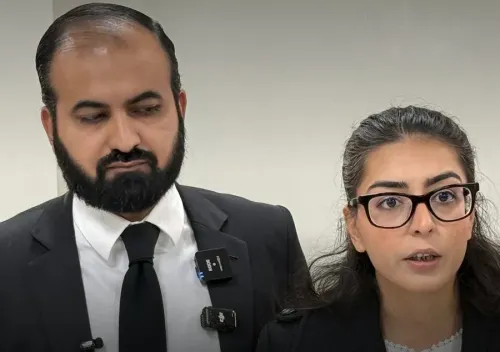
Imaan Mazari, husband move Pakistan SC against anti-terror trial
Synopsis
Pakistani human rights lawyer Imaan Mazari and her husband have taken their fight to the Supreme Court, arguing that a hastily revived terrorism case — complete with a two-year-old hidden FIR and a jail-based trial — is a direct attempt to keep them locked up after the top court had already suspended their 17-year social media sentences.
Key Takeaways
Imaan Mazari and husband Hadi Ali Chattha filed petitions in the Pakistani Supreme Court on 26 October 2025 .
The petitions challenge the IHC's 19 October order refusing to stay their trial before an anti-terrorism court.
The couple was indicted on 7 October over alleged disruption of a foreign cricket team's security route.
They allege the case is designed to circumvent the Supreme Court's order suspending their 17-year sentences in a social media post case.
Their lawyer alleged the FIR was hidden for two years and that a terrorism charge was added to convert bailable offences into non-bailable ones.
Justice Raja Inaam Ameen Minhas said the court would examine the matter; a verdict date is yet to be fixed.
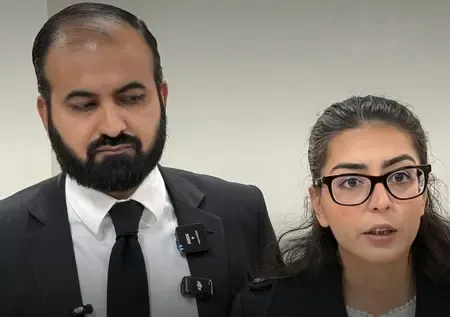
Jailed Pakistani human rights lawyer Imaan Mazari and her husband Hadi Ali Chattha on Monday, 26 October 2025, moved the Pakistani Supreme Court challenging the Islamabad High Court's (IHC) refusal to stay their trial before an anti-terrorism court. The couple alleged that the proceedings were designed to block their release, according to local media reports.
The Petitions Filed
According to leading Pakistani daily Dawn, Mazari and Chattha filed separate but near-identical petitions through senior counsel Faisal Siddiqui. The petitions challenge the IHC's 19 October order in a case linked to the alleged disruption of the security route of a foreign cricket team and incitement to public unrest. The couple, accused of removing barriers from the route, were indicted on 7 October.
The petitions alleged that the trial amounted to persecution aimed at undermining the Supreme Court's earlier order suspending the couple's 17-year sentences in a controversial social media post case. They further contended that the present case had 'suddenly resurfaced' to keep them behind bars through what they described as a frivolous prosecution.
Allegations of Procedural Violations
The couple also accused the trial court of acting with 'unprecedented haste', recording the testimony of six prosecution witnesses on 10 October and 14 October, and approving the prosecution's request to shift proceedings to Adiala jail. Mazari's petition stated that the IHC had 'erroneously refused to exercise its discretion to grant ad interim relief to stay the criminal trial, despite multiple factual and legal reasons warranting such relief and repeated requests.'
The petitions further argued that recording evidence in the couple's absence violated the Code of Criminal Procedure and their right to a fair trial, emphasising that their walkout — and that of their lawyers — was a protest, not a waiver of their right to be present.
IHC Hearing on Jail Trial
Separately, a division bench of the IHC heard the couple's plea against their trial being conducted inside Adiala jail and against the appointment of a state counsel. Their lawyer, Riasat Ali Azad, told the bench that the accused were being produced before what he termed a 'jail court', where access was restricted and journalists and members of the public were barred entry.
Azad alleged that when he sought a single adjournment, a state counsel was appointed and prosecution witnesses were cross-examined in his absence. He also contended that the First Information Report (FIR) in the case had been withheld for two years, and that the couple was arrested under it immediately after securing bail from the Supreme Court. He argued that although the original charges were bailable, a terrorism-related charge was subsequently added.
Court's Response and What Comes Next
Azad urged the court to restrain the trial court from announcing a final verdict until the petition was decided. Justice Raja Inaam Ameen Minhas, noting that the accused could also be acquitted, said the court would examine the matter. The Supreme Court is yet to formally admit the petitions, and the next hearing date is expected to be set shortly. The case is being closely watched by Pakistani civil society and press freedom advocates as a test of judicial independence.
Point of View
Bailable charges quietly upgraded to terrorism offences, and witnesses examined inside a restricted jail facility — tracks a template critics say has been used against other government opponents. The Supreme Court's willingness to admit and expedite these petitions will signal whether it intends to enforce the spirit of its own earlier order suspending the 17-year sentences, or whether procedural attrition will simply substitute for the sentence the court already stayed. Civil society is watching closely, and so is the international press freedom community.
NationPress
26 Oct 2026
Frequently Asked Questions
Why have Imaan Mazari and Hadi Ali Chattha moved the Pakistani Supreme Court?
The couple moved the Supreme Court on 26 October 2025 to challenge the Islamabad High Court's refusal to stay their trial before an anti-terrorism court. They allege the proceedings are designed to keep them in custody by circumventing the Supreme Court's earlier order that had suspended their 17-year sentences in a social media post case.
What is the case against Imaan Mazari and her husband?
They are accused of removing barriers from the security route of a visiting foreign cricket team and inciting public unrest. They were indicted on 7 October 2025. Their lawyer contends that the original charges were bailable but a terrorism charge was subsequently added, and that the FIR had been withheld for two years before being used against them.
What are the key procedural concerns raised in the petitions?
The petitions allege that the trial court recorded the testimony of six prosecution witnesses while the accused were absent, that the trial was shifted to Adiala jail restricting public and media access, and that a state counsel was appointed and witnesses cross-examined when their lawyer sought a routine adjournment. The couple argues these steps violated the Code of Criminal Procedure and their fair trial rights.
What did the Islamabad High Court decide earlier?
On 19 October 2025, the IHC declined to grant an interim stay on the couple's anti-terrorism court trial. Mazari's petition argues the court 'erroneously refused to exercise its discretion' despite multiple factual and legal grounds for relief.
What happens next in the case?
The Pakistani Supreme Court is yet to formally admit the petitions. Justice Raja Inaam Ameen Minhas said the court would examine the matter after the couple's lawyer urged it to restrain the trial court from delivering a final verdict until the petitions are decided.