Pakistan journalists demand court act on jailed rights lawyers' appeal delay
Synopsis
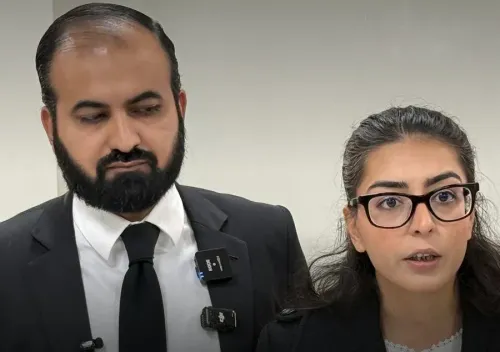
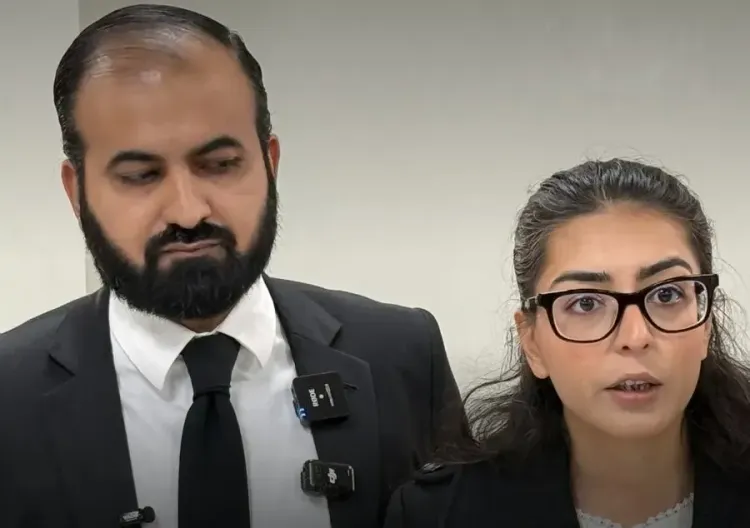
Nearly three dozen veteran Pakistani journalists and civil society leaders have demanded urgent judicial action as the Islamabad High Court continues to delay ruling on the sentence suspension pleas of imprisoned rights lawyers Imaan Zainab-Mazari and Hadi Ali Chattha — despite a Supreme Court order from May. Adding urgency: Imaan is reportedly battling a chest infection in Adiala Jail, with a critical X-ray still not conducted by authorities.
Key Takeaways
Imaan Zainab-Mazari and Hadi Ali Chattha were sentenced to a combined 17 years in prison and fined 36 million Pakistani rupees each over charges linked to social media posts.
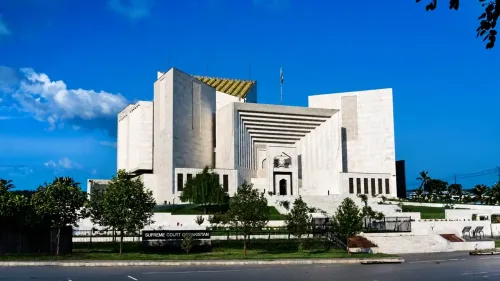
Pakistan's Supreme Court ordered the Islamabad High Court on 12 May to decide their suspension applications within two weeks — a deadline that has passed without action.
Nearly 30 veteran journalists and civil society members have issued a joint statement demanding the court act before the next hearing on 17 September .
The coalition warned the delay violates Articles 4, 9, and 10-A of Pakistan's Constitution, covering liberty, due process, and fair trial rights.
Imaan is reportedly battling a chest infection at Adiala Jail, Rawalpindi , with the HRC-Pakistan flagging the absence of a chest X-ray and inadequate medical facilities.
The HRC-Pakistan has called on authorities to ensure immediate medical care and proper isolation for women prisoners with infectious diseases.
Veteran journalists and civil society members in Pakistan have voiced alarm over the prolonged delay by the Islamabad High Court in deciding applications filed by imprisoned human rights lawyers Imaan Zainab-Mazari and her husband Hadi Ali Chattha, seeking suspension of their sentences. The concern was reported on Tuesday, 15 September 2026, even as the couple's next hearing is scheduled for 17 September.
The Court's Repeated Inaction
Pakistan's Supreme Court had on 12 May directed the Islamabad High Court to decide the suspension applications within two weeks. That deadline has long elapsed without a ruling, prompting a joint statement from a broad coalition of civil society voices. The signatories include prominent journalists and rights advocates such as Hussain Naqi, Farhatullah Babar, Zahid Hussain, Munizae Jahangir, Mazhar Abbas, and Iqbal Khattak, among nearly three dozen others.
The group warned that the court's inaction undermines constitutional protections enshrined in Articles 4, 9, and 10-A of the Pakistan Constitution, which cover liberty, due process, and the right to a fair trial. They expressed particular concern about the chilling effect that prolonged pre-appeal incarceration could have on the legal fraternity and human rights defenders more broadly.
The Case Against Imaan and Hadi
Imaan Zainab-Mazari and Hadi Ali Chattha were convicted by a sessions court in Islamabad earlier this year and sentenced to a combined 17 years in prison. Each was also fined 36 million Pakistani rupees. The charges, according to reports, are linked to social media posts — a framing that critics argue represents a pattern of using digital-speech laws to silence dissent.
This comes amid a wider global conversation about the criminalisation of online expression, with Pakistan's treatment of activists and journalists drawing repeated scrutiny from international rights bodies.
Imaan's Deteriorating Health in Adiala Jail
The urgency of the civil society statement is compounded by serious health concerns. On 25 August, the Human Rights Council of Pakistan (HRC-Pakistan) expressed grave concern over the deteriorating health of Imaan Zainab-Mazari, who is detained at Adiala Jail in Rawalpindi, describing the prison's medical facilities as 'alarming.'
According to the family, Imaan had been battling a chest infection, with a blood test reportedly revealing a high white blood cell count indicating active infection. Despite the clinical need, jail authorities had not yet conducted a chest X-ray to rule out potentially serious conditions, including tuberculosis, the family said. The HRC-Pakistan demanded an immediate X-ray and comprehensive medical assessment, and called for her transfer to a hospital if required.
The rights body also flagged that women in Adiala Jail diagnosed with infectious diseases are not isolated from other inmates or children — a situation it described as compounding the health risk. 'Imprisonment does not strip a person of their right to health,' the HRC-Pakistan said in its statement, adding that 'the protection of the life, health, and dignity of every person in custody is the direct responsibility of the state.'
Demands Going Into the September 17 Hearing
With the next hearing set for 17 September, the coalition of journalists and civil society members has formally requested the Supreme Court to ensure that the suspension applications are heard and decided without further postponement. Beyond the individual case, they called on authorities to guarantee all women prisoners access to specialist medical care, dental services, essential medicines, and diagnostic facilities.
The case has drawn comparisons to other instances in Pakistan where civil and legal activists have faced protracted judicial delays, reinforcing concerns that the courts' pace of justice may itself become an instrument of punishment. Observers will be watching closely whether the 17 September hearing produces a substantive ruling or another adjournment.
Point of View
It raises the question of whether the suspension mechanism exists in practice or only on paper. That the accused are human rights lawyers convicted over social media posts sharpens the concern: the delay itself may be functioning as punishment. Civil society's intervention is necessary, but whether it moves the needle depends on whether the September 17 hearing produces a ruling or another deferral.
NationPress
15 Sept 2026
Frequently Asked Questions
Why are Imaan Zainab-Mazari and Hadi Ali Chattha in jail?
They were convicted by a sessions court in Islamabad and sentenced to a combined 17 years in prison, with each fined 36 million Pakistani rupees. The charges against them are linked to social media posts, according to reports.
What did Pakistan's Supreme Court order regarding their case?
On 12 May, Pakistan's Supreme Court ordered the Islamabad High Court to decide the couple's sentence suspension applications within two weeks. That deadline has since passed without the High Court issuing a ruling.
Why are journalists and civil society concerned about the delay?
The coalition of nearly 30 veteran journalists and rights advocates argues that the prolonged delay violates Articles 4, 9, and 10-A of Pakistan's Constitution, which protect liberty, due process, and the right to a fair trial. They also warn that the delay has a chilling effect on lawyers and human rights defenders.
What is the health situation of Imaan Zainab-Mazari in jail?
Imaan is reportedly battling a chest infection at Adiala Jail in Rawalpindi, with blood tests indicating a high white blood cell count. Despite the clinical need, authorities had not conducted a chest X-ray as of late August, raising concerns about tuberculosis and other serious illnesses.
What happens next in the case?
The next court hearing is scheduled for 17 September 2026. Civil society groups and journalists have urged the Supreme Court to ensure that the suspension applications are decided at this hearing without further postponement.