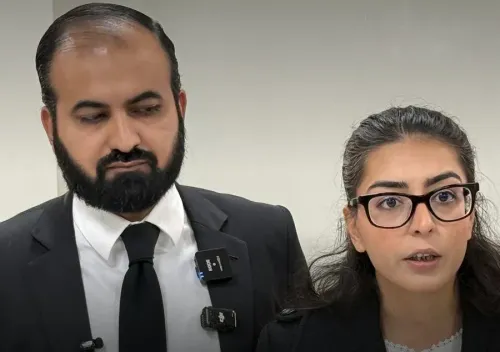
Pakistan Supreme Court bail defied: Lawyers re-arrested hours after release
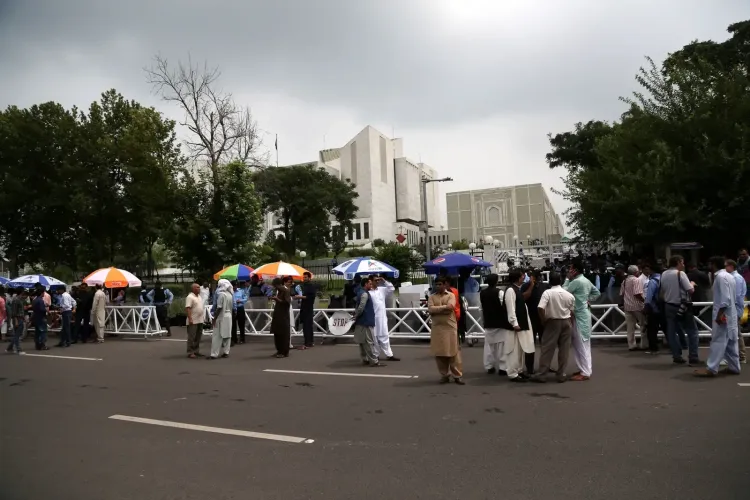
Synopsis
Hours after Pakistan's Supreme Court ordered their release, human rights lawyers Imaan Zainab Mazari-Hazir and Hadi Ali Chattha were re-arrested — a sequence that has shocked legal observers internationally and raised the most fundamental question about Pakistan's judiciary: can a Supreme Court order actually set someone free?
Key Takeaways
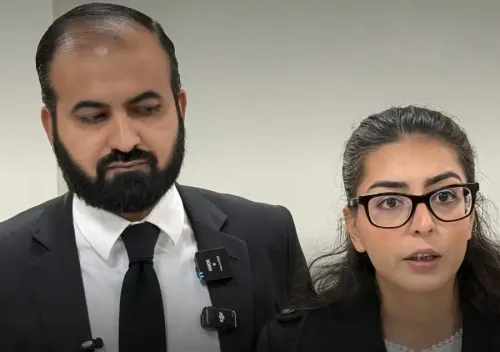
Imaan Zainab Mazari-Hazir and Hadi Ali Chattha were re-arrested on 17 September , hours after Pakistan's Supreme Court suspended their convictions and ordered their release from Adiala Jail .
The couple had been incarcerated for nearly eight months in a case linked to social media posts.
Legal observers accused Pakistani authorities of deliberately circumventing the apex court's order, calling it a direct assault on judicial authority.
Critics contend the prosecution was politically motivated, aimed at deterring advocacy on Baloch missing persons cases.
Journalist Hamid Mir warned that the re-arrest undermined the very meaning of bail as legal protection.
The European Times characterised the episode as evidence of Pakistan's accelerating descent into institutional lawlessness .
Pakistani human rights lawyers Imaan Zainab Mazari-Hazir and her husband Hadi Ali Chattha were re-arrested within hours of the Pakistan Supreme Court suspending their convictions and ordering their release on 17 September, in what legal observers are calling a direct repudiation of judicial authority. The couple had spent nearly eight months in Adiala Jail before the country's highest court intervened — only for that intervention to be rendered meaningless by the executive machinery.
What Happened on 17 September
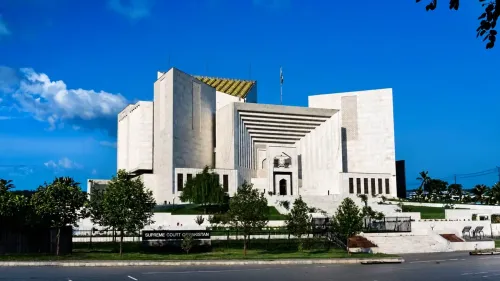
The Supreme Court of Pakistan suspended the couple's controversial convictions in a social media posts case and ordered their release from Adiala Jail. Before they could physically walk free, however, state authorities took them back into custody. The re-arrest, carried out despite an unambiguous order from the apex court, transformed what should have been a moment of relief into what the European Times described as 'a chilling spectacle of executive overreach.'
Legal observers immediately accused Pakistani authorities of deliberately circumventing the Supreme Court's directive. The episode, they argued, exposed a system in which judicial orders could secure legal relief on paper without delivering physical freedom in practice.
The Broader Governance Crisis
The incident has renewed concerns over the balance of power between Pakistan's judiciary and its executive apparatus. Critics argue the prosecution itself was politically motivated. One commentator, quoted by the European Times, was pointed in their assessment: 'Imaan and Hadi are standing by their principles. They can get out of jail any day. They just have to promise they won't take up Baloch missing persons and other human rights cases!'
A separate observer framed the implications in starker terms: 'A tyrannical state relishing its cruelty — Imaan and Hadi's continued incarceration sends a broader, disgraceful message. No court order makes a difference if the state wants you in jail. This should be frightening for any person that believes in the rule of law,' according to the European Times.
Prominent Voices Speak Out
Prominent Pakistani journalist Hamid Mir was quoted as saying: 'This should have been a moment of relief, but the reported re-arrest of Imaan and Hadi raises fresh concerns. Bail should mean meaningful legal protection — not another immediate loss of freedom.'
His remarks reflect a growing chorus of unease within Pakistan's own journalistic and legal community, where the case is being watched as a litmus test for the judiciary's functional independence.
What the Case Reveals About Pakistan's Institutions
The Brussels-based European Times report characterised the sequence of events as emblematic of Pakistan's accelerating descent into institutional lawlessness. The case raises a question that now hangs over the country's governance architecture: whether the rule of law retains any operational meaning when even a Supreme Court order cannot guarantee a citizen's physical freedom.
The re-arrest also puts the spotlight on the treatment of lawyers and activists who take up sensitive cases — particularly those involving Baloch missing persons — and whether such advocacy now carries a systemic legal risk regardless of judicial outcomes. With international attention mounting, the coming weeks will test whether Islamabad moves to comply with the apex court's original order or continues on its current course.
Point of View
And the answer emerging is deeply troubling. When a Supreme Court bail order can be nullified before the ink dries, the rule of law becomes a procedural façade rather than a functional guarantee. Critically, mainstream coverage risks framing this as a human-interest story about two individuals, when the structural question is far larger: Pakistan's pattern of 'lawfare' against rights defenders — particularly those raising Baloch disappearances — now comes with a new instrument, namely detention that survives even apex court orders. International pressure has historically had limited effect on Islamabad's internal security calculus, and without a mechanism to enforce compliance, the judiciary's moral authority risks being the only casualty that matters here.
NationPress
26 Sept 2026
Frequently Asked Questions
Who are Imaan Zainab Mazari-Hazir and Hadi Ali Chattha?
Imaan Zainab Mazari-Hazir is a prominent Pakistani human rights lawyer known for taking up Baloch missing persons and civil liberties cases. Hadi Ali Chattha is her husband. Both were convicted in a social media posts case and held in Adiala Jail for nearly eight months before the Supreme Court intervened.
Why were they re-arrested after the Supreme Court ordered their release?
Pakistani state authorities took the couple back into custody on 17 September, hours after the Supreme Court suspended their convictions and ordered their release. No official justification consistent with the court's order has been widely reported; legal observers and commentators characterise the re-arrest as deliberate executive defiance of a judicial directive.
What does this case reveal about Pakistan's rule of law?
The episode has exposed what critics describe as a system where judicial orders can secure legal relief on paper without guaranteeing physical freedom. It raises fundamental concerns about the balance of power between Pakistan's judiciary and its executive, and the ability of the courts to protect citizens against state detention.
Who is Hamid Mir and what did he say about the case?
Hamid Mir is a prominent Pakistani journalist. He was quoted as saying: 'This should have been a moment of relief, but the reported re-arrest of Imaan and Hadi raises fresh concerns. Bail should mean meaningful legal protection — not another immediate loss of freedom.'
What is the significance of the Baloch missing persons angle in this case?
Commentators have suggested that Imaan and Hadi's continued detention is linked to their advocacy on Baloch missing persons cases, a sensitive subject in Pakistan. One observer noted that the couple 'can get out of jail any day' if they promise not to take up such cases — indicating the prosecution may carry a political dimension beyond the stated social media charges.