Pakistan lawyers Imaan Mazari, Hadi Chattha get 10-year sentences in security case
Synopsis
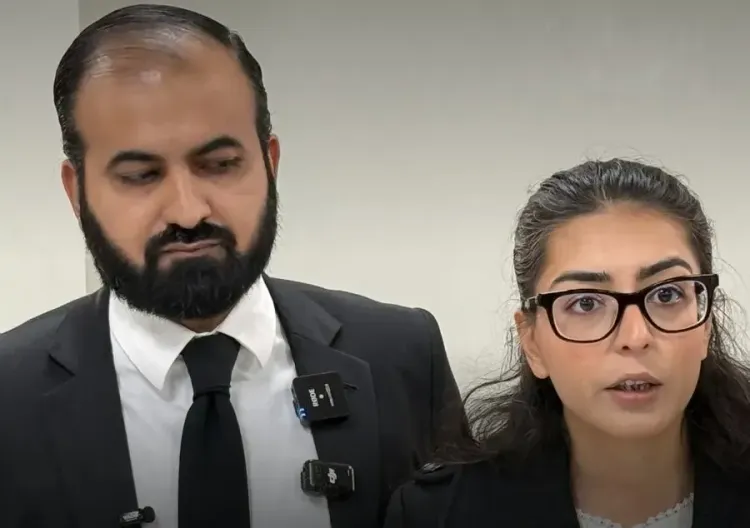
A Pakistani anti-terrorism court has handed 10-year sentences to prominent human rights lawyers Imaan Zainab Mazari-Hazir and Hadi Ali Chattha over a 2024 road-barricade incident during a cricket match — drawing fierce condemnation from the Baloch Yakjehti Committee, which says the verdict is proof that Pakistan's judiciary operates under military dominance and is being used to silence those who speak for the oppressed.
Key Takeaways
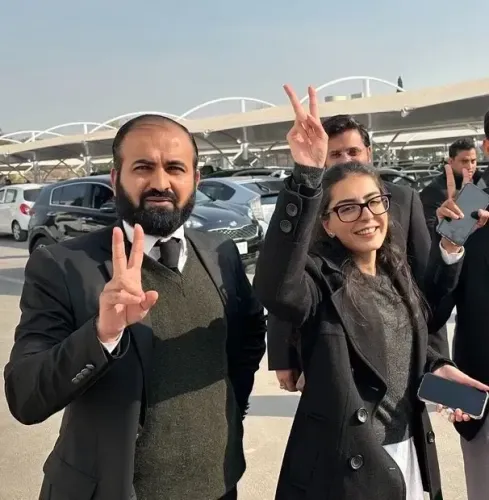
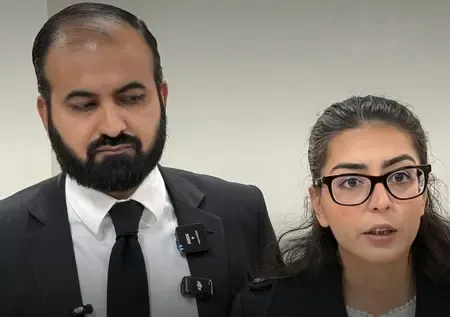
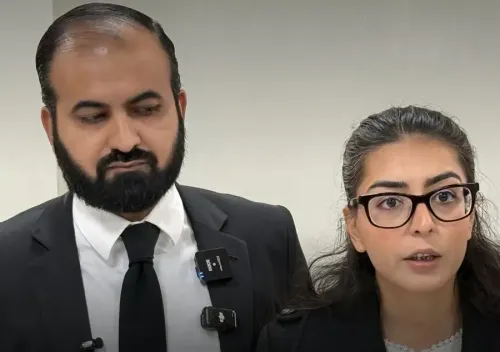
An anti-terrorism court in Islamabad sentenced human rights lawyers Imaan Zainab Mazari-Hazir and Hadi Ali Chattha to 10 years in prison each on Thursday, 30 October 2026 .
The case relates to the removal of road barricades during a 2024 cricket match in Islamabad, prosecuted under the Anti-Terrorism Act (ATA), 1997 .
Both were also fined PKR one lakh each ; all sentences run concurrently.
The Baloch Yakjehti Committee (BYC) condemned the verdict as 'a clear example of the helplessness of the judiciary in Pakistan' and called it an attempt to silence human rights defenders.
The BYC has called on international human rights organisations and lawyers' bodies to take notice and demand justice.
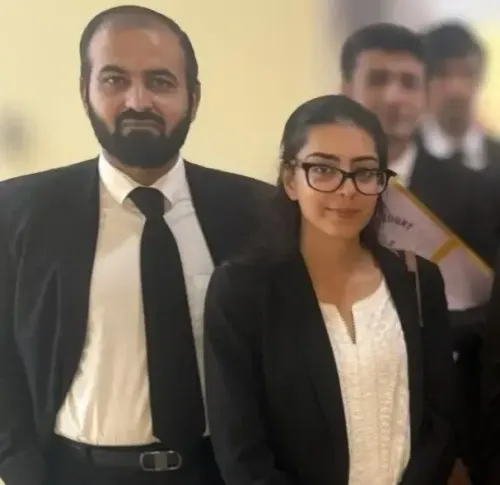
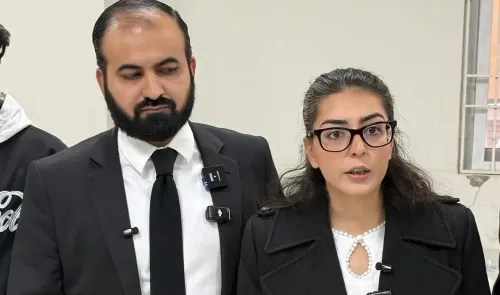
An anti-terrorism court in Islamabad on Thursday, 30 October 2026, sentenced human rights lawyers Imaan Zainab Mazari-Hazir and her husband Hadi Ali Chattha to 10 years in prison each in connection with a security breach case linked to the removal of road barricades during a cricket match in Islamabad in 2024. The verdict has drawn sharp international condemnation, with rights groups warning it signals a wider crackdown on civil society voices in Pakistan.
The Verdict and Its Details
The anti-terrorism court convicted the couple under the Anti-Terrorism Act (ATA), 1997, and additionally imposed a fine of Pakistani Rupees one lakh each. The court directed all sentences to run concurrently, meaning the effective prison term remains 10 years each. The case stemmed from an incident in 2024 in which barricades placed on an Islamabad road during a cricket match were reportedly removed — an act the prosecution framed as a security breach.
Critics argue that the use of anti-terrorism legislation for what amounts to a road obstruction dispute is a disproportionate application of the law, and raises questions about the independence of Pakistan's judiciary from military influence.
Rights Group Condemns the Sentences
The Baloch Yakjehti Committee (BYC), a prominent civil rights organisation, issued a statement on X on Friday describing the sentences as 'a clear example of the helplessness of the judiciary in Pakistan, the absence of justice, and a system based on military dominance.' The BYC characterised the punishment as 'an attempt to silence the struggle for the defence of human rights and justice.'
In its statement, the BYC noted that both Imaan Zainab Mazari-Hazir and Hadi Ali Chattha were not merely lawyers but long-standing human rights activists who had consistently raised their voices against what the committee described as atrocities committed against the Baloch, Pashtun, and other oppressed communities. The couple had also expressed solidarity with families affected by enforced disappearances — a deeply contested issue in Pakistan's western provinces.
The BYC posted on X: 'The sentencing of Iman Zainab Mazari and Hadi Ali Chatha poses a critical question to all individuals struggling for justice, freedom of expression, and human rights: Does the freedom to raise one's voice for the oppressed truly exist in this country?'
Background: Who Are Imaan Mazari and Hadi Chattha
Imaan Zainab Mazari-Hazir is the daughter of Shireen Mazari, a former federal minister and prominent opposition figure in Pakistan. She has been a vocal critic of enforced disappearances and military influence over civilian institutions. Hadi Ali Chattha is similarly known for taking up cases involving victims of alleged state oppression. Their profile as high-visibility activists makes this sentencing particularly significant — and the BYC argues it sends 'an alarming message to all those voices that speak out for the oppressed.'
Wider Context: Pakistan's Civil Society Under Pressure
This case is not an isolated incident. Analysts and rights groups have documented a pattern of legal pressure on activists, journalists, and lawyers in Pakistan, particularly those aligned with movements critical of the military establishment. This is the latest in a series of high-profile prosecutions that critics allege are driven by political motive rather than genuine security concern. Notably, the BYC itself has faced repeated state pressure over its activism in Balochistan.
The BYC has urged human rights organisations, lawyers' representative bodies, civil society, and international human rights institutions to take notice of the case and demand justice for the couple.
What Comes Next
The couple's legal team is expected to challenge the verdict in higher courts. International human rights bodies, including those affiliated with the United Nations, are likely to face calls to formally respond to the sentencing. How Pakistan's legal establishment and international partners react in the coming days will be closely watched by rights advocates across South Asia.
Point of View
And this case fits that template almost exactly. What makes it more significant than previous cases is the symbolic weight: Imaan Mazari-Hazir is a nationally recognised figure, and her sentencing sends an unmistakable signal to every lawyer or activist considering speaking up on enforced disappearances or Baloch rights. The international community's response — or silence — will itself be a data point on how much external pressure Pakistan's civil-military establishment is willing to absorb.
NationPress
30 Oct 2026
Frequently Asked Questions
Who are Imaan Zainab Mazari-Hazir and Hadi Ali Chattha?
Imaan Zainab Mazari-Hazir is a prominent Pakistani human rights lawyer and activist, and the daughter of former minister Shireen Mazari. Hadi Ali Chattha is her husband and a fellow human rights lawyer. Both are known for advocating on behalf of victims of alleged enforced disappearances and state oppression, particularly in Balochistan and Khyber Pakhtunkhwa.
What were they convicted for?
They were convicted under Pakistan's Anti-Terrorism Act (ATA), 1997, in connection with the removal of road barricades placed during a cricket match in Islamabad in 2024. An anti-terrorism court sentenced both to 10 years in prison each and fined them PKR one lakh each.
Why has the verdict drawn condemnation?
Critics argue that applying anti-terrorism law to a road-barricade incident is disproportionate and politically motivated. The Baloch Yakjehti Committee described the verdict as evidence of 'the helplessness of the judiciary in Pakistan' and said it reflects a system operating under military dominance rather than independent legal principles.
What is the Baloch Yakjehti Committee?
The Baloch Yakjehti Committee (BYC) is a civil rights organisation that advocates for the rights of the Baloch people and other marginalised communities in Pakistan. It has been vocal about enforced disappearances and alleged state abuses in Balochistan, and has itself faced repeated pressure from Pakistani authorities.
What happens next in the case?
The couple's legal team is expected to appeal the verdict in higher courts. The BYC has urged international human rights bodies, lawyers' associations, and civil society organisations to intervene and call for justice. How international partners and UN-affiliated institutions respond is expected to be closely watched.