Pakistan court jails human rights lawyers Imaan Mazari, Hadi Chattha for 10 years

Synopsis
A Pakistani anti-terrorism court has sentenced prominent human rights lawyer Imaan Zainab Mazari-Hazir and her husband Hadi Ali Chattha to 10 years each — under a law meant for terrorism — over a 'security breach' during a cricket tour. With 15 international rights bodies already demanding their release, and a Supreme Court bail order that was effectively ignored, the verdict is being widely condemned as a textbook case of state persecution of legal defenders.
Key Takeaways
Imaan Zainab Mazari-Hazir and Hadi Ali Chattha were each sentenced to 10 years in prison by a Pakistani anti-terrorism court on 29 October 2026 .
The charges relate to an alleged security breach during an international cricket team's visit to Pakistan in October 2024 , registered at Aabpara Police Station, Islamabad .
The severest sentence — 10 years and Rs 1 lakh fine each — was imposed under the Anti-Terrorism Act (ATA), 1997 ; all sentences run concurrently.
Defence counsel Aimal Mandokhail argued the verdict was premature while petitions remained before the Supreme Court and Islamabad High Court .
15 international civil society organisations , including FIDH and OMCT , had previously demanded the couple's immediate release and the dropping of all charges.
The couple described themselves as 'prisoners of conscience' targeted for defending street vendors, blasphemy accusees, and victims of enforced disappearances.
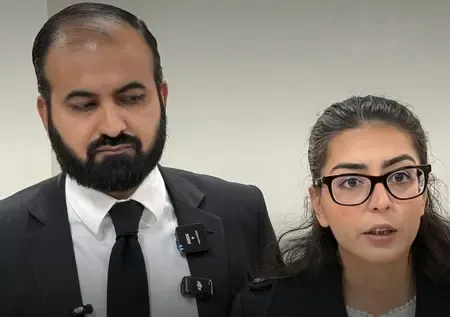
A Pakistani anti-terrorism court on Thursday, 29 October 2026, sentenced human rights lawyers Imaan Zainab Mazari-Hazir and her husband Hadi Ali Chattha to 10 years in prison each, in a security breach case registered at Islamabad's Aabpara Police Station. The case stems from allegations that the couple interfered in state affairs during an international cricket team's visit to Pakistan in October 2024, according to local media reports.
What the Court Ordered
The court handed down multiple concurrent sentences under different statutes. Under Section 353, the couple received two years' imprisonment each and a fine of Pakistani Rs 50,000 each; under Section 186, they received one year each and an additional Rs 50,000 fine each. The most severe penalty came under the Anti-Terrorism Act (ATA), 1997, which imposed 10 years' imprisonment and a fine of Rs 1 lakh on each of them. With all sentences directed to run concurrently, the effective imprisonment stands at 10 years each, according to Pakistani media outlet Geo News.
Defence Objections and Pending Petitions
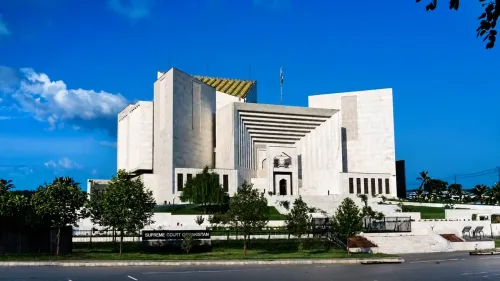
The couple's counsel, Aimal Mandokhail, had sought a deferment of the verdict, arguing that petitions were still pending before the Supreme Court and the Islamabad High Court. 'The decision should be postponed until the petitions pending before the Supreme Court and High Court are decided,' Geo News quoted Mandokhail as saying. He contended the court could not legally deliver its verdict while those applications remained under consideration.
Lawyers Say Case Is 'State Harassment'
In their separately recorded but near-identical statements, Imaan and Hadi rejected the charges outright, calling the security breach case 'nothing more than harassment' designed to punish them for their human rights advocacy. Pakistani daily Dawn quoted their joint assertion: 'The evidence produced during this trial is not against us, but in fact a charge sheet against (prosecution witnesses)/police officials and the state.' They described prosecution witnesses as 'part and parcel' of state machinery that had allegedly persecuted them for providing pro bono legal services to marginalised communities — including street vendors, those facing false blasphemy allegations, and victims of enforced disappearances. Imaan stated: 'I am a prisoner of conscience who has been at the receiving end of state persecution.'
International Outcry and Civil Society Pressure
The case has drawn sustained international criticism. Last month, 15 international civil society organisations — including the International Federation for Human Rights (FIDH) and the World Organisation Against Torture (OMCT) — voiced grave concern over the couple's continued detention since January, even after the Supreme Court had suspended their sentences and granted them bail. In a joint statement, the organisations called on Pakistani authorities to immediately release the couple and drop all charges linked to the 'legitimate exercise of freedom of expression, peaceful assembly, human rights advocacy, and the lawful performance of their professional duties as lawyers.' They also urged the government to 'disclose the factual and legal basis for their re-arrest and ensure rigorous judicial scrutiny of the arbitrary use of the Anti-Terrorism Act in the latest proceedings.'
Wider Context: Pakistan's Record on Rights Lawyers
This verdict comes amid mounting global concern about Pakistan's treatment of dissenting legal voices and human rights defenders. Critics argue the use of the ATA — a law designed for counter-terrorism purposes — against lawyers engaged in civil and constitutional advocacy represents a pattern of legal overreach. Notably, the couple had been detained since January despite a Supreme Court order granting them bail, a contradiction that human rights groups say illustrates the selective application of judicial protections. The case now enters an uncertain appellate phase, with higher court petitions still unresolved.
Frequently Asked Questions
Why were Imaan Zainab Mazari-Hazir and Hadi Ali Chattha sentenced in Pakistan?
They were convicted by an Islamabad anti-terrorism court in connection with a security breach case alleging that they interfered in state affairs during an international cricket team's visit to Pakistan in October 2024. The couple has maintained that the case is state-driven harassment targeting their human rights advocacy.
How long is the prison sentence, and under which law?
Each received an effective sentence of 10 years, with the most severe penalty — 10 years and a fine of Pakistani Rs 1 lakh — imposed under the Anti-Terrorism Act (ATA), 1997. Additional shorter sentences under Sections 353 and 186 run concurrently, so the total imprisonment is 10 years each.
What is the international community's response to this verdict?
Fifteen international civil society organisations, including the FIDH and OMCT, have called for the couple's immediate release and urged Pakistan to drop all charges linked to their human rights work. They also called for scrutiny of what they described as the arbitrary use of the Anti-Terrorism Act in this case.
Can the couple appeal, and are there pending cases in higher courts?
Yes. The couple's lawyer, Aimal Mandokhail, told the court that petitions were pending before both the Supreme Court and the Islamabad High Court, and had sought a deferment of the verdict on those grounds. The appellate process is now expected to proceed, though the couple was reportedly detained since January despite a Supreme Court bail order.
What kind of legal work did the couple do before their arrest?
Imaan and Hadi provided pro bono legal services to marginalised communities, including street vendors, individuals facing blasphemy allegations, and victims of enforced disappearances. They argue that this advocacy — not any genuine security threat — is the real reason behind the prosecution.