Sonowal: Indian Seafarers Safe After Persian Gulf Tanker Attack
Synopsis
Liberia-flagged crude tanker MT NAVIG8 MESSI was struck by a projectile near the Strait of Hormuz on November 18, 2026. All three Indian seafarers aboard are safe; one has been hospitalised for evaluation. Minister Sonowal says the ministry is monitoring the situation closely.
Key Takeaways
MT NAVIG8 MESSI , a Liberia-flagged crude oil tanker, was hit by a projectile in the Persian Gulf on November 18, 2026 .
All three Indian seafarers aboard, along with the full crew, are safe with no serious injuries reported.
One Indian officer has been shifted to a hospital for first-aid treatment and medical evaluation.
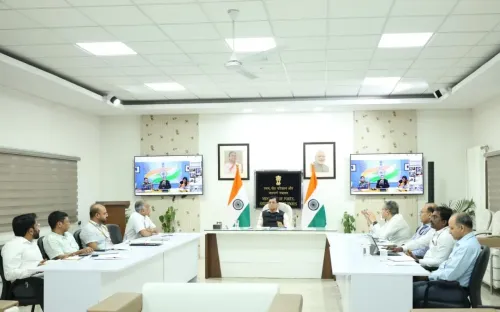
Union Minister Sarbananda Sonowal confirmed the Ministry of Ports, Shipping and Waterways is in direct contact with the ship management company.
The incident occurred near the Strait of Hormuz , a critical chokepoint for India's crude oil imports.
The ministry is coordinating on crew security, medical care, and ongoing monitoring of the situation.
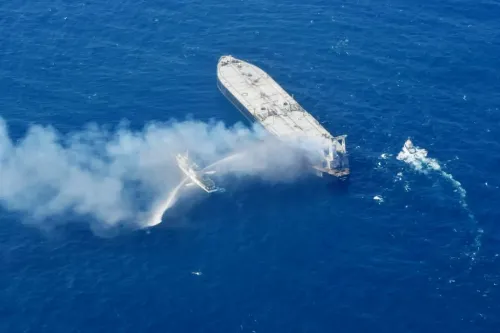
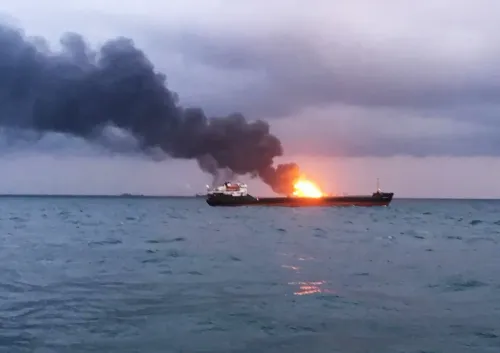
A crude oil tanker carrying three Indian seafarers was struck by a projectile in the Persian Gulf on Wednesday, November 18, 2026, as it approached one of the world's most strategically sensitive waterways — and Union Minister of Ports, Shipping and Waterways Sarbananda Sonowal confirmed that all crew members are safe.
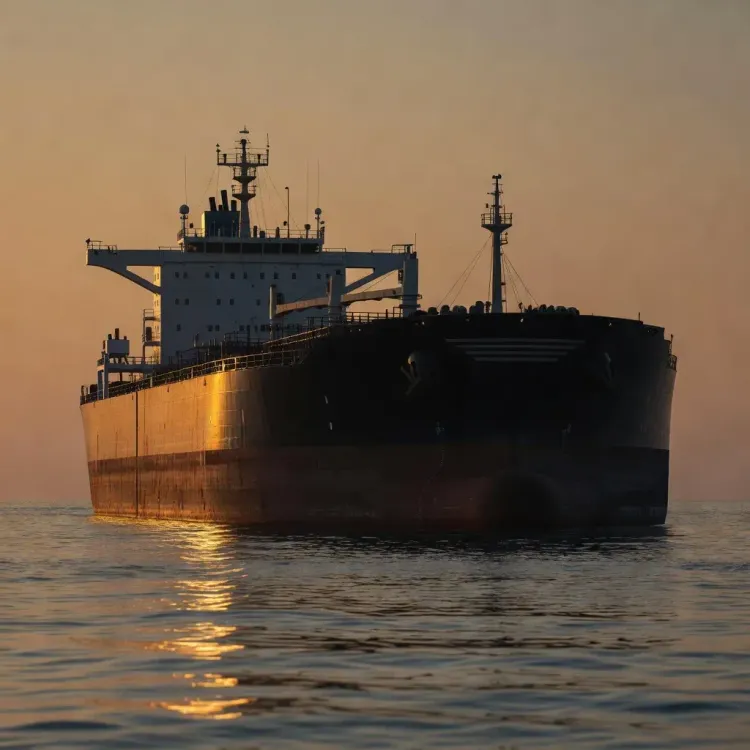
The vessel, MT NAVIG8 MESSI, a Liberia-flagged crude oil tanker, was targeted in the attack while nearing the Strait of Hormuz. All three Indian nationals aboard — along with the entire crew — have been accounted for, with no serious injuries reported. One Indian officer has been transferred to a hospital for first-aid treatment and medical evaluation.
What happened near the Strait of Hormuz
The Strait of Hormuz is the narrow chokepoint between Iran and Oman through which a significant share of the world's crude oil passes. It has been a recurring flashpoint: in 2019, multiple oil tankers were attacked in the nearby Gulf of Oman amid sharply elevated US-Iran tensions, triggering international naval deployments and placing Indian energy-security planners on high alert.
India imports a substantial portion of its crude oil via routes that pass through this exact corridor. Any sustained disruption here does not stay at sea — it moves directly into fuel prices, freight costs, and supply-chain calculations across the country.
Ministry's response and what it signals
Sonowal's ministry stated it is 'continuously monitoring the situation' and remains 'in close contact with the ship management company to ensure the ongoing security, medical care and wellbeing' of the seafarers. That direct, real-time engagement with vessel management reflects the standard protocol through which the Ministry of Ports, Shipping and Waterways coordinates with the Ministry of External Affairs during maritime security incidents involving Indian nationals abroad.
The MT NAVIG8 MESSI sails under a Liberian flag — a common flag-of-convenience registry — meaning India has no direct flag-state authority over the vessel. The ministry's leverage runs through diplomatic and corporate channels: consular pressure, coordination with the ship owner, and, where needed, naval assets operating in the Indian Ocean Region.
India's exposure in a volatile corridor
Thousands of Indian seafarers crew commercial vessels transiting the Persian Gulf at any given time, making this incident more than a single-ship emergency. The Indian Navy has significantly expanded its maritime domain awareness and escort operations in the broader region in recent years, partly in response to the sharp rise in attacks on commercial shipping that intensified from late 2023 onward.
The injured officer's hospitalisation will be closely watched: the speed and quality of medical access, and any subsequent decision on crew repatriation, will test the speed of India's consular machinery in the Gulf.
The tanker's cargo — crude oil — adds a layer of economic sensitivity to what is already a human story. If the vessel sustains structural damage, questions of cargo security and environmental risk will follow quickly. Right now, every eye from New Delhi to the ship management company is on one question: are those three Indians truly out of harm's way?
Point of View
Forcing India to sharpen its maritime security posture well beyond its traditional near-seas focus. For the Ministry of Ports, Shipping and Waterways, rapid public communication via social media — as Sonowal demonstrated here — has become a standard crisis-management tool, blending diplomatic signalling with direct reassurance to anxious families of crew members. The incident also underscores India's structural exposure: as one of the world's largest crude oil importers, any escalation in Hormuz-corridor tensions translates almost immediately into domestic energy-security risk. The speed of the Ministry of External Affairs' follow-up, and whether India issues formal advisories to India-crewed vessels in the region, will reveal how seriously the government reads this latest flare-up.
NationPress
18 Nov 2026
Frequently Asked Questions
What happened to MT NAVIG8 MESSI in the Persian Gulf?
The Liberia-flagged crude oil tanker MT NAVIG8 MESSI was targeted in a projectile attack on November 18, 2026, while approaching the Strait of Hormuz in the Persian Gulf. All crew members, including three Indian seafarers, are reported safe.
Are the Indian seafarers on MT NAVIG8 MESSI safe?
Yes. Union Minister Sarbananda Sonowal confirmed all three Indian nationals aboard are safe and accounted for, with no serious injuries. One Indian officer has been hospitalised for first-aid treatment and medical evaluation.
What is the Strait of Hormuz and why does it matter for India?
The Strait of Hormuz is a narrow waterway between Iran and Oman and is one of the world's most critical oil-transit chokepoints. India imports a large share of its crude oil through routes passing this corridor, making incidents there a direct energy-security concern.
What is India's government doing after the tanker attack?
The Ministry of Ports, Shipping and Waterways, led by Sarbananda Sonowal, is continuously monitoring the situation and coordinating with the ship management company. The ministry is focused on the security, medical care, and wellbeing of the Indian seafarers aboard.
Has this kind of attack happened near the Strait of Hormuz before?
Yes. In 2019, several oil tankers were attacked in the nearby Gulf of Oman during a period of heightened US-Iran tensions, prompting international naval deployments. Attacks on commercial shipping in the broader Persian Gulf region have been a recurring concern since then.