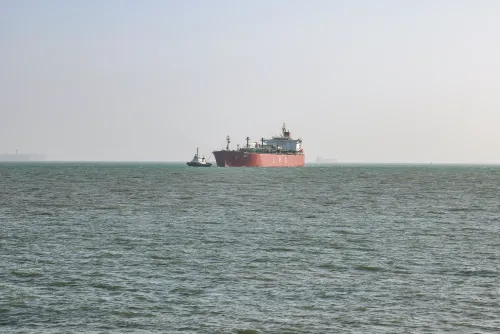
24 Indian seafarers safe after LPG tanker TARA GAS hit by missile in Strait of Hormuz
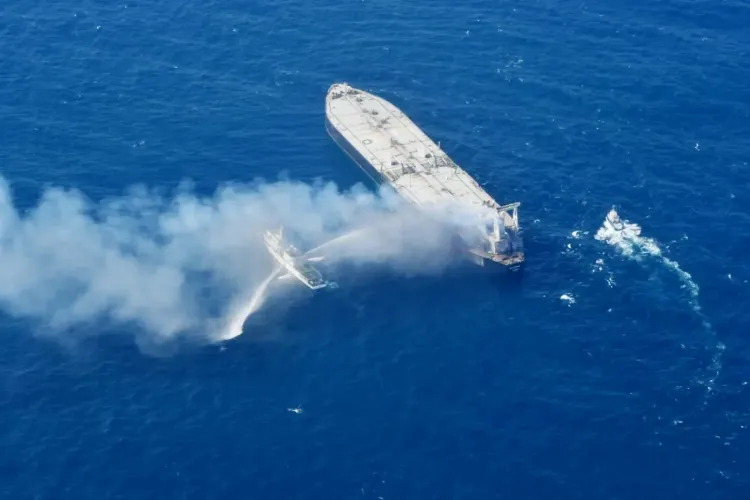
Synopsis
Two attacks on vessels carrying Indian seafarers in less than a week — first the VLCC MT FUJAIRAH ENERGY in the Persian Gulf on 10 November, now the LPG tanker TARA GAS in the Strait of Hormuz on 16 November. All 24 Indian nationals on TARA GAS are safe, but the rapid succession of incidents signals a dangerous escalation for one of the world's most vital — and most vulnerable — shipping corridors.
Key Takeaways
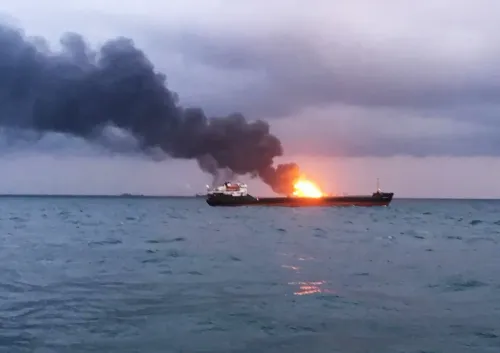
Panama-flagged LPG tanker TARA GAS was struck by a missile in the Strait of Hormuz on 16 November 2026 .
All 24 Indian seafarers and the entire 25-member crew are safe, with no injuries reported.
This is the second attack on a vessel carrying Indian crew in under a week — the VLCC MT FUJAIRAH ENERGY was hit in the Persian Gulf on 10 November , injuring one Indian national .
Minister Sarbananda Sonowal confirmed the TARA GAS incident via a post on X, saying Indian authorities are in contact with the ship management company.
The MEA has reiterated India's call for an end to West Asia hostilities, flagging the conflict's impact on global food, fuel, fertiliser, and financial flows.
Union Minister for Ports, Shipping and Waterways Sarbananda Sonowal on Tuesday, 17 November 2026, confirmed that all 24 Indian seafarers aboard the Panama-flagged LPG tanker TARA GAS were safe after the vessel was struck by a missile in the Strait of Hormuz on 16 November. The entire 25-member crew escaped without injury, according to Sonowal, who said Indian authorities were in close contact with the ship management company.
What Happened to TARA GAS
The Panama-flagged LPG tanker was targeted in a missile attack while transiting the strategically critical Strait of Hormuz on 16 November. The vessel was carrying 24 Indian nationals as part of its full crew of 25. Sonowal confirmed that none of the crew members sustained any injuries.
"On Nov 16, Panama-flagged LPG tanker TARA GAS, carrying 24 Indian seafarers, was targeted in a missile attack in the Strait of Hormuz. All 24 Indian nationals, along with the entire 25-member crew, are completely safe with no injuries. We are continuously monitoring the situation and remain in close contact with the ship management company to ensure the ongoing security and wellbeing of our seafarers," the Union Minister stated.
Second Attack on a Vessel Carrying Indian Crew in Days
This is the second such incident in under a week involving Indian seafarers in the region. On 10 November, the Liberia-flagged Very Large Crude Carrier (VLCC) MT FUJAIRAH ENERGY, which was carrying six Indian seafarers, was struck by a projectile while transiting the Persian Gulf on a voyage from Al Ruwais to Dubai. Four crew members, including one Indian national, sustained injuries in that attack. The injured Indian seafarer reportedly suffered minor injuries and was taken ashore for medical examination, while the remaining crew — including the other five Indian seafarers — were confirmed safe.
Notably, the two incidents within days of each other mark a sharp escalation in risks faced by commercial shipping in the broader West Asia corridor, a route critical to global energy flows.
India's Position on West Asia Conflict
Earlier this month, India reiterated its call for an immediate end to hostilities in West Asia. At a bi-weekly media briefing in New Delhi, Ministry of External Affairs (MEA) spokesperson Randhir Jaiswal said the ongoing conflict had adversely affected the movement of food, fuel, fertilisers, and financial flows worldwide. He said India continues to advocate dialogue and diplomacy among the parties to restore peace and stability in the region.
On the safety of Indian nationals, the MEA spokesperson reaffirmed that New Delhi remains committed to ensuring the security of the Indian diaspora and seafarers in West Asia and beyond.
Why This Matters for India
India is one of the world's largest suppliers of seafarers, with tens of thousands of Indian nationals serving on commercial vessels transiting the Persian Gulf and Strait of Hormuz at any given time. Repeated attacks on vessels in this corridor directly threaten both the livelihoods of Indian maritime workers and the country's energy supply lines, as a significant share of India's crude oil imports passes through these waters.
With attacks now targeting LPG tankers in the Strait of Hormuz and crude carriers in the Persian Gulf in the same week, the Indian government faces mounting pressure to strengthen diplomatic efforts and bolster consular support for seafarers in the region.
Point of View
Yet its public posture remains calibrated to avoid friction with regional powers. The MEA's call for 'dialogue and diplomacy' is necessary but insufficient when crew members are being injured and commercial ships targeted with missiles. New Delhi will need to move beyond confirmatory tweets and press briefings toward concrete bilateral pressure and enhanced maritime safety protocols if it is to protect its nationals and its energy supply lines.
NationPress
17 Nov 2026
Frequently Asked Questions
What happened to the LPG tanker TARA GAS in the Strait of Hormuz?
The Panama-flagged LPG tanker TARA GAS was struck by a missile while transiting the Strait of Hormuz on 16 November 2026. All 24 Indian seafarers on board, along with the full 25-member crew, escaped without injury, according to Union Minister Sarbananda Sonowal.
How many Indian seafarers were on board TARA GAS?
TARA GAS was carrying 24 Indian nationals as part of its 25-member crew. All of them are confirmed safe with no injuries reported.
Was this the first attack on a vessel carrying Indian seafarers in the region recently?
No. On 10 November 2026, the Liberia-flagged VLCC MT FUJAIRAH ENERGY was hit by a projectile in the Persian Gulf while transiting from Al Ruwais to Dubai. The vessel carried six Indian seafarers; one Indian national sustained minor injuries and was taken ashore for medical care.
What is India's official response to the attacks?
Union Minister Sarbananda Sonowal confirmed both incidents through posts on X and stated that Indian authorities are in continuous contact with the respective ship management companies. The Ministry of External Affairs has separately reiterated India's call for an end to West Asia hostilities, citing their impact on global food, fuel, fertiliser, and financial flows.
Why is the Strait of Hormuz significant for India?
The Strait of Hormuz is one of the world's most critical maritime chokepoints, through which a significant portion of India's crude oil imports transit. India also supplies a large share of the global seafaring workforce, making attacks in this corridor a direct threat to both national energy security and the safety of Indian maritime workers.