Sonowal: 3 Indian Seafarers Safe After Hormuz Tanker Attack

Synopsis
Union Minister Sarbananda Sonowal confirmed on November 11, 2026 that three Indian seafarers aboard the Saudi-flagged tanker NCC FAJR are safe after the vessel was involved in a possible attack while transiting the Strait of Hormuz. The ministry is monitoring the situation closely.
Key Takeaways
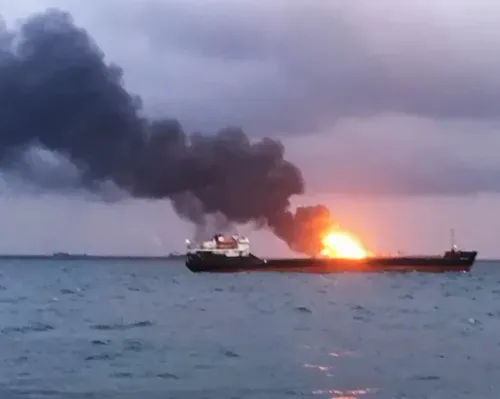
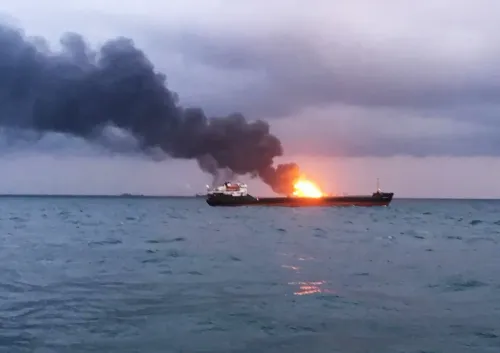
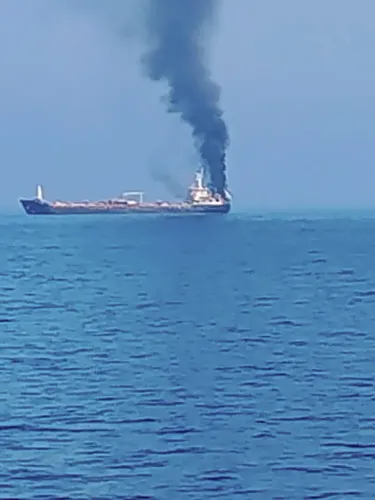
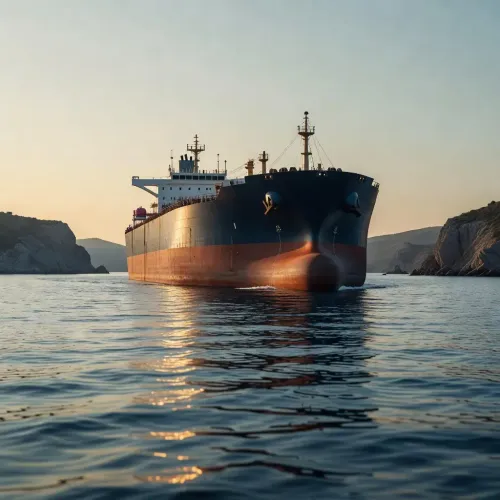
Saudi Arabia-flagged oil tanker NCC FAJR was involved in a 'possible attack' while transiting the Strait of Hormuz on November 11, 2026 .
All 3 Indian nationals aboard and the entire crew have been confirmed safe by Union Minister Sarbananda Sonowal .
India's Ministry of Ports, Shipping and Waterways is continuously monitoring the situation and in contact with the ship management company.
The Strait of Hormuz carries roughly one-fifth of global oil consumption and is a periodic flashpoint for maritime security incidents.
India is one of the world's largest suppliers of maritime labour, making crew safety in high-risk sea lanes a standing government priority.
Follow-up statements from the Ministry of External Affairs are expected as details of the incident are established.
A Saudi-flagged oil tanker was hit in one of the world's most watched waterways on Wednesday — and Union Ports and Shipping Minister Sarbananda Sonowal moved quickly to confirm that every Indian aboard got out safe. The tanker NCC FAJR, sailing under the Saudi Arabian flag, was involved in a 'possible attack' while transiting the Strait of Hormuz on November 11, 2026, with three Indian nationals among its crew.
What happened to NCC FAJR in the Strait of Hormuz
The minister's post confirmed the vessel was 'transiting the Strait of Hormuz' when the incident occurred. The language — 'possible attack' — signals that an investigation or assessment is still underway. Sonowal stated that all three Indian seafarers, along with the vessel's entire crew, are safe, and that his ministry is 'continuously monitoring the situation' while remaining 'in regular contact with the ship management company.'
The Strait of Hormuz is the narrow chokepoint between Iran and Oman through which roughly one-fifth of global oil consumption transits. Any incident there reverberates instantly through global energy markets and maritime security circles. The corridor has seen periodic flashpoints tied to regional geopolitical tensions — seizures, drone strikes, and naval confrontations have flared there in recent years.
India's seafarers in a high-stakes sea lane
India is one of the world's largest suppliers of maritime labour, with tens of thousands of Indian seafarers serving aboard foreign-flagged vessels at any given time. When those ships move through contested waters like the Strait of Hormuz, the responsibility for their safety sits with both the flag state and New Delhi's consular and ministerial machinery. In this case, Saudi Arabia is the flag state — a close partner with which India maintains significant energy and diplomatic ties.
Successive Indian governments have handled Gulf maritime incidents by coordinating directly with ship management companies and flag-state authorities, keeping communication lines open without seeking direct military engagement in the region. Sonowal's statement follows that established playbook: reassure, monitor, coordinate.
Ministry on standby as situation develops
The Ministry of Ports, Shipping and Waterways has not disclosed the nature or origin of the 'possible attack,' and no formal claim of responsibility has been mentioned. Watch for follow-up statements from the Ministry of External Affairs, which typically takes the lead on consular and diplomatic dimensions whenever Indian nationals are at risk on foreign vessels. Coordination with international maritime authorities may also follow if the incident is confirmed as a deliberate act.
For now, the three Indian seafarers are safe. But in a strait this consequential, the full story is rarely over when the first bulletin lands.
Point of View
Leaving New Delhi reliant on flag states and commercial ship managers as the first line of response. The 'possible attack' framing in the minister's own language is careful and deliberate, leaving room for diplomatic manoeuvre before any attribution is made. As Hormuz tensions remain structurally linked to the broader Iran-Gulf fault line, this incident will likely prompt renewed calls for stronger bilateral protocols with key flag states, particularly Gulf partners like Saudi Arabia.
NationPress
11 Nov 2026
Frequently Asked Questions
Are Indian seafarers on the NCC FAJR tanker safe?
Yes. Union Minister Sarbananda Sonowal confirmed on November 11, 2026 that all three Indian nationals aboard the NCC FAJR tanker are safe, along with the entire crew.
What happened to the NCC FAJR tanker in the Strait of Hormuz?
The Saudi Arabia-flagged oil tanker NCC FAJR was involved in a 'possible attack' while transiting the Strait of Hormuz on November 11, 2026. The exact nature and origin of the incident had not been officially confirmed at the time of the minister's statement.
What is the Strait of Hormuz and why is it important?
The Strait of Hormuz is a narrow waterway between Iran and Oman that serves as the primary route for roughly one-fifth of global oil consumption. It is one of the world's most strategically critical maritime chokepoints and has been the site of periodic security incidents.
What is India doing to protect its seafarers in the Strait of Hormuz?
India's Ministry of Ports, Shipping and Waterways is continuously monitoring the situation and is in regular contact with the ship management company responsible for NCC FAJR. The Ministry of External Affairs is also expected to coordinate on the consular and diplomatic dimensions of the incident.
Who is Sarbananda Sonowal and what is his role in this incident?
Sarbananda Sonowal is India's Union Minister of Ports, Shipping and Waterways and a senior BJP leader and former Chief Minister of Assam. As the minister responsible for Indian maritime affairs, he issued the official government update confirming the crew's safety and the ministry's ongoing monitoring of the NCC FAJR incident.