India-flagged Tankers Granted Passage by Iran Through Hormuz After Key Diplomatic Talks
Synopsis
In a pivotal move, Iran has permitted India-flagged tankers to transit through the crucial Strait of Hormuz following diplomatic discussions between EAM S. Jaishankar and Iranian Foreign Minister Abbas Araghchi. This decision underscores the importance of maintaining energy supply routes amidst rising regional tensions.
Key Takeaways
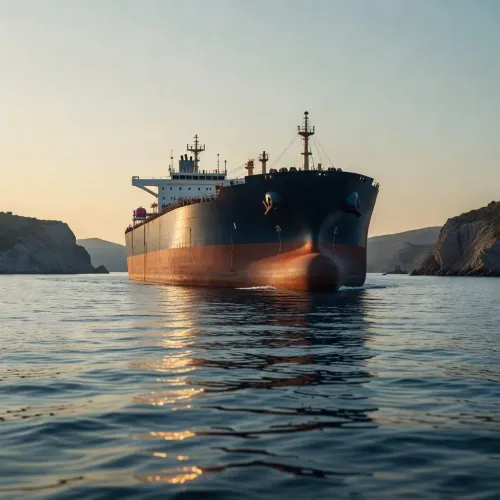
Iran permits India-flagged tankers to navigate through the Strait of Hormuz .
Discussions between EAM S.
Jaishankar and Abbas Araghchi emphasize maritime safety.
Successful passage of Indian tankers alleviates energy supply concerns.
Regional tensions continue, with recent attacks on vessels reported.
Over 28 Indian vessels remain in the sensitive waterway.
New Delhi/Tehran, March 12 (NationPress) In a significant development, Iran has granted permission for India-flagged tankers to navigate through the Strait of Hormuz. This decision follows discussions between External Affairs Minister (EAM) S. Jaishankar and his Iranian counterpart, Abbas Araghchi, aimed at maintaining the crucial maritime route for transporting crude oil and natural gas.
Sources close to the matter reveal that Indian vessels 'Pushpak' and 'Parimal' have been successfully traversing the Strait of Hormuz, while ships from the US, Europe, and Israel continue to encounter restrictions in this strategically vital passage.
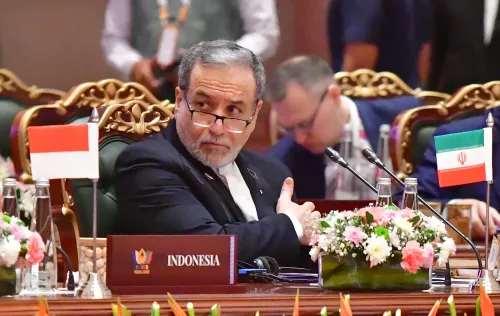
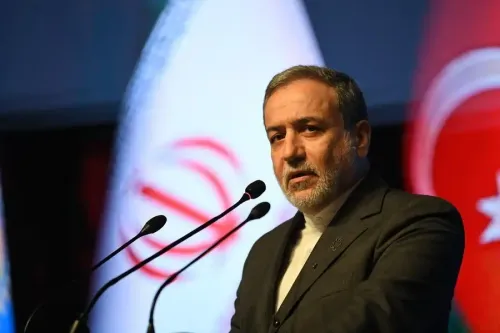
The discussions between EAM Jaishankar and Iranian Foreign Minister Abbas Araghchi on March 10 placed a strong emphasis on ensuring the safe passage of tankers through the Strait of Hormuz. The two leaders reviewed the changing landscape in West Asia, focusing on maritime movement in the Strait—a topic that has become increasingly important amid rising tensions in the region.
In another noteworthy incident, a Liberian-flagged tanker transporting Saudi Arabian crude oil, captained by an Indian national, has successfully crossed the Strait of Hormuz and docked at Mumbai port. This marks the first India-bound tanker to navigate this waterway since maritime traffic was severely impacted by recent attacks on Iran by the United States and Israel.
The tanker, named 'Shenlong Suezmax', loaded crude oil at the Saudi port of Ras Tanura on March 1 and set sail two days later. Maritime tracking data from Lloyd’s List Intelligence and TankerTrackers indicates that the vessel's last recorded position before entering Indian waters was within the Strait of Hormuz on March 8.
The successful transit of this tanker is anticipated to alleviate some concerns in India regarding potential interruptions in energy supplies. As Asia’s third-largest economy, India is heavily dependent on the Strait of Hormuz, with more than half of its crude oil and natural gas imports traversing this narrow maritime corridor.
Despite the successful passage of certain vessels, several Indian ships remain in or near the sensitive waterway. The Directorate General of Shipping reports that at least 28 Indian-flagged vessels have been operating in or around the Strait of Hormuz since hostilities escalated in the area.
Officials noted that eight Indian-flagged ships, which were positioned east of the Strait of Hormuz at the onset of the conflict, have since relocated to safer waters. A recent situation report from the Directorate General of Shipping reveals that over the past few days, seven vessels—including 'Desh Mahima', 'Desh Abhiman', 'Swarna Kamal', 'Vishva Prerna', 'Jag Viraat', 'Jag Lokesh', and 'LNGC Aseem'—have successfully moved out into the Arabian Sea, while another vessel, 'Jag Lakshya', has continued its journey towards Angola.
Meanwhile, regional tensions persist. On March 11, a Thai-flagged cargo vessel was reportedly attacked shortly after departing from the United Arab Emirates near the Strait of Hormuz, as confirmed by the Royal Thai Navy. The vessel, known as 'Mayuree Naree', was en route to Kandla Port in Gujarat when it was targeted while navigating through the Strait.
Authorities are actively monitoring the situation, as security concerns loom over one of the world's most vital maritime energy routes.
Point of View
With energy security remaining a top priority for nations reliant on this vital maritime passage.
NationPress
30 Sept 2026
Frequently Asked Questions
Why are India-flagged tankers important for energy supplies?
India-flagged tankers are crucial because they transport over half of India's crude oil and natural gas imports, making safe passage through the Strait of Hormuz essential for the country's energy security.
What prompted Iran to allow these tankers to pass?
The decision came after discussions between Indian External Affairs Minister S. Jaishankar and Iranian Foreign Minister Abbas Araghchi, emphasizing the need to keep vital maritime routes open amid rising tensions in the region.
What is the significance of the Strait of Hormuz?
The Strait of Hormuz is a strategically important waterway through which a significant portion of the world's oil supply is transported, making it a critical area for global energy security.
How many Indian-flagged vessels are currently operating in the region?
As reported, at least 28 Indian-flagged vessels have been operating in or near the Strait of Hormuz since the onset of hostilities in the region.
What recent incidents have occurred in the Strait of Hormuz?
Recently, a Thai-flagged cargo vessel was reportedly attacked while transiting the Strait, highlighting the ongoing security concerns in this vital maritime corridor.