CM Hemant Soren Hoists Flag at Shaheed Chowk on Independence Day
Synopsis
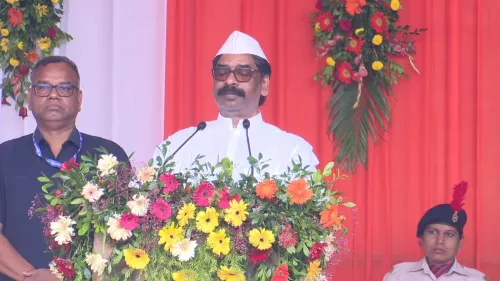
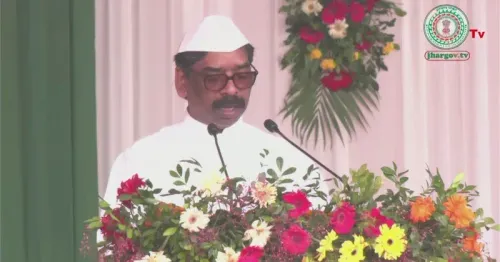
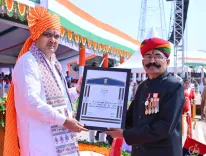
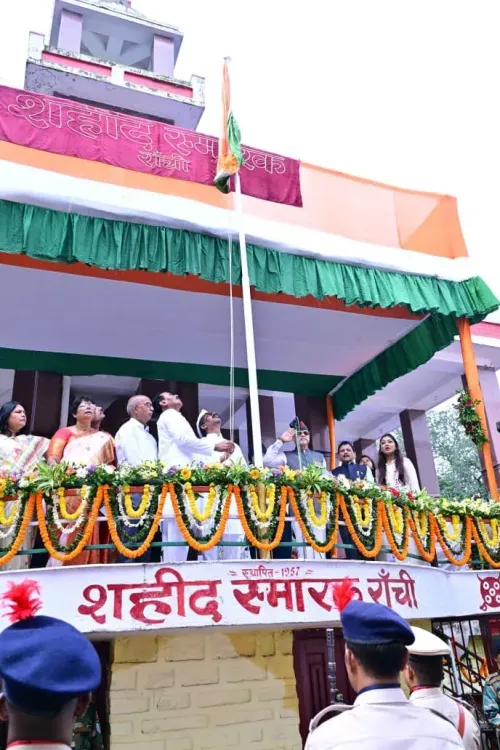
Chief Minister Hemant Soren hoisted the national flag at Shaheed Sthal, Shaheed Chowk in Ranchi on 15 August 2026, paying tribute to martyrs on Independence Day as part of Jharkhand's official state commemoration.
Key Takeaways
Chief Minister Hemant Soren hoisted the national flag at Shaheed Sthal, Shaheed Chowk, Ranchi on 15 August 2026 .
The ceremony marked India's Independence Day , observed annually on 15 August.
Shaheed Chowk in Ranchi is Jharkhand's primary official site for martyr commemorations.
Soren represents the Jharkhand Mukti Morcha and has served multiple terms as Chief Minister.
Jharkhand was formed on 15 November 2000 , with Ranchi as its capital.
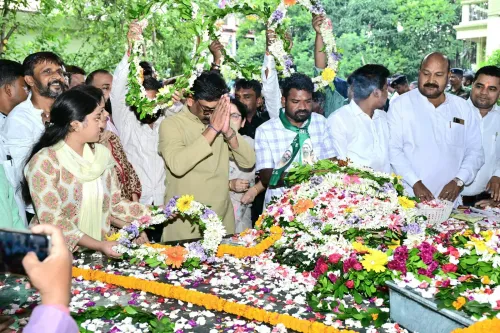
On the 79th Independence Day, 15 August 2026, Jharkhand paid solemn tribute to its fallen heroes as Chief Minister Hemant Soren hoisted the national flag at the Shaheed Sthal, Shaheed Chowk, Ranchi — the state's foremost memorial to its martyrs.
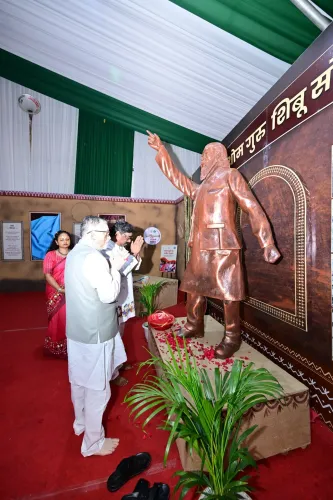
The Chief Minister's Office confirmed that Soren offered his respects to veer shaheedon ('brave martyrs') at the ceremony, marking the occasion with the solemnity it demands. Shaheed Chowk in Ranchi has long served as the symbolic heart of Jharkhand's remembrance of those who gave their lives for the nation.
Ranchi's Martyr Memorial and Its Place in State Memory
The Shaheed Sthal at Shaheed Chowk is the designated site for Jharkhand's most significant official commemorations. On Independence Day, the flag-hoisting here is not merely ceremonial — it is the state's formal declaration that the sacrifices of its martyrs are not forgotten. Families of martyrs and residents of Ranchi gather at such events to witness the tribute firsthand.
Soren's Role and Jharkhand's Independence Day Protocol
Hemant Soren, representing the Jharkhand Mukti Morcha, has served as Chief Minister across multiple terms. Across India, state chief ministers lead flag-hoisting ceremonies at prominent martyr memorials on Independence Day as a matter of constitutional protocol — a tradition that cuts across party lines and unites every state in a single act of national remembrance. Jharkhand, formed on 15 November 2000, brings its own distinct identity to this national ritual, with Ranchi as its capital and the Shaheed Sthal as its civic anchor.
Every year on this date, the tricolour rising over Shaheed Chowk is a reminder that statehood and nationhood are inseparable — and that the men and women honoured here made both possible.
Point of View
But for Hemant Soren and the JMM, it also carries a deeper resonance — the party's roots lie in a movement for tribal rights and a distinct Jharkhand identity, making the homage to martyrs politically as well as symbolically significant. State-level Independence Day ceremonies have increasingly become platforms where regional identity and national belonging are publicly woven together. Soren's visible presence at Ranchi's foremost martyr memorial reinforces his administration's emphasis on the state's own historical narrative alongside the national one.
NationPress
16 Aug 2026
Frequently Asked Questions
Where did CM Hemant Soren hoist the flag on Independence Day 2026?
Hemant Soren hoisted the national flag at the Shaheed Sthal located at Shaheed Chowk in Ranchi, Jharkhand, on 15 August 2026.
What is Shaheed Chowk in Ranchi?
Shaheed Chowk is a memorial site in Ranchi, Jharkhand, dedicated to martyrs. It serves as the primary venue for the state's official Independence Day and other major national commemorations.
Who is Hemant Soren?
Hemant Soren is the Chief Minister of Jharkhand, representing the Jharkhand Mukti Morcha (JMM). He has served multiple terms as Chief Minister, including from 2019 onward.
When was Jharkhand formed?
Jharkhand was formed on 15 November 2000 as a separate state carved out of Bihar, with Ranchi as its capital.
What happens at Shaheed Sthal on Independence Day in Jharkhand?
On Independence Day, the Chief Minister of Jharkhand leads an official flag-hoisting ceremony at the Shaheed Sthal, Shaheed Chowk, Ranchi, and pays tribute to martyrs as part of the state's formal national day observance.