US Permits Iranian Oil Transit Through Strait of Hormuz Amid Ongoing Conflict

Synopsis
In a strategic move to stabilize global energy supplies, the US has authorized Iranian oil tankers to pass through the Strait of Hormuz, despite ongoing tensions. This decision comes as oil prices soar, raising concerns over supply disruptions. Discover the implications of this development for the global energy market.
Key Takeaways
US permits Iranian oil tankers to navigate the Strait of Hormuz.
Global oil prices are surging, reaching $100 per barrel.
Shipping activity is expected to increase gradually without military escorts.
Temporary waiver issued for Russian oil shipments .
Strategic petroleum reserves are being utilized globally.
On March 17, in a significant development, the United States has granted permission for Iranian oil tankers to transit through the Strait of Hormuz amidst the ongoing conflict. Treasury Secretary Scott Bessent stated that this decision aims to promote stability in global energy resources.
“We are observing an increasing flow of fuel tankers. Iranian vessels have successfully navigated out, and we have facilitated this for the benefit of global supply,” Bessent conveyed during an interview with CBS News.
He noted that vessels from India and China are also active in the area. “Indian ships have begun their journeys. Given India's heavy reliance on Gulf oil, we believe some Chinese ships are also making their way out,” he added.
This announcement coincides with a surge in oil prices, with U.S. crude reaching $100 per barrel due to concerns about potential disruptions in one of the world's most vital maritime routes.
Bessent indicated that shipping activity is anticipated to gradually rise without the necessity for military escorts. “We believe there will be a natural opportunity for the Iranians to permit this. For now, we are comfortable with this situation, as we aim for a well-supplied global market,” he mentioned.
Additionally, the administration has implemented measures to alleviate supply pressures by issuing a temporary waiver on Russian oil shipments already en route. “We provided a 30-day waiver for Russian oil that was already at sea, amounting to approximately 130 million barrels,” he stated.
Bessent countered concerns regarding the easing of restrictions, asserting that maintaining stable prices curtails Moscow’s revenues. “If oil prices escalate to $150, yet Putin receives 70% of that, where is the additional profit if prices rise to $150?” he questioned.
He acknowledged that while the global supply deficit is notable, it remains manageable. “The deficit appears to be around 10 to 14 million barrels, and this is before any vessels emerge from the straits,” he remarked.
To mitigate potential disruptions, Saudi Arabia and the United Arab Emirates have redirected some of their exports away from the Gulf region. Additionally, global strategic petroleum reserves have been utilized. “The largest global SPR release was recorded at 400 million barrels,” Bessent noted.
The Treasury Secretary articulated the broader military strategy as an initiative to diminish Iran’s regional influence. “President Trump has made it clear that his objective is to weaken and incapacitate the military capabilities of the regime,” he stated, emphasizing the goal to “eliminate Iran's capacity to project power beyond its borders.”
Bessent characterized Iran as “the root of global terrorism,” highlighting its affiliations with various proxy groups and activities across different regions.
Simultaneously, he dismissed the notion of a unified Iranian response, indicating internal chaos. “There exists a cohesive Iranian strategy, but we believe the current ayatollah may be injured or even incapacitated,” he commented.
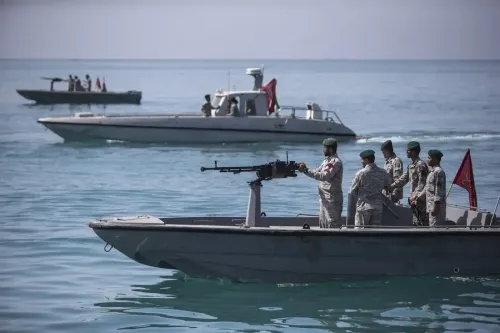
The Strait of Hormuz is crucial as it facilitates a significant portion of global oil and gas shipments, rendering any disruption a critical concern for energy markets. Asian economies, notably India, are particularly vulnerable due to their dependence on Gulf crude.
Point of View
I view the US decision to allow Iranian oil tankers through the Strait of Hormuz as a strategic maneuver aimed at stabilizing global energy supplies. While this could ease some market pressures, it also raises questions about the geopolitical implications and long-term stability in the region.
NationPress
3 Oct 2026
Frequently Asked Questions
Why is the US allowing Iranian oil tankers to pass through the Strait of Hormuz?
The US is permitting Iranian oil tankers to transit through the Strait of Hormuz to stabilize global energy supplies amidst rising oil prices.
What impact does this decision have on global oil prices?
This decision is expected to alleviate some supply pressures, potentially stabilizing or lowering oil prices that have recently surged.
Are other countries' vessels moving through the Strait of Hormuz?
Yes, vessels from India and China are also navigating through the Strait of Hormuz, emphasizing their reliance on Gulf oil.
What measures is the US taking regarding Russian oil shipments?
The US has issued a temporary waiver allowing Russian oil shipments already at sea to continue for 30 days.
How significant is the Strait of Hormuz for global oil transportation?
The Strait of Hormuz is vital as it handles a large share of the world’s oil and gas shipments, making any disruption a major concern.