Sirsa calls Sonia Gandhi's memoir 'Journey of Hate', challenges Op Blue Star account
Synopsis
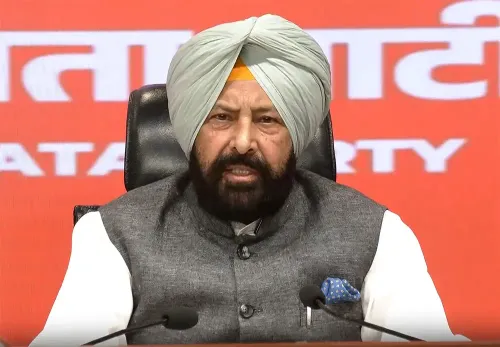
Delhi Minister Manjinder Singh Sirsa has branded Sonia Gandhi's memoir a 'Journey of Hate', directly challenging her account of Indira Gandhi's tearful response to Operation Blue Star footage. His most explosive claim — that British military advisors helped plan the June 1984 operation — reignites one of India's most sensitive historical debates, with the Sikh community and Punjab politics squarely in the frame.
Key Takeaways
Delhi Minister Manjinder Singh Sirsa on 11 November 2026 called Sonia Gandhi's memoir Belonging: A Journey of Love a 'Journey of Hate' at a press conference in New Delhi .
Sirsa dismissed as 'absolutely a lie' Sonia Gandhi's account of Indira Gandhi weeping over footage of Operation Blue Star's aftermath.
He alleged that a British Military advisor prepared a contingency plan for the operation and handed it to Indian intelligence in February 1984 .
Sirsa claimed Indira Gandhi deliberately timed the operation to coincide with Guru Arjan Dev's martyrdom anniversary to maximise civilian presence.
He highlighted that 40 gurdwaras beyond the Golden Temple were attacked, a fact he said Sonia Gandhi omitted from her memoir.
Sirsa alleged the operation was designed to 'punish' Sikhs for opposing Indira Gandhi during the Emergency .
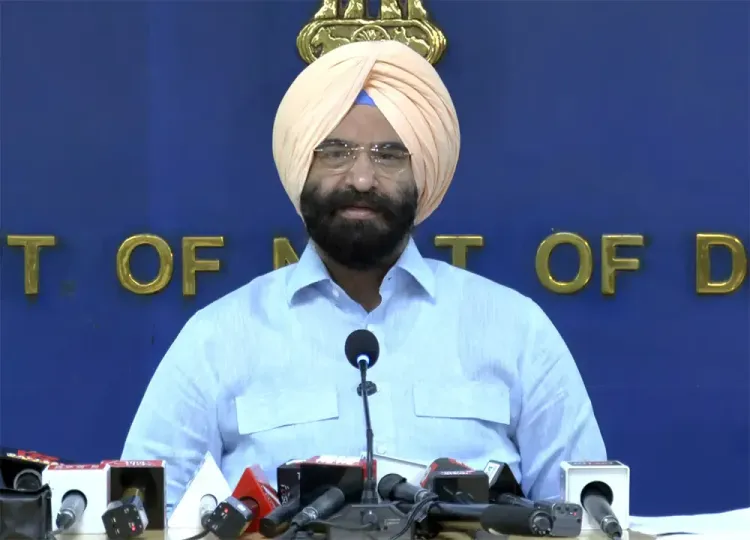
Delhi Minister Manjinder Singh Sirsa on Wednesday, 11 November 2026, launched a sharp attack on Congress leader and Rajya Sabha MP Sonia Gandhi over her memoir Belonging: A Journey of Love, specifically targeting her portrayal of former Prime Minister Indira Gandhi's reaction to Operation Blue Star. Addressing a press conference in New Delhi, Sirsa declared the book a 'Journey of Hate' and pledged to expose what he called its 'lies'.
The Memoir Passage That Sparked the Row
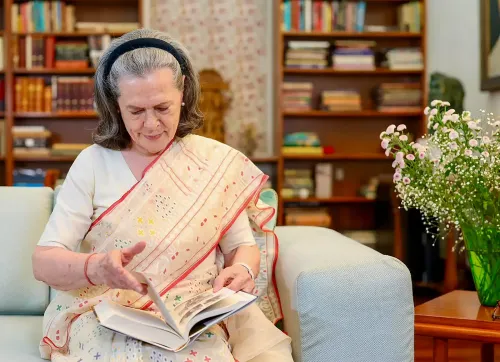
The controversy centres on a passage in Sonia Gandhi's memoir in which she describes Indira Gandhi breaking down in tears after watching footage of the aftermath of Operation Blue Star — the June 1984 Army operation at the Golden Temple in Amritsar. Sonia Gandhi wrote: 'As my mother-in-law watched the slow-moving record, I could see her face wet with tears — tears of pain and regret, I think: Sorrow at the manner in which the siege had ended, at the large number of lives lost.'
Sirsa dismissed this account outright, saying: 'This is absolutely a lie.' He alleged that the book 'attempts to justify the scars of 1984', which he attributed to the Gandhi family's decisions.
Sirsa's Claims on British Intelligence Involvement
Going further, Sirsa alleged that before Operation Blue Star was launched, the Indian government had sought inputs from British intelligence — a claim he said was supported by British government documents. 'According to British documents, a British Military advisor prepared a contingency plan and handed it to Indian Intelligence in February 1984. Before the attack, Indira Gandhi took support from England's Army, not India's,' he alleged. This claim, if verified, would represent a significant historical controversy, though Sirsa did not table the documents at the press conference.
Timing and Targeting of the Operation
Sirsa also accused the late Indira Gandhi of 'deliberately choosing' the martyrdom anniversary of Guru Arjan Dev to launch Operation Blue Star — a date he said guaranteed the maximum presence of women and children inside the Golden Temple. 'Today, India's Prime Minister Narendra Modi pays tribute to the Sikh Gurus on their martyrdom anniversaries and shares messages of respect. But what did the then Prime Minister do?' he said, drawing a pointed contrast.
He further alleged that the operation was motivated not merely by security imperatives but by a desire to 'punish' the Sikh community for opposing Indira Gandhi during the Emergency. 'This attack was intended to punish them,' he claimed.
Scope of Destruction and Silence on Gurdwaras
Sirsa highlighted that beyond the Golden Temple (also referred to as Darbar Sahib), 40 additional gurdwaras were attacked as part of the 1984 military operation. He criticised Sonia Gandhi for making no mention of this in her memoir. He also referenced the state-led reconstruction of the Akal Takht — a move widely viewed within the Sikh community as an encroachment on religious sovereignty and an attempt to conceal the scale of the destruction — and noted that Indira Gandhi never publicly expressed regret for the losses suffered by the Sikh community.
Political Context
Sirsa's attack comes amid the broader reception of Sonia Gandhi's memoir and touches on one of independent India's most contested historical episodes. 'Sonia Gandhi has written this book as she has started feeling that they will never come to power again,' Sirsa alleged, framing the memoir as a political image-rehabilitation exercise. The events of 1984 — including Operation Blue Star in June and the anti-Sikh riots following Indira Gandhi's assassination in October — remain deeply sensitive fault lines in Indian politics, particularly in Punjab and among the Sikh diaspora. How the Congress responds to Sirsa's specific historical allegations is likely to shape the next phase of the memoir's public reception.
Point of View
But no Indian government has formally endorsed or investigated it, and Sirsa offered no new evidence on Wednesday. What is striking is the BJP deploying a Delhi minister — not a Punjab leader — to press this attack, suggesting a calculated national outreach to Sikh voters rather than a purely regional play. The 1984 wounds have never been institutionally addressed, and memoir season is now reopening them in a highly politicised arena.
NationPress
11 Nov 2026
Frequently Asked Questions
What did Sonia Gandhi write about Operation Blue Star in her memoir?
In her memoir Belonging: A Journey of Love , Sonia Gandhi wrote that she witnessed Indira Gandhi in tears after watching footage of Operation Blue Star's aftermath, describing her mother-in-law's reaction as 'tears of pain and regret' over the casualties and damage to the Golden Temple. Delhi Minister Sirsa has called this account 'absolutely a lie'.
What is Manjinder Singh Sirsa's main objection to the memoir?
Sirsa alleges the memoir attempts to whitewash the Gandhi family's role in the events of 1984, including Operation Blue Star and its broader impact on the Sikh community. He also claims the book omits key facts, such as the attack on 40 other gurdwaras and Indira Gandhi's alleged use of British military advice in planning the operation.
What is the claim about British intelligence and Operation Blue Star?
Sirsa alleged that a British Military advisor prepared a contingency plan for Operation Blue Star and handed it to Indian intelligence in February 1984, claiming Indira Gandhi relied on British rather than Indian military advice. This allegation is based on what he described as British government documents; it echoes disclosures that surfaced from UK national archives in 2014, though no Indian government has formally confirmed the claim.
Why does Sirsa say the timing of Operation Blue Star was deliberate?
Sirsa alleged that Indira Gandhi deliberately chose the martyrdom anniversary of Guru Arjan Dev — a major Sikh observance — to launch the operation, knowing it would maximise the number of devotees, including women and children, inside the Golden Temple. He contrasted this with Prime Minister Narendra Modi's practice of publicly honouring Sikh Gurus on such dates.
Why do the events of 1984 remain politically significant in India?
Operation Blue Star in June 1984 and the anti-Sikh riots following Indira Gandhi's assassination in October 1984 remain among independent India's most contested historical episodes, with deep resonance in Punjab and among the global Sikh diaspora. Questions of accountability, official narratives, and community memory have never been fully resolved, making any public discussion — including memoirs — politically charged.