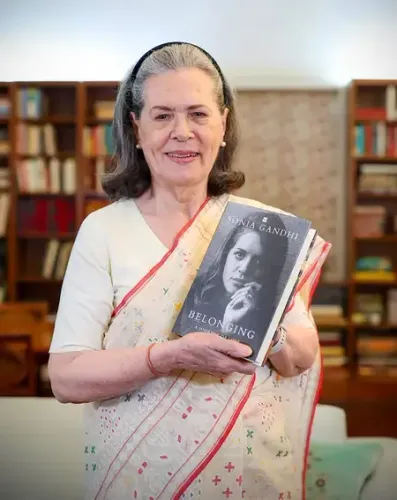
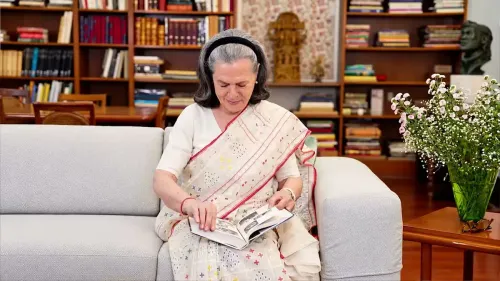
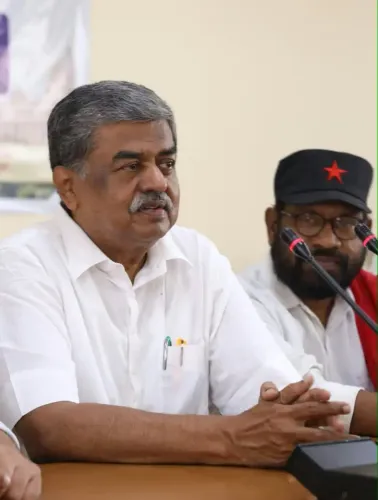
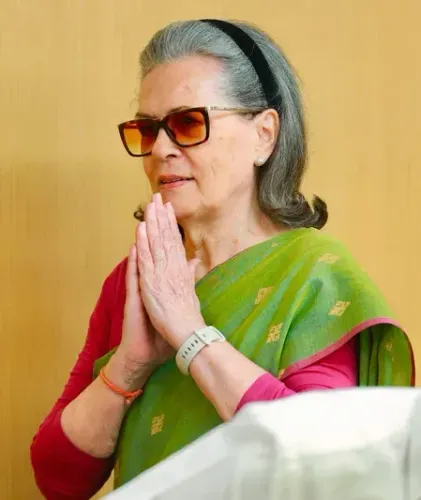
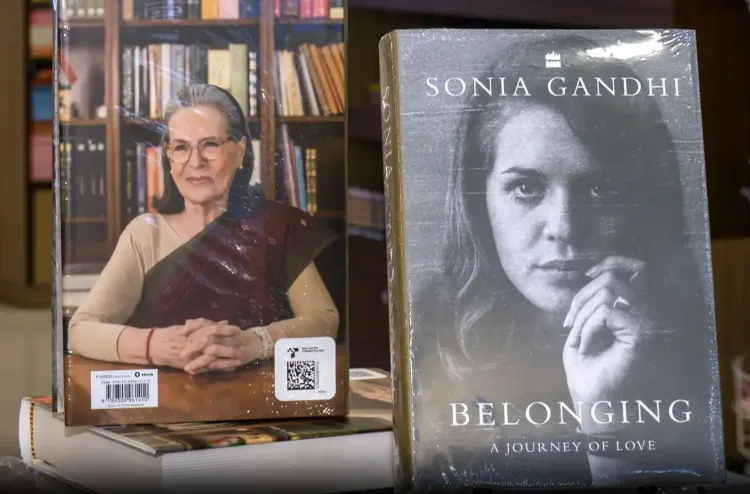
Sonia Gandhi memoir triggers BJP, Shiv Sena backlash over historical accounts
Synopsis
Sonia Gandhi's memoir has done what few political books manage — it has handed the opposition a fresh battlefield. BJP leaders accuse her of using the book to deflect blame for the Emergency onto the dead, while Shiv Sena questions her silence on women's representation and demands accountability for 1984. With Punjab elections on the horizon, the row over 'Belonging' is quickly becoming anything but personal.
Key Takeaways
Sonia Gandhi's memoir 'Belonging: A Journey of Love' has drawn sharp political attacks from BJP and Shiv Sena leaders.
BJP spokesperson R.P.
Singh accused Gandhi of attempting to whitewash the Congress's past and blaming the Emergency on the late Sanjay Gandhi .
Shiv Sena's Shaina NC questioned the memoir's silence on India's women and demanded accountability for the 1984 anti-Sikh riots in which, she said, over 3,000 Sikhs were killed in Delhi .
BJP MLA Ram Kadam alleged that references to Operation Blue Star and Punjab were politically timed ahead of the state's Assembly elections .
JD(U) spokesperson Rajiv Ranjan claimed public expectations from the memoir had 'faded completely.' The Congress had not issued a formal response to the opposition criticism at the time of reporting.
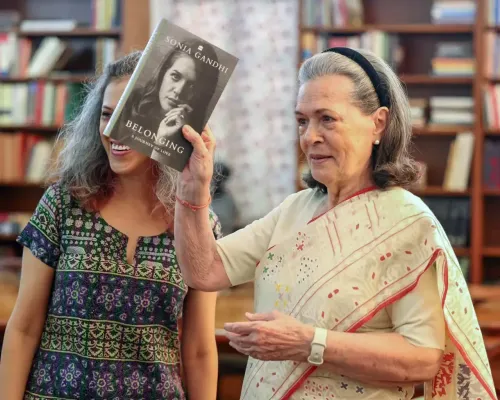
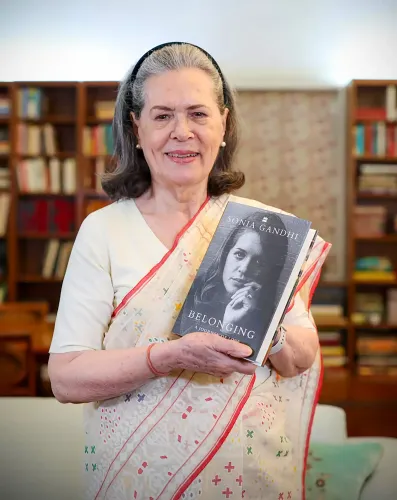
The publication of Sonia Gandhi's memoir, 'Belonging: A Journey of Love', has ignited fierce political pushback from leaders of the Bharatiya Janata Party (BJP) and Shiv Sena, who have challenged her account of pivotal events in India's history, including the Emergency, Operation Blue Star, and the 1984 anti-Sikh riots. The reactions, voiced in New Delhi on 11 November 2026, come as the memoir draws national attention for its treatment of episodes long at the centre of partisan contestation.
BJP's Core Charge: Whitewashing the Past
BJP National Spokesperson R.P. Singh accused the Congress Parliamentary Party (CPP) Chairperson of using the memoir to deflect accountability for her party's most controversial chapters. Singh alleged that the book assigns blame for the Emergency entirely to the late Sanjay Gandhi, while shielding those still living by targeting those who can no longer respond.
'Sonia Gandhi's book is entirely an attempt to whitewash the sins committed by the Congress. On the issue of the Emergency, she is placing all the blame on Sanjay Gandhi. In all the other incidents she has discussed in the book, she is trying to absolve herself while blaming people who are no longer alive,' Singh said.
Bihar BJP President Sanjay Saraogi separately criticised reported passages in which Sonia Gandhi questions Prime Minister Narendra Modi's commitment to the nation-first principle and the ideological values of the Rashtriya Swayamsevak Sangh (RSS). 'The respected Prime Minister and the RSS do not need a certificate of approval from Sonia Gandhi or the Congress party,' Saraogi said.
Shiv Sena Questions Women's Representation and 1984
Shiv Sena leader Shaina NC questioned why the memoir, titled around the theme of belonging, failed to address the concerns of women across India — particularly given the pending passage of the Women's Reservation Bill for 33 per cent Lok Sabha seats.
'Sonia Gandhi ji, you talk about belonging, but where is the story of India's women? Where is their belonging? Why isn't there a single page for India's daughters?' she said, pressing Gandhi on her role in advancing women's political representation.
Shaina also challenged the memoir's account of the late Prime Minister Indira Gandhi experiencing grief after viewing footage from Operation Blue Star, arguing that historical events of such magnitude cannot be treated as private reflections. 'When you write about 1984, the Emergency and Operation Blue Star in that book, it no longer remains personal; it becomes the country's history. And when it becomes the country's history, you have to answer a few questions,' she said.
Pointing to the 1984 violence in which, she noted, over 3,000 Sikhs were killed in Delhi, Shaina questioned what concrete action had followed beyond expressions of remorse. 'History doesn't change through a book,' she said.
BJP MLA Raises Foreign Publisher and Punjab Timing Concerns
BJP MLA Ram Kadam questioned the decision to publish the memoir through a foreign publisher, framing it as inconsistent with the declared love for India that runs through the book's pages. He also took issue with passages reportedly critical of the presence of religious figures at Prime Minister Modi's oath-taking ceremony, saying such seating arrangements were consistent with Indian cultural values.
Notably, Kadam alleged that the memoir's references to Operation Blue Star and Punjab were politically calculated ahead of the state's upcoming Assembly elections. 'Fearing a crushing defeat in the Punjab elections, she has written certain things in the book by distorting facts, perhaps to gain the sympathy of the people there,' he claimed. He also questioned why the account of Indira Gandhi's emotional reaction to Operation Blue Star had not surfaced in the 42 years since the event.
JD(U) Says Reader Expectations Have Faded
Janata Dal (United) National Spokesperson Rajiv Ranjan claimed that the memoir had failed to meet public expectations, arguing that someone with Sonia Gandhi's unique vantage point — as Indira Gandhi's daughter-in-law, Rajiv Gandhi's wife, and a senior Congress leader — was well-placed to illuminate lesser-known aspects of India's political history but had not done so. 'People's expectations from this much-discussed book now seem to be fading completely,' Ranjan said.
What Comes Next
The Congress party had not issued a formal response to the opposition's criticism at the time of reporting. With Punjab Assembly elections approaching, the memoir's references to Operation Blue Star are likely to remain a flashpoint in political discourse. The debate underscores how contested episodes of India's post-independence history — the Emergency, the 1984 riots, and counter-insurgency operations in Punjab — continue to shape the country's present-day political battles.
Point of View
But it also conveniently sidesteps any reckoning with the events themselves. What is striking is the breadth of the pile-on: Emergency accountability, 1984, Operation Blue Star, women's reservation, even the publisher's nationality — each objection serves a distinct constituency. With Punjab elections approaching, the memoir has become a proxy battleground, and the Congress's silence so far only prolongs the news cycle.
NationPress
11 Nov 2026
Frequently Asked Questions
What is Sonia Gandhi's memoir 'Belonging: A Journey of Love' about?
It is a personal memoir by Sonia Gandhi , the Congress Parliamentary Party (CPP) Chairperson , covering her life's journey, relationships, and observations on major events in India's political history, including the Emergency, Operation Blue Star, and the 1984 anti-Sikh riots. The book has sparked controversy for the way it portrays responsibility for these events.
Why is the BJP criticising Sonia Gandhi's memoir?
BJP leaders allege that the memoir is an attempt to distance Sonia Gandhi and the Congress from the party's controversial political legacy by placing blame for the Emergency on the late Sanjay Gandhi and by targeting others who are no longer alive to respond. BJP MLA Ram Kadam further alleged that references to Operation Blue Star and Punjab were politically motivated ahead of Assembly elections.
What did Shiv Sena's Shaina NC say about the memoir?
Shiv Sena leader Shaina NC questioned why the memoir, titled around the theme of belonging, contained no substantive discussion of the struggles of India's women or Gandhi's role in advancing the Women's Reservation Bill . She also demanded answers over the 1984 anti-Sikh violence and argued that discussions of historical events like the Emergency and Operation Blue Star become matters of national history, not personal reflection.
What is the controversy around Operation Blue Star in the memoir?
The memoir reportedly recounts the late Prime Minister Indira Gandhi experiencing grief after watching footage from Operation Blue Star . Critics, including BJP MLA Ram Kadam and Shiv Sena's Shaina NC , have questioned why this account surfaces only now, 42 years after the event, and what concrete action followed that grief.
Has Congress responded to the criticism of the memoir?
The Congress party had not issued a formal response to the opposition's criticism at the time of reporting. The political debate is expected to intensify given the memoir's references to Punjab and the approaching state Assembly elections .