Sonia Gandhi's memoir reveals why she chose Dr Manmohan Singh as PM in 2004
Synopsis
Sonia Gandhi's memoir 'Belonging: A Journey of Love' finally answers a question that hung over Indian politics for two decades: why did she step aside for Dr Manmohan Singh in 2004? Her answer centres on his unimpeachable integrity, economic expertise, and the fact that he belonged to no internal party faction — a rare political clean slate at a moment the UPA coalition could ill afford division.
Key Takeaways
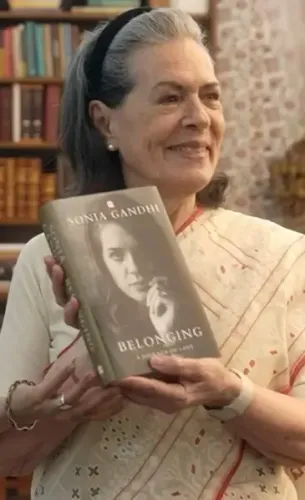
Sonia Gandhi's memoir, 'Belonging: A Journey of Love' (published by HarperCollins India ), released on 10 November 2026 .
Gandhi explains she chose Dr Manmohan Singh as Prime Minister in 2004 for his integrity, governance expertise, and non-partisan standing within the Congress .
She recalled Dr Singh's foundational role as Finance Minister under P.V.
Narasimha Rao in the early 1990s as central to her decision.
Dr Singh initially declined the offer but was persuaded after discussions with senior colleagues.
Gandhi revealed there was no prior discussion between her and Dr Singh about the Prime Minister's post on the drive to or from Rashtrapati Bhawan on 18 May 2004 .
Dr Manmohan Singh, who served two consecutive terms as Prime Minister, passed away in 2024 at the age of 92 .
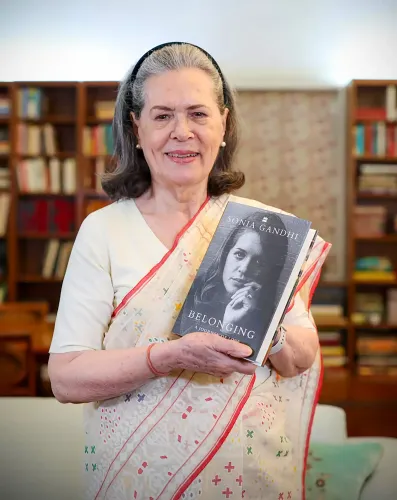
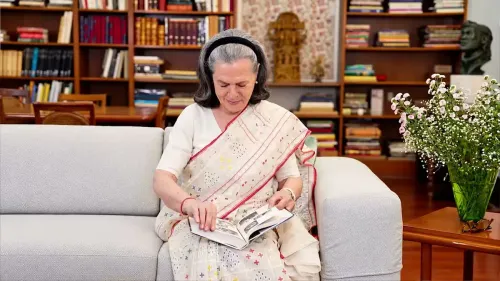
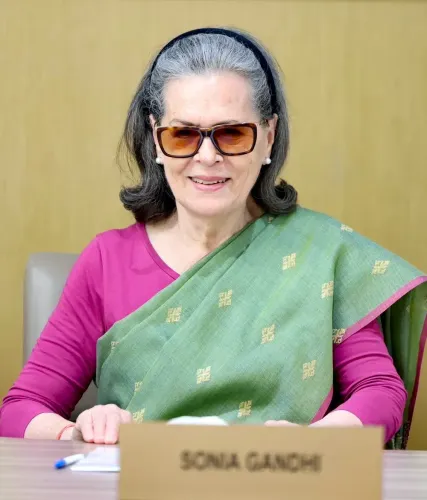
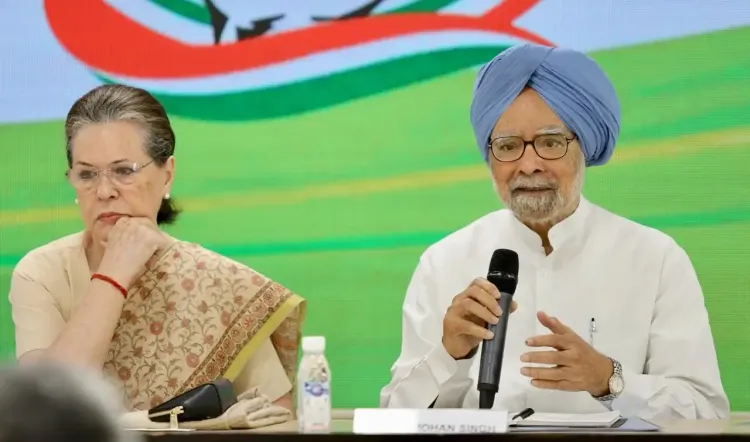
Congress Parliamentary Party (CPP) Chairperson Sonia Gandhi's memoir, 'Belonging: A Journey of Love', published by HarperCollins India, hit bookstores on Tuesday, 10 November 2026, offering the most detailed first-person account yet of her decision to decline the Prime Minister's post in 2004 and instead nominate Dr Manmohan Singh to lead the country. The book sheds new light on a political moment that defined India's trajectory for a decade.
Why Sonia Gandhi Chose Dr Manmohan Singh
In the memoir, Gandhi described Dr Singh — who served two consecutive terms as Prime Minister and passed away in 2024 at the age of 92 — as a person of 'unquestionable integrity' with an exceptional command of governance and public administration. She wrote that among the senior colleagues qualified for the post, Dr Singh stood out as someone 'above reproach.'
'There were several senior colleagues, seasoned and qualified for the post, who would have been more than willing to accept it but among all of them was one who had long been in my sight as a person above reproach, and possessed a deep and consummate understanding of governance. That was Dr Manmohan Singh, a member of the Congress Working Committee,' Gandhi wrote.
She also noted that Dr Singh was not affiliated with any internal faction of the Indian National Congress (INC), which she considered a critical advantage at a time when the United Progressive Alliance (UPA) government would be supported by the Communist parties. 'I thought Dr Manmohan Singh would assuage the doubts of many about our ability to manage and continue the policies that had been begun years ago,' Gandhi wrote, according to reports.
Dr Singh's Economic Legacy and Personal Journey
Gandhi recalled Dr Singh's pivotal role as Finance Minister in the early 1990s under then Prime Minister P.V. Narasimha Rao, when he introduced a sweeping series of economic reforms that fundamentally redirected India's economic course. She emphasised that his credentials as an experienced economist were central to her calculus.
She also recounted his remarkable personal journey — born into a Sikh family in a village in Punjab that now falls within Pakistan, he lost his mother at a young age and rose through sheer intellect and perseverance to study at the Universities of Oxford and Cambridge before ascending to international forums. 'His keen intellect and hard work had taken him from a remote village school to the universities of Oxford and Cambridge, and on from there to international fora,' she wrote in the memoir.
The Events of 18 May 2004
Gandhi offered a vivid account of 18 May 2004, when she accompanied Dr Singh to Rashtrapati Bhawan as the process of government formation was underway. 'Its vast, imposing walls stood tall against the sweltering sun. A flock of pigeons flitted about a large sandstone fountain at the centre of what is called the Eastern Court of the palatial building,' she wrote, recalling the charged atmosphere of that day.
Significantly, Gandhi revealed that there had been no discussion between the two of them about the Prime Minister's post — either during the drive to Rashtrapati Bhawan or on the return to her residence at 10, Janpath. 'He had quite naturally assumed, like everyone else, that it would be me,' she disclosed.
Dr Singh's Initial Reluctance
Gandhi also described how Dr Singh was discreetly approached to gauge his willingness to accept the responsibility. He initially expressed reluctance and declined, but was eventually persuaded after further discussions. 'I knew that our beloved country would be safe in his hands. I held consultations with my senior colleagues, and they seemed more reconciled to my decision. They didn't oppose Dr Manmohan Singh's name when I suggested it to them; no one could contest the depth of his experience or his reputation as an honourable man who would do right by India,' Gandhi recalled in the memoir.
Significance of the Memoir
The memoir, written when Gandhi was 79 years old, arrives more than two decades after one of modern India's most consequential political decisions. It contextualises not only the choice of Dr Singh but also the internal dynamics of the Congress party and the UPA coalition at a defining juncture. With Dr Singh no longer alive to offer his own account, Gandhi's memoir stands as one of the few authoritative windows into the deliberations of May 2004. How the book is received — and what it reveals about Gandhi's own political philosophy — is likely to shape Congress's self-narrative in the years ahead.
Point of View
And her account of the 2004 decision reads as much as political legacy-building as personal reflection. What is striking is not the choice itself — Singh's credentials were beyond dispute — but the revelation that he assumed until the last moment that Gandhi would take the post herself, suggesting the decision was more unilateral and closely held than the party mythology has acknowledged. The memoir also implicitly frames Gandhi's renunciation as an act of statesmanship, a framing that Congress will likely deploy ahead of the next electoral cycle. Whether voters view it that way, twenty-two years on, is an entirely different question.
NationPress
10 Nov 2026
Frequently Asked Questions
What is Sonia Gandhi's memoir 'Belonging: A Journey of Love' about?
'Belonging: A Journey of Love' is Sonia Gandhi's memoir published by HarperCollins India, released on 10 November 2026. It covers her personal and political journey, including her pivotal decision in 2004 to decline the Prime Minister's post and nominate Dr Manmohan Singh instead.
Why did Sonia Gandhi choose Dr Manmohan Singh as Prime Minister in 2004?
According to her memoir, Gandhi chose Dr Singh for his unquestionable integrity, deep understanding of governance, and experience as an economist and former Finance Minister. She also valued the fact that he was not affiliated with any internal faction of the Congress party, making him a unifying choice for the UPA coalition.
Did Dr Manmohan Singh want to become Prime Minister?
According to Gandhi's memoir, Dr Singh initially expressed reluctance and declined the offer when he was first approached. He was eventually persuaded after further discussions, and went on to serve two consecutive terms as Prime Minister.
What happened on 18 May 2004 at Rashtrapati Bhawan?
On 18 May 2004, Gandhi accompanied Dr Manmohan Singh to Rashtrapati Bhawan as the process of government formation was underway. Gandhi revealed in the memoir that Dr Singh had assumed until that point that she would become Prime Minister herself, as there had been no prior discussion between them about the post.
Who was Dr Manmohan Singh and what was his background?
Dr Manmohan Singh was an economist and statesman who served as India's Prime Minister for two consecutive terms from 2004 to 2014. He was born into a Sikh family in a village in Punjab that now lies in Pakistan, studied at the Universities of Oxford and Cambridge, and served as Finance Minister under Prime Minister P.V. Narasimha Rao in the early 1990s, when he introduced landmark economic reforms. He passed away in 2024 at the age of 92.