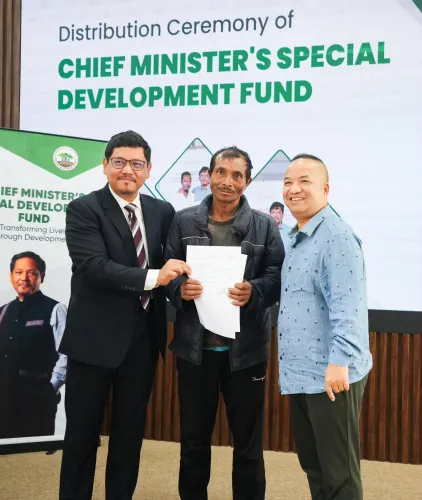
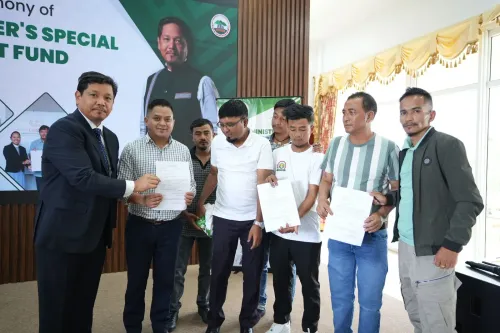
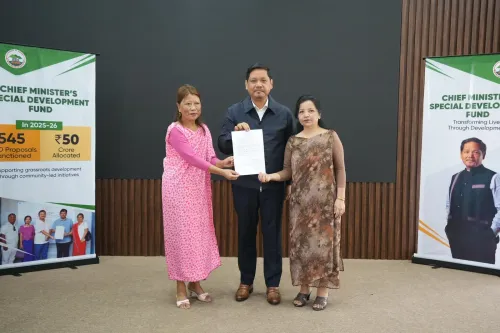
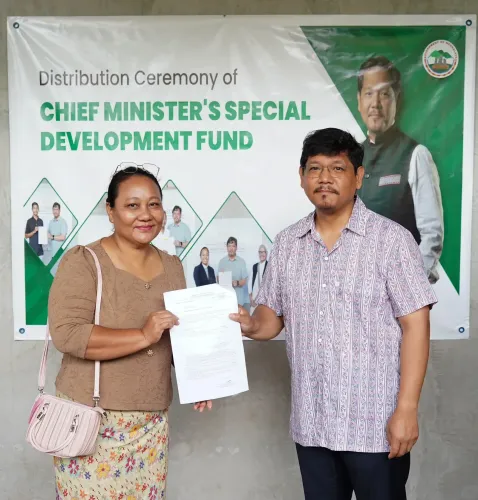
CM Conrad Sangma Disburses CMSDF Sanctions in Meghalaya
Synopsis
Meghalaya Chief Minister Conrad Sangma handed over sanctions under the Chief Minister's Special Development Fund on November 10, 2026, directing discretionary development grants to communities across the hill state.
Key Takeaways
CM Conrad Sangma disbursed sanctions under the Chief Minister's Special Development Fund (CMSDF) on November 10, 2026 .
The CMSDF is a discretionary fund that finances small-scale local infrastructure and welfare projects not covered by larger schemes.
Meghalaya's difficult hill terrain makes flexible, targeted funding mechanisms especially critical for last-mile delivery.
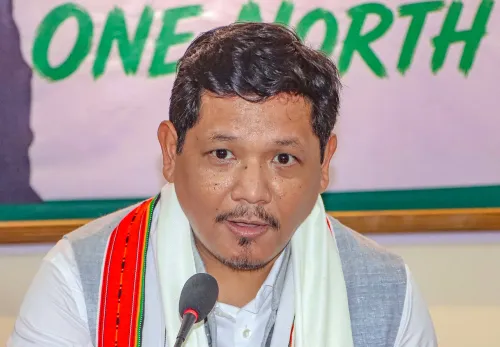
Sangma has served as Meghalaya Chief Minister since 2018 and is national president of the National People's Party (NPP) .
Public handover ceremonies are a recurring feature of Sangma's governance style, emphasising direct accountability to beneficiaries.
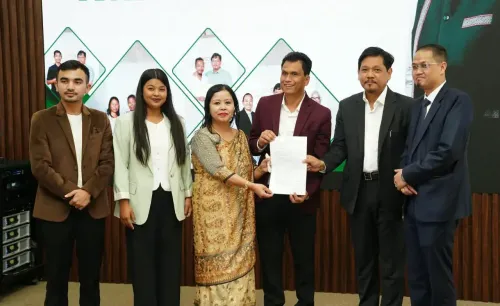
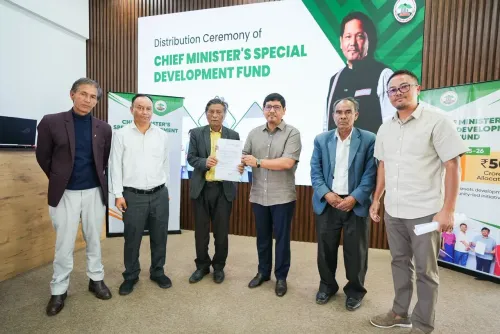
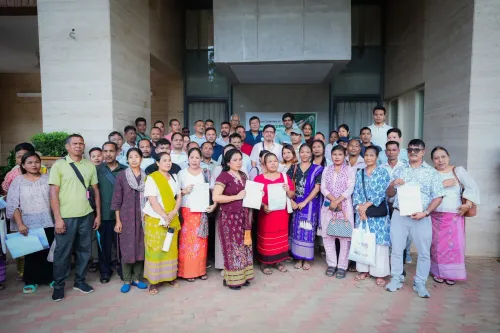
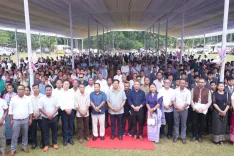
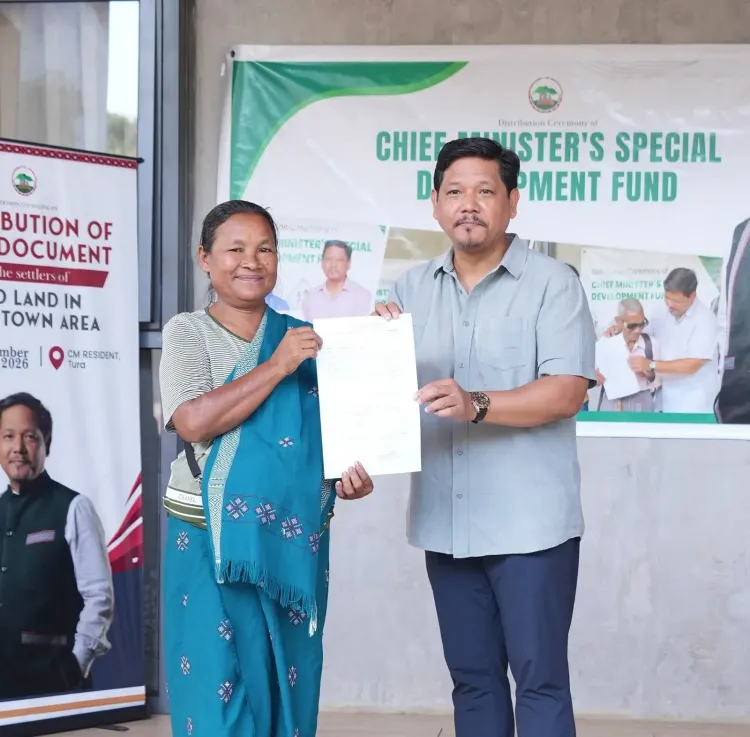
Putting development funds directly into communities' hands, Meghalaya Chief Minister Conrad Sangma on Tuesday, November 10, 2026, handed over sanctions under the Chief Minister's Special Development Fund (CMSDF) — a discretionary grant mechanism that channels resources to local projects across the state.
What the CMSDF does for Meghalaya's villages
The Chief Minister's Special Development Fund is a constituency-linked discretionary fund that allows the Chief Minister to sanction grants for small-scale infrastructure, community welfare, and local development needs that may not be covered under larger centrally-sponsored schemes. It is designed to bridge the last-mile gap between state budgets and ground-level requirements in a state where geography — hills, rivers, and remote hamlets — routinely complicates standard delivery pipelines.
Meghalaya's hilly terrain means that many villages depend on targeted, flexible funding to address urgent local needs ranging from rural roads and water supply to community halls and school repairs. The CMSDF gives the Chief Minister direct agency to respond to such demands without waiting for larger scheme cycles.
Sangma's track record with direct-benefit handovers
Conrad Sangma, who leads the National People's Party (NPP) as its national president and has served as Meghalaya's Chief Minister since 2018, has regularly used public sanction-handover ceremonies to signal accountability and transparency — placing the paperwork in beneficiaries' or representatives' hands in full view, rather than routing approvals through opaque administrative channels.
The NPP, a regional party with its core base in Meghalaya, positions itself as a grassroots outfit attuned to the specific needs of the northeast's tribal communities. Visible acts of fund disbursement are part of that political grammar — governance made tangible, not just announced.
Point of View
While proponents say they are indispensable in geographically fragmented states where standard scheme cycles are too slow. For Sangma, public sanction ceremonies serve a dual purpose: they demonstrate responsive governance ahead of an NPP focused on consolidating its northeast footprint, and they reinforce the party's brand as a grassroots, community-first outfit. The optics of handing over paperwork in person — rather than a press release — are deliberate political communication as much as administrative act.
NationPress
10 Nov 2026
Frequently Asked Questions
What is the Chief Minister's Special Development Fund in Meghalaya?
The Chief Minister's Special Development Fund (CMSDF) is a discretionary grant mechanism in Meghalaya that allows the Chief Minister to sanction funds for local infrastructure, community welfare, and development needs not easily addressed by larger centrally-sponsored schemes.
Who is Conrad Sangma?
Conrad Sangma is the Chief Minister of Meghalaya and the national president of the National People's Party (NPP). He has held the Chief Minister's office since 2018.
What projects does the CMSDF typically fund?
The CMSDF typically supports small-scale projects such as rural roads, water supply works, community halls, school repairs, and other local infrastructure that falls outside the scope of larger state or central schemes.
Why is flexible funding important in Meghalaya?
Meghalaya's hilly terrain and remote hamlets make standard scheme delivery pipelines slow and difficult. Flexible discretionary funds allow faster, targeted responses to community needs across the state.
What is the National People's Party (NPP)?
The National People's Party (NPP) is a regional political party based primarily in Meghalaya and the northeast of India. It was founded by P. A. Sangma and is currently led nationally by Chief Minister Conrad Sangma.