Giriraj Singh attacks Sonia Gandhi over memoir, cites 'true face' claim
Synopsis
Union Minister Giriraj Singh used the release of Sonia Gandhi's memoir 'Belonging: A Journey of Love' to revive long-standing BJP allegations — from the Batla House encounter to her 1983 citizenship — calling the book a self-exposure of her 'true face'. The timing, amid multiple state election cycles, underscores the political stakes around the memoir's narrative.
Key Takeaways
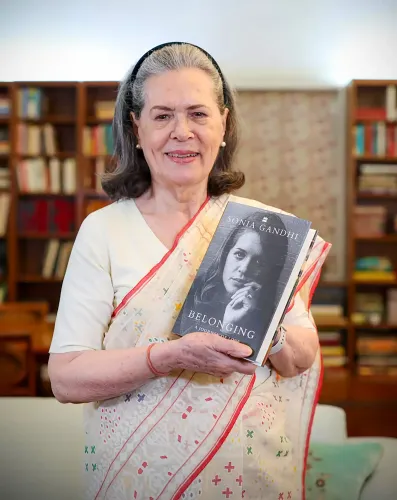
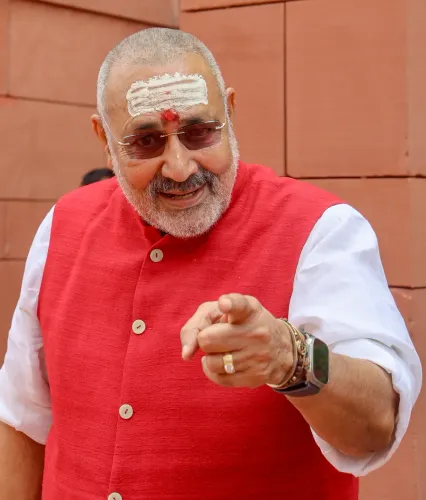
Union Minister Giriraj Singh attacked Sonia Gandhi on 10 November 2026 after the release of her memoir Belonging: A Journey of Love .
Singh alleged Gandhi was 'lying' and attempting to portray herself as a political martyr through her personal account.
He revived the Batla House encounter controversy, alleging selective grief on Gandhi's part over violence.
Singh also alleged Gandhi acquired Indian citizenship only in 1983 for political reasons — a claim the Congress has previously rejected as false.
The remarks are part of broader multi-party reactions to the memoir's publication.
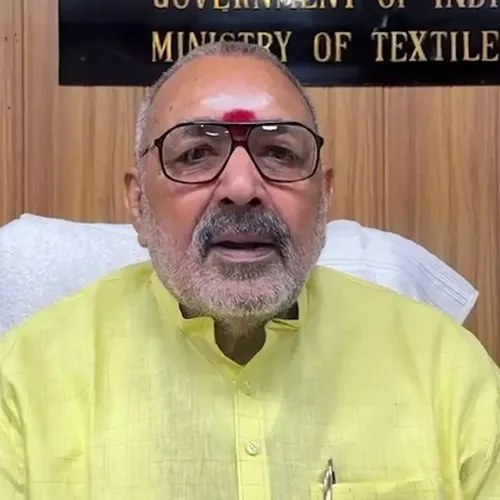
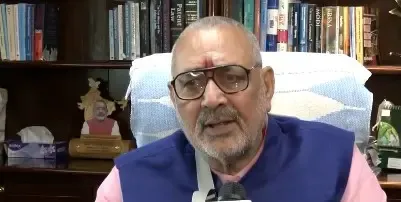
Union Minister Giriraj Singh on Tuesday, 10 November 2026, launched a sharp attack on Congress Parliamentary Party (CPP) Chairperson Sonia Gandhi following the release of her memoir Belonging: A Journey of Love, accusing her of making false claims and attempting to cast herself as a political martyr. Singh's remarks represent the Bharatiya Janata Party's (BJP's) most direct response yet to the memoir's publication.
Singh's Core Allegations
Reacting to the memoir, Singh alleged that Sonia Gandhi was seeking political sympathy through a selective personal narrative. 'She is lying. She wants to become a martyr by getting her nails trimmed. Technically, she could not have become Prime Minister. I have heard that all preparations had been made at that time to install her on the throne. But someone gave what proved to be good advice, as some people believe, and technically she could not become Prime Minister,' Singh said.
He added, 'I am happy that the book she has written about herself has exposed her true face.' Singh did not substantiate these characterisations with documentary evidence during his remarks.
Batla House Encounter and Pahalgam References
Singh also revived the long-standing political controversy over the Batla House encounter, alleging that Gandhi had shown selective grief. 'Her tears flowed when a terrorist was killed in Batla House. But her tears dry up whenever Hindus are burnt in Godhra. When our brothers and sisters are shot dead by terrorists in Pahalgam after being asked about their religion, all their tears dry up,' he said.
He further alleged that the Congress leadership had remained silent over soldiers killed in terrorist attacks and in Naxalite violence. 'Their tears flow when it comes to people like Afzal Guru. Perhaps their tears flow when programmes are organised at JNU on his death anniversary,' Singh added.
Citizenship Controversy Revisited
Singh also raised allegations about Sonia Gandhi's acquisition of Indian citizenship, claiming she took it only when political power became a possibility for her family. 'She did not take citizenship until she realised that her family could also come to power. When did she acquire citizenship? In 1983. Before that, she was staying illegally,' he alleged.
These citizenship claims have been a recurring BJP talking point for several years and remain contested. The Congress party has previously dismissed similar allegations as politically motivated and factually incorrect.
Political Context
Singh's remarks came amid a wider wave of political reactions triggered by the memoir's release. Leaders across party lines have commented on Sonia Gandhi's account of key political and personal events, with the memoir reigniting debates over the UPA era, her decision not to assume the Prime Ministership in 2004, and episodes she addresses in the book. This is not the first time Singh has targeted Gandhi publicly; he has been among the most vocal BJP voices on issues related to the Congress leadership. The timing — ahead of several state assembly cycles — adds an unmistakably electoral edge to the exchange.
Point of View
Batla House, Afzal Guru — bundled for a new news cycle. That the memoir has handed the BJP a fresh pretext to relitigate decade-old controversies is itself a political calculation worth noting. What mainstream coverage tends to underplay is that none of Singh's core allegations are new; they have been made and legally contested for years without resolution. The more significant editorial question is whether Gandhi's memoir advances any new factual account that changes the historical record — or whether both sides are simply restaging familiar positions for the next electoral audience.
NationPress
10 Nov 2026
Frequently Asked Questions
What did Giriraj Singh say about Sonia Gandhi's memoir?
Singh said the memoir had 'exposed her true face' and accused Gandhi of lying and seeking to portray herself as a political martyr. He made several specific allegations including about her citizenship and her conduct during the Batla House encounter controversy.
What is Sonia Gandhi's memoir 'Belonging: A Journey of Love' about?
'Belonging: A Journey of Love' is a memoir by Congress Parliamentary Party Chairperson Sonia Gandhi covering her personal and political life. Its release has prompted reactions from leaders across party lines, with the BJP in particular contesting several elements of her account.
What is the Batla House encounter controversy that Singh referenced?
The Batla House encounter of 2008 involved a Delhi Police anti-terror operation in which a suspected militant was killed. It has remained a long-running political flashpoint, with the BJP alleging that Congress leaders expressed sympathy for the slain individual rather than the security personnel involved.
What did Singh allege about Sonia Gandhi's citizenship?
Singh alleged that Sonia Gandhi acquired Indian citizenship in 1983 only after recognising that her family could attain political power, and that she had been residing in India illegally before that. The Congress has previously rejected such claims as politically motivated and factually incorrect.
Why is the reaction to the memoir politically significant?
The memoir's release has reignited debates about key UPA-era events, including Gandhi's decision not to assume the Prime Ministership in 2004. With several state assembly elections on the horizon, both parties are using the book's narrative to reinforce their competing accounts of that political era.