Cabinet Clears ₹62,370 Cr Fertiliser Subsidy for Rabi 2026–27
Synopsis
The Union Cabinet has approved NBS rates for P&K fertilisers for Rabi 2026–27, committing ₹62,370.02 crore — a ₹24,417.73 crore increase over last Rabi — to ensure affordable DAP and NPKS availability for Indian farmers during the October 2026–March 2027 sowing season.
Key Takeaways
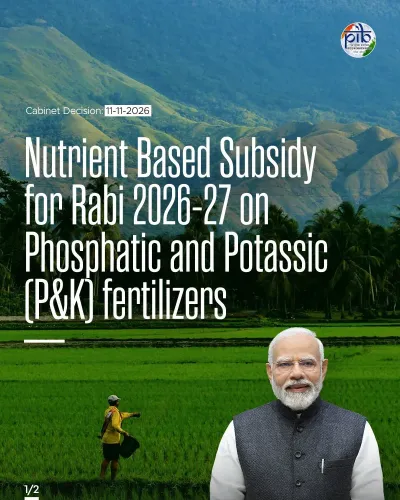
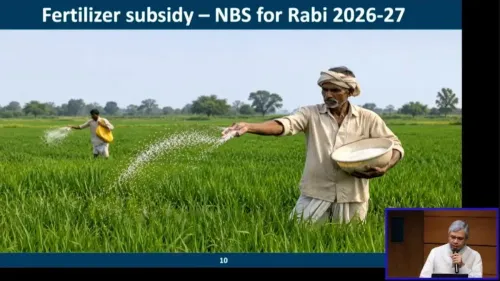
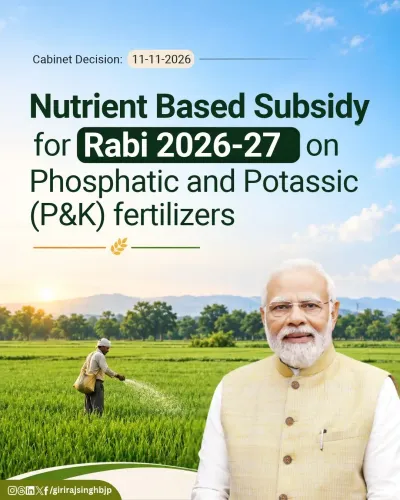
The Union Cabinet approved Nutrient Based Subsidy (NBS) rates for Phosphatic and Potassic (P&K) fertilisers for Rabi 2026–27 (October 1, 2026 – March 31, 2027) .
The tentative budgetary allocation stands at ₹62,370.02 crore , an increase of ₹24,417.73 crore over the previous Rabi season.
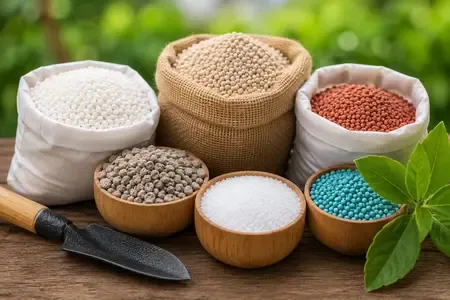
Key fertilisers covered include DAP (Diammonium Phosphate) and NPKS grades critical to winter crop nutrition.
Subsidy rates are notified to fertiliser manufacturers and importers under the NBS mechanism introduced in April 2010 .
The decision aims to rationalise subsidies against volatile international input prices while shielding farmers from retail price increases.
Smooth, uninterrupted fertiliser supply ahead of the October 2026 Rabi sowing window is a stated operational objective.
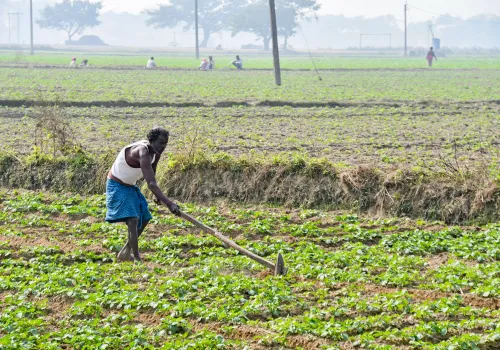
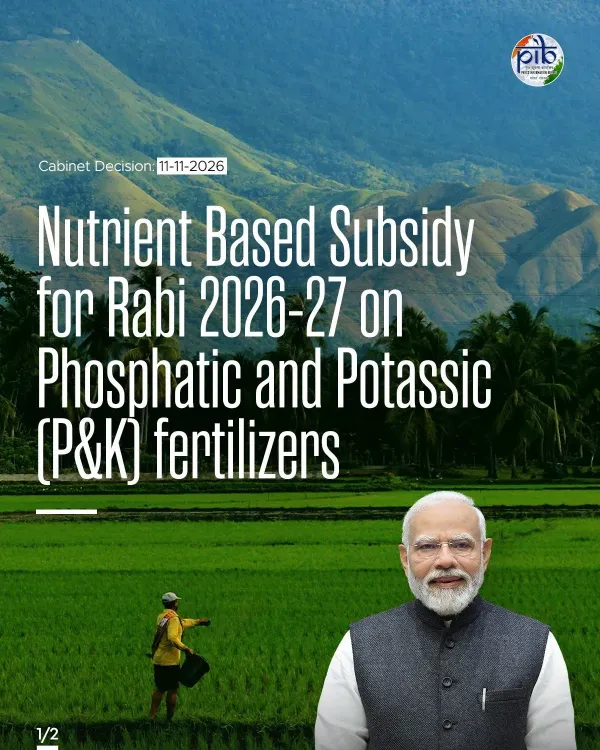
When India's winter crop season opens in October 2026, farmers planting wheat, mustard and chickpeas will find subsidised fertilisers waiting — because the Union Cabinet, chaired by Prime Minister Narendra Modi, has approved the Nutrient Based Subsidy (NBS) rates for Phosphatic and Potassic (P&K) fertilisers for the Rabi 2026–27 season (October 1, 2026 – March 31, 2027), with a tentative budgetary outlay of ₹62,370.02 crore.
A ₹24,000 crore jump from last Rabi season
The approved allocation represents an increase of ₹24,417.73 crore over the previous Rabi season's figure — a surge that signals the government's intent to absorb a greater share of elevated global input costs rather than pass them on to farmers. International prices of key raw materials such as ammonia, phosphoric acid, and potash have been volatile in recent years, and the revised NBS rates are designed to rationalise subsidy outflows in step with those movements.
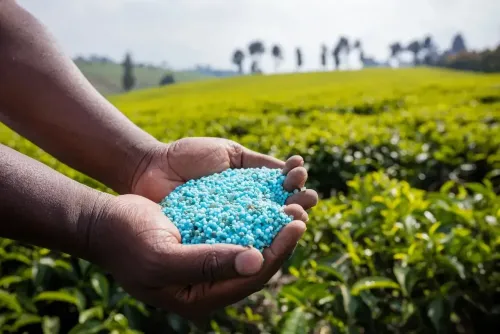
The NBS mechanism, introduced in April 2010, ties subsidy support to the nutrient content of fertilisers rather than fixing a flat concession on each product. This means manufacturers and importers receive notified per-nutrient subsidy rates, while retail prices for farmers stay capped at affordable levels. The policy covers critical grades including Diammonium Phosphate (DAP) and Nitrogen, Phosphorus, Potassium and Sulphur (NPKS) blends — both essential to Rabi crop nutrition.
What the Cabinet decision delivers on the ground
Union Coal and Mines Minister G. Kishan Reddy, who also serves as BJP's Telangana state president, shared the Cabinet decision on Wednesday, November 11, 2026, highlighting four operational commitments: ensuring availability of P&K fertilisers at subsidised prices; rationalising subsidy rates against shifting international market conditions; channelling support through notified rates to manufacturers and importers; and guaranteeing a smooth, uninterrupted supply chain through the Rabi sowing window.
Smooth supply during the October sowing rush is not a given — procurement logistics, port handling, and last-mile distribution all need to sync. The Cabinet approval gives the fertiliser supply chain a firm fiscal signal ahead of that critical window.
Telangana farmers and India's broader input-security push
For Telangana, where Reddy holds the BJP's top organisational post, the Rabi season is a key production period for paddy in irrigated tracts and oilseeds in dryland districts. The state's farmers — like those across the country — have long flagged price spikes in DAP as a pressure point during sowing. A Cabinet-backed subsidy revision of this scale directly addresses that concern.
India has maintained fertiliser subsidies for decades as a pillar of food security policy. The periodic NBS rate revision is routine in structure but consequential in scale — the difference between an affordable bag of DAP at the village retailer and an unaffordable one can shift planting decisions across millions of hectares.
The government has framed the decision as advancing the vision of a 'prosperous and self-reliant agricultural sector' — a stated goal that links fertiliser access to the broader ambition of strengthening farm input security from within.
With the allocation cleared, all eyes now turn to disbursement speed, stock positions at district warehouses, and whether retail prices hold steady when the first sowing rains arrive.
Point of View
000 crore in a single season — reflects how much global commodity markets have driven up the cost of keeping farm inputs affordable in India. The NBS mechanism, now in its sixteenth year, was designed precisely to absorb such shocks without passing the burden to cultivators, and this revision tests that design at scale. Politically, the timing matters: a smooth Rabi supply chain going into an election-sensitive agricultural calendar reinforces the government's farmer-welfare narrative. The real test, however, will be execution — whether the subsidy disbursement reaches manufacturers fast enough to stock district warehouses before October's sowing rush begins.
NationPress
11 Nov 2026
Frequently Asked Questions
What is the NBS rate for Rabi 2026–27 fertilisers approved by the Cabinet?
The Union Cabinet approved the Nutrient Based Subsidy (NBS) rates for P&K fertilisers for Rabi 2026–27 with a total tentative allocation of ₹62,370.02 crore. Specific per-nutrient rates are notified to manufacturers and importers; the Cabinet decision covers the period October 1, 2026 to March 31, 2027.
What is the Nutrient Based Subsidy (NBS) scheme?
The Nutrient Based Subsidy scheme, introduced in April 2010, provides government subsidies to fertiliser manufacturers and importers based on the nutrient content (Nitrogen, Phosphorus, Potassium, Sulphur) of P&K fertilisers, keeping retail prices affordable for farmers without fixing a flat product-level concession.
Which fertilisers are covered under the Rabi 2026–27 NBS decision?
The Cabinet decision covers Phosphatic and Potassic (P&K) fertilisers, including Diammonium Phosphate (DAP) and Nitrogen, Phosphorus, Potassium and Sulphur (NPKS) grades — key inputs for Rabi crops like wheat, mustard and chickpeas.
How much has the fertiliser subsidy allocation increased over last Rabi season?
The tentative budgetary allocation of ₹62,370.02 crore for Rabi 2026–27 is ₹24,417.73 crore higher than the previous Rabi season's allocation, reflecting adjustments to international fertiliser input prices.
What is the Rabi season and why does fertiliser availability matter?
Rabi is India's winter crop season, running from approximately October to March, covering major crops like wheat, mustard, and pulses. Timely availability of affordable fertilisers such as DAP at the start of this season is critical to yield outcomes across millions of farming households.