CM Samrat Choudhary Backs Cabinet's ₹62,370 Cr Fertiliser Subsidy
Synopsis
Bihar CM Samrat Choudhary welcomed the Union Cabinet's approval of ₹62,370 crore in Nutrient Based Subsidy on P&K fertilisers and a fixed DAP price of ₹1,350 per bag for Rabi 2026-27, calling it a decisive step for farmer welfare and agricultural self-reliance.
Key Takeaways
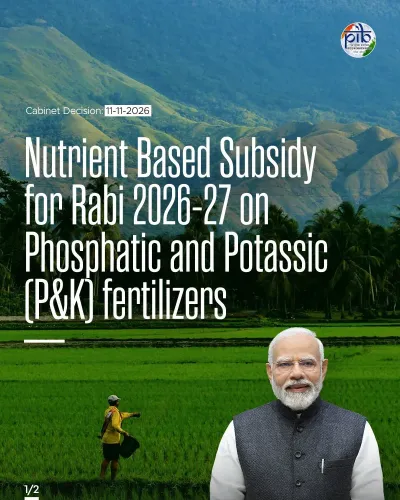
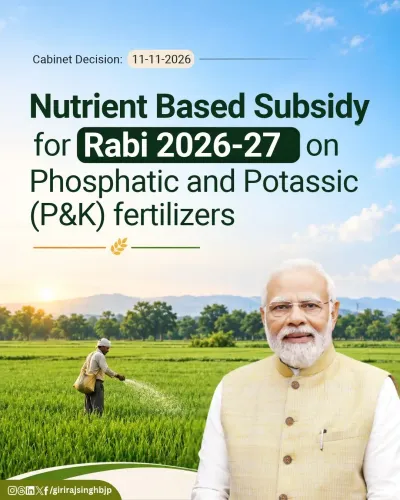
The Union Cabinet approved Nutrient Based Subsidy (NBS) rates on Phosphatic and Potassic (P&K) fertilisers for Rabi 2026-27 .
Total budgetary provision under the decision stands at ₹62,370 crore .
DAP will be available to farmers at a fixed rate of ₹1,350 per bag through a special provision.
The NBS framework has governed P&K fertiliser subsidies since April 2010 , linking payouts to nutrient content rather than flat concessions.
Bihar CM Samrat Choudhary highlighted three expected benefits: affordable fertiliser access, a boost to domestic manufacturing, and reduced financial burden on farmers.
Effective delivery will depend on state-level distribution coordination before the Rabi sowing window closes.
A ₹62,370 crore fertiliser subsidy package for the Rabi 2026-27 season — and a capped DAP price of ₹1,350 per bag — is how the Union Cabinet is signalling its commitment to keeping Indian agriculture affordable. Bihar Chief Minister Samrat Choudhary threw his weight behind the decision on Wednesday, 11 November 2026, calling it a landmark step in the interest of the country's farming community.
What the Cabinet Actually Approved
The Cabinet, under Prime Minister Narendra Modi, approved fresh Nutrient Based Subsidy (NBS) rates on Phosphatic and Potassic (P&K) fertilisers for the upcoming Rabi season. The NBS framework — in place since April 2010 — links subsidy payouts directly to the nutrient content of fertilisers, replacing the older flat-concession model that had little connection to what farmers actually needed from the soil.
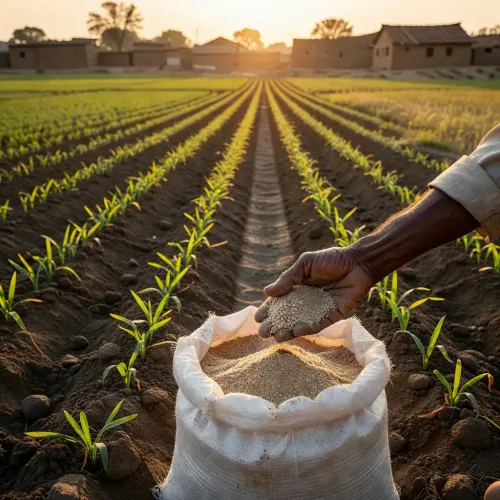
Alongside the broader P&K subsidy, a special provision ensures Di-Ammonium Phosphate (DAP) reaches farmers at a fixed ₹1,350 per bag — a price intervention designed to shield cultivators from global commodity volatility during one of the most input-intensive sowing windows of the year.
Why DAP Pricing Is the Number That Matters Most
DAP is the second most widely used fertiliser in India after urea, and its price at the farm gate directly shapes decisions about how much land gets sown and how intensively. When global phosphate markets spike, the gap between international cost and the subsidised domestic price widens — and that gap is filled by the government's budgetary outlay. The ₹62,370 crore allocation for this season signals that the Centre is absorbing a significant share of that burden so the farmer doesn't have to.
CM Choudhary, posting in Hindi, underlined the three-pronged benefit he sees in the decision: 'उर्वरकों की उपलब्धता और किफायती दरों का लाभ' ('availability of fertilisers at affordable rates'), a push for domestic fertiliser manufacturing, and no additional financial burden on farming households.
The Rabi Stakes for Bihar
Bihar is a major Rabi-season agriculture state, with wheat, maize, and mustard among its key crops. For a Chief Minister whose political base is deeply rooted in rural constituencies, an affordable input cycle translates directly into farmer income stability — and by extension, voter sentiment ahead of any state-level electoral cycle. Choudhary framing the Cabinet decision as central to building a 'samriddh evam aatmanirbhar Bharat' ('prosperous and self-reliant India') places it squarely within the BJP's larger agrarian-welfare narrative.
Actual disbursement of the approved subsidy amounts, and how efficiently state-level agencies coordinate fertiliser distribution before the sowing window closes, will determine whether the policy intent reaches the last-mile farmer in time.
Point of View
The Cabinet is deploying a dual shield: a direct-to-farmer price signal and a structural incentive for domestic fertiliser producers. For CM Choudhary, amplifying this decision from Patna reinforces the BJP's framing that Centre-state alignment under Modi is delivering measurable benefits to Bihar's largely agrarian electorate. The real test, as always, is last-mile distribution — how much of the ₹62,370 crore actually reaches the farmer in the form of affordable, available inputs before the sowing deadline.
NationPress
11 Nov 2026
Frequently Asked Questions
What is the Nutrient Based Subsidy (NBS) scheme for fertilisers?
The Nutrient Based Subsidy (NBS) scheme, introduced in April 2010 , provides government subsidies on Phosphatic and Potassic (P&K) fertilisers based on their nutrient content rather than a flat concession, making support more targeted and efficient.
What is the DAP price for farmers in Rabi 2026-27?
Under the Cabinet's approval for Rabi 2026-27, DAP (Di-Ammonium Phosphate) will be made available to farmers at a fixed rate of ₹1,350 per bag through a special government provision.
How much money has the government allocated for fertiliser subsidies in Rabi 2026-27?
The Union Cabinet has approved a budgetary provision of approximately ₹62,370 crore to support NBS rates on P&K fertilisers for the Rabi 2026-27 season.
Why did Bihar CM Samrat Choudhary comment on the fertiliser subsidy decision?
Samrat Choudhary , as Bihar Chief Minister and a senior BJP leader, welcomed the Cabinet decision as a step beneficial to farmers' prosperity, affordable input access, and domestic fertiliser manufacturing, aligning with the party's agrarian welfare agenda.
What are P&K fertilisers and why do they matter for Rabi crops?
Phosphatic and Potassic (P&K) fertilisers supply essential nutrients — phosphorus and potassium — that are critical for root development and crop yield in Rabi crops like wheat, mustard, and pulses sown during the winter season.