Kishan Reddy Hits Rahul Gandhi Over 'Anti-India' Remarks Abroad
Synopsis
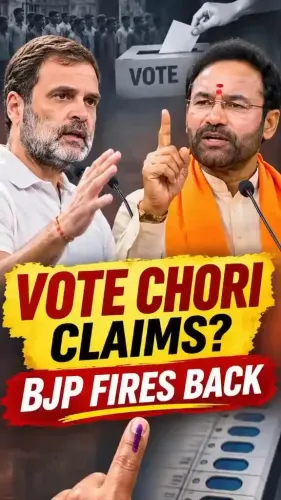
BJP's G. Kishan Reddy accused Congress leader Rahul Gandhi of 'anti-India and anti-democratic rhetoric' abroad, targeting remarks at the so-called 'Bharat Summit' and calling them a betrayal of his role as Leader of the Opposition.
Key Takeaways
Kishan Reddy posted a sharp attack on Rahul Gandhi on November 18, 2026 , accusing him of running down India's democracy and economy on foreign soil.
Reddy referenced an event called the 'Bharat Summit' and alleged it featured foreign speakers who demeaned India — specific details of the event remain unverified.
He invoked Gandhi's constitutional status as Leader of the Opposition to argue the overseas remarks amount to a 'betrayal of the people and the nation.' Congress improved its Lok Sabha seat tally in 2024 , with Gandhi formally taking the LoP role — the first time the post had an occupant in roughly a decade.
The BJP–Congress clash over overseas criticism of Indian democracy has been a recurring flashpoint since 2014 and intensified after the 2024 polls.
Reddy's closing line — 'political rhetoric cannot substitute for facts' — signals the BJP's broader counter-narrative against democratic-backsliding allegations.
A BJP leader attacking the opposition for criticising India on foreign soil is not new — but Union Coal and Mines Minister G. Kishan Reddy escalated that charge sharply on Wednesday, November 18, 2026, training his fire on Congress leader Rahul Gandhi over what he called 'political theatrics overseas' and rhetoric that 'betrays the people and the nation.'
The 'Bharat Summit' Controversy at the Centre
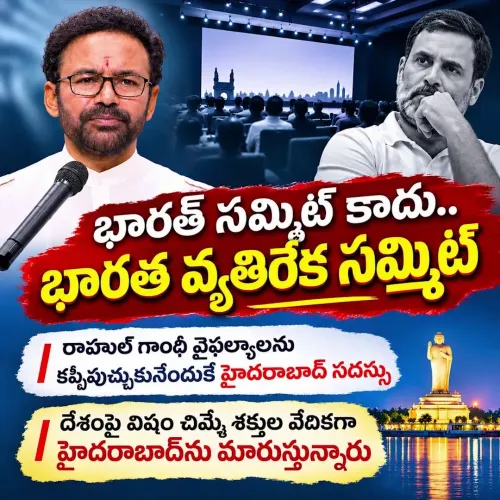
Reddy's post takes direct aim at an event billed as the 'Bharat Summit' — which he alleges featured foreign speakers who 'demeaned Bharat.' He also accuses Congress of questioning India's electoral process from foreign shores and belittling the country's economic growth. 'Empty vessels make the most noise,' Reddy wrote, in a pointed opening that set the tone for the rest of his broadside.
The specific details of the Bharat Summit — its organisers, the identity of the foreign speakers, and the exact venue — have not been independently confirmed. What is on record is the political charge: a sitting Union Minister accusing the Leader of the Opposition of using an overseas platform to run down Indian democracy and its institutions.
Rahul Gandhi as LoP — and the Accountability Argument
The charge carries a particular edge because of Rahul Gandhi's constitutional position. After Congress significantly improved its tally in the 2024 Lok Sabha elections, Gandhi was appointed Leader of the Opposition — the first time the post had a formal occupant in a decade. Reddy leans into that status to sharpen his critique: as LoP, he argues, Gandhi's overseas statements are not merely partisan commentary but carry the weight of a constitutional office, making the alleged 'anti-India and anti-democratic rants' a 'betrayal' of that responsibility.
It is a framing the BJP has deployed before — the idea that opposition criticism voiced on foreign soil crosses a line that domestic political debate does not. Congress has consistently pushed back, arguing that raising democratic concerns internationally is both legitimate and necessary.
A Routine Battle That Keeps Intensifying
This exchange fits a well-worn groove in Indian politics since 2014 — when the BJP first came to power — and has grown louder since the 2024 polls gave the opposition more parliamentary heft. The BJP's standard counter-frame: a stronger opposition presence in Parliament is the proper arena for democratic scrutiny, not overseas press conferences or foreign-hosted summits. Congress's counter to that counter: the ruling party uses procedural control of Parliament to stifle exactly that scrutiny.
Reddy closes with a line that doubles as the BJP's broadest retort to democratic-backsliding allegations: 'India's democracy is robust enough to withstand scrutiny, but political rhetoric cannot substitute for facts.' Whether Congress treats that as a conversation-closer or an invitation to list specifics will likely define the next round of this fight.
Point of View
And pre-empt any international credibility the 'Bharat Summit' controversy might generate. The LoP framing is new and deliberately tightens the accountability standard. This exchange also signals that ahead of any upcoming state elections, both parties are keen to anchor the 'who is anti-national' argument firmly in the public mind. Congress will almost certainly respond by demanding specifics — which democratic norms were violated, which institutions were 'demeaned' — turning the debate back toward verifiable ground.
NationPress
18 Nov 2026
Frequently Asked Questions
What did G. Kishan Reddy say about Rahul Gandhi?
Reddy accused Rahul Gandhi of engaging in 'anti-India and anti-democratic rhetoric' on foreign soil, specifically criticising his alleged participation in the 'Bharat Summit' where he claimed foreign speakers demeaned India. He also accused Gandhi of questioning India's electoral process from abroad and belittling the country's economic growth.
What is the 'Bharat Summit' that Kishan Reddy mentioned?
Reddy referenced an event called the 'Bharat Summit' at which he alleged foreign speakers demeaned India. The specific organisers, speakers, and date of this event have not been independently confirmed from established public record.
What is Rahul Gandhi's current position in Parliament?
Rahul Gandhi serves as the Leader of the Opposition in the Lok Sabha, a role he was appointed to after Congress significantly increased its seat tally in the 2024 Lok Sabha elections, while the BJP-led NDA retained the government.
Why does the BJP criticise Congress for making statements abroad?
The BJP's consistent argument is that raising concerns about Indian democracy or electoral processes on foreign soil is inappropriate and potentially damaging to India's international image. The party argues that Parliament is the legitimate arena for such scrutiny.
Is this the first time BJP has attacked Congress for overseas remarks?
No. This is part of a well-established pattern that began after the BJP came to power in 2014 and has intensified since the 2024 Lok Sabha elections produced a stronger opposition presence in Parliament.