Rajnath Singh: India's defence sector is now a global export force
Synopsis
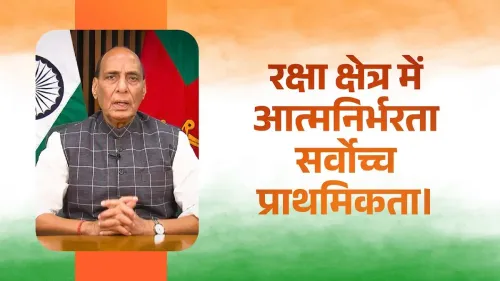
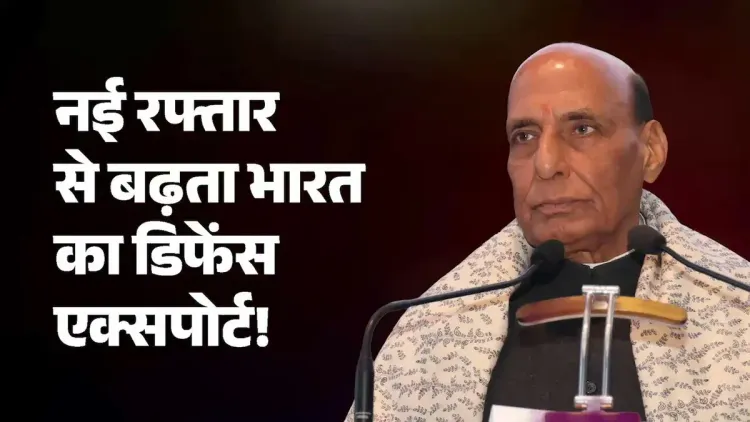
Union Defence Minister Rajnath Singh declared on November 18, 2026, that India's defence sector has surpassed the self-reliance stage and is now a growing global exporter, with all three armed services expanding capability through indigenous production.
Key Takeaways
Union Defence Minister Rajnath Singh posted on November 18, 2026 that India's defence sector is now asserting a global identity beyond domestic self-reliance.
He highlighted large-scale defence exports and 'unprecedented' growth in domestic production as the twin engines of this shift.
All three services — Indian Army, Indian Navy, and Indian Air Force — were cited as beneficiaries of expanding indigenous production capacity.
The Positive Indigenisation Lists , introduced from 2020 , banned imports of specified items to force domestic substitution and are a key policy driver behind the trend.
The Atmanirbhar Bharat initiative provided the broader institutional framework supporting both production growth and export promotion.
Specific production and export statistics are expected to be released in the next Union Budget or Ministry of Defence annual report.
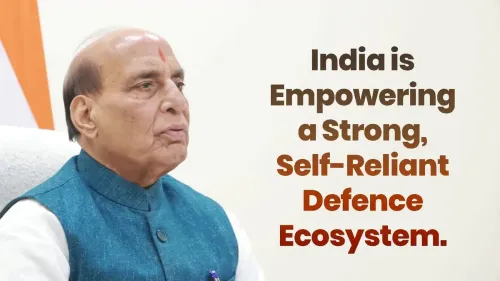
India's defence story has crossed a threshold — from plugging import gaps to actively shipping weapons and systems abroad. On Wednesday, November 18, 2026, Union Defence Minister Rajnath Singh declared on X that the country's defence sector has moved well beyond self-reliance and is now cementing a global identity, with exports scaling up and domestic production growing at an unprecedented pace.
Posting in Hindi, the Minister said: 'भारत का रक्षा क्षेत्र आत्मनिर्भरता से आगे बढ़कर वैश्विक स्तर पर अपनी पहचान मजबूत कर रहा है' — 'India's defence sector, moving beyond self-reliance, is strengthening its identity at the global level.' He added that the Army, Navy, and Air Force are all expanding capability in tandem with the surge in indigenous production, pointing to 'new heights' ahead.From import bans to export momentum
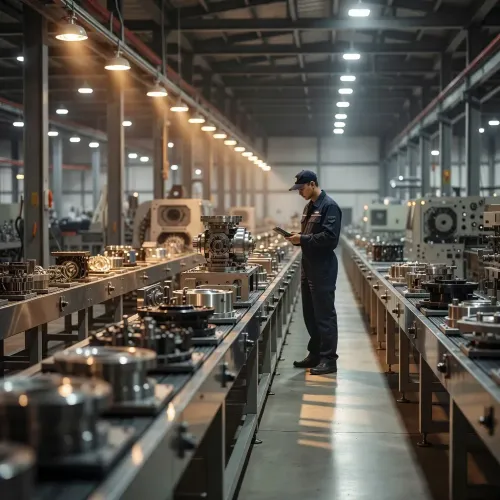
The policy scaffold behind that confidence is not new — it has been years in the making. Beginning in 2020, the Ministry of Defence rolled out successive Positive Indigenisation Lists, placing hard bans on the import of specified defence equipment and forcing the domestic industry — both public-sector giants and a growing constellation of private players — to step up. The logic was simple: cap the outflow, build the pipeline.
That pipeline has since fed an export push targeting partners across Asia, Africa, and Latin America. The arc — from a country that once imported the bulk of its frontline hardware to one that is now a named supplier to multiple nations — reflects one of the more striking reversals in India's industrial policy in recent decades.
The three-service capability push
Rajnath Singh's specific call-out of the Indian Army, Indian Navy, and Indian Air Force as beneficiaries of this production surge is deliberate framing. Each service has seen a stream of domestically produced platforms — from warships to light combat aircraft to artillery systems — commissioned in recent years, reducing the queue of foreign contracts that once defined Indian defence procurement. The Minister's post, accompanied by a video, signals that this narrative is being amplified ahead of likely budget and policy announcements.
The broader Atmanirbhar Bharat initiative, launched in 2020, gave political and institutional cover to what had been a slower, patchwork effort since 2014. Increased R&D funding, liberalised FDI rules in defence manufacturing, and dedicated export promotion cells all fed the same direction of travel.
What the numbers will eventually tell
The Minister's framing stops short of citing specific production or export figures — those will likely emerge in the next Union Budget or the Ministry's annual report. That is the data moment to watch: whether the trajectory he describes is confirmed by auditable numbers, and how India's export volumes stack up against established defence-export economies. The claim of 'unprecedented pace' is the promissory note; the accounts are yet to be presented.
India's defence sector has rarely moved this fast or this deliberately. The question now is not whether it can build — it demonstrably can. The question is whether it can sustain the global credibility that turns a one-time sale into a durable supply relationship.
Point of View
' the government signals it wants the defence export story — not just the import-substitution story — to define the next political and economic cycle. The reference to all three services is notable: it broadens the claim beyond one platform or one deal, lending it an institutional sweep that is harder to dispute. The key variable remains hard data — if the forthcoming Ministry annual report or Budget figures confirm the export surge, this narrative consolidates; if numbers disappoint, the rhetoric risks getting ahead of the reality.
NationPress
18 Nov 2026
Frequently Asked Questions
What did Rajnath Singh say about India's defence exports?
On November 18, 2026, Rajnath Singh stated that India's defence sector has moved beyond self-reliance and is now exporting defence products on a large scale, while domestic production is growing at an unprecedented pace.
What is the Atmanirbhar Bharat initiative in defence?
Atmanirbhar Bharat, launched in 2020, is a government initiative promoting self-reliance across sectors. In defence, it accelerated domestic manufacturing, R&D investment, and export promotion while reducing dependence on foreign arms imports.
What is India's Positive Indigenisation List?
The Positive Indigenisation List is a Ministry of Defence policy, introduced from 2020 onward, that bans the import of specified defence items in order to compel domestic production by Indian public and private sector manufacturers.
Which countries does India export defence products to?
India has been expanding defence exports to partner nations across Asia, Africa, and Latin America, though specific recipient countries and contract values are detailed in Ministry of Defence annual reports and budget documents.
How has India's defence production changed since 2014?
Since 2014, India has pursued sustained policy reforms including liberalised FDI in defence, increased R&D funding, and successive indigenisation mandates — a process that accelerated sharply after the launch of Atmanirbhar Bharat in 2020.