Gadkari meets BMS delegation on transport workers' concerns
Synopsis
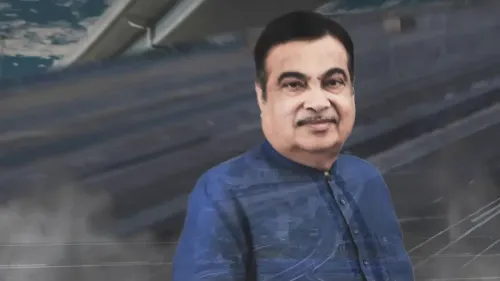
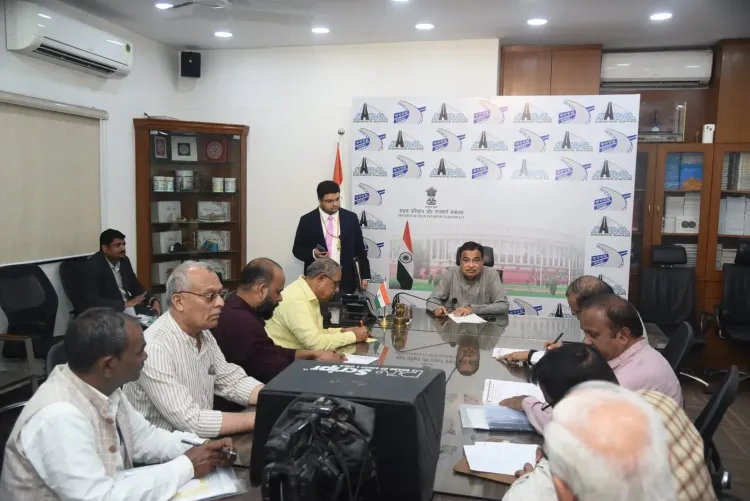
Union Minister Nitin Gadkari met a Bharatiya Mazdoor Sangh delegation led by former general secretary Ravindra Himte on 18 November 2026, holding detailed discussions on challenges facing state and private transport sector workers and receiving formal memorandums on their demands.
Key Takeaways
Union Minister Nitin Gadkari met a Bharatiya Mazdoor Sangh (BMS) delegation on 18 November 2026 .
The delegation was led by former BMS All India General Secretary Ravindra Himte and included eight other senior union representatives.
Discussions focused on concerns and challenges faced by employees in state and private transport sectors .
Gadkari received formal memorandums outlining key issues and demands, and assured due consideration.
BMS is the largest RSS-affiliated trade union; Gadkari has periodically held structured meetings with its delegations on labour concerns in infrastructure.
India's four labour codes (2019–2020) remain unevenly implemented for transport workers, particularly those on contract arrangements.
Transport workers across India's state and private bus sectors found a direct line to policy on Wednesday, 18 November 2026, when Union Road Transport and Highways Minister Nitin Gadkari held detailed discussions with a senior delegation of the Bharatiya Mazdoor Sangh (BMS) — the country's largest RSS-affiliated trade union — and received formal memorandums on their key demands.
Who sat across the table from Gadkari
The BMS delegation was led by former All India General Secretary Shri Ravindra Himte, accompanied by All India Organising Secretary Shri B. Surendran, Prabhari Shri Vallabh Bhai Vachani, and senior representatives Shri Kanak Singh Gohil, Shri Raju Bhosle Rao, Shri Kailash Malik, Shri Yogesh Sharma, Shri Ravi Shankar Alluri, and Shri Deepak. The breadth of the representation — spanning organising, regional, and sectoral leadership — signals that the concerns placed before the minister were substantive and coordinated.
Gadkari confirmed the discussions covered 'various concerns and challenges faced by employees in the State and private transport sectors' and that he had 'assured due consideration of the matters raised.' That phrase — 'due consideration' — is now the one workers and union leaders will be watching.
What BMS is pushing for — and why it matters now
The BMS has historically been the loudest organised voice for workers in road transport, logistics, and state transport undertakings (STUs). India's four labour codes enacted between 2019 and 2020 consolidated a cluttered web of central laws on wages, industrial relations, social security, and occupational safety — but their implementation at the state and enterprise level remains uneven. Transport workers, many of them on contract or informal arrangements with private bus operators, sit precisely in the gap the codes were meant to close.
Gadkari has held structured meetings with BMS delegations before on implementation issues in highways, logistics, and STUs — making this engagement part of a recognisable pattern of consultation between his ministry and Sangh-affiliated labour. The memorandums received Wednesday now create a formal paper trail: a basis for follow-up, and a benchmark against which the ministry's response will be judged.
The pressure point: state transport corporations and private operators
India's state road transport corporations have faced a prolonged financial squeeze — mounting wage arrears, pension disputes, and deteriorating service conditions. Private bus operators, meanwhile, operate in a regulatory grey zone on contract labour norms. Both sectors employ hundreds of thousands of workers whose pay, job security, and safety protections vary sharply by state. For the BMS, getting the Road Transport Ministry to actively engage — rather than deferring entirely to state governments — is itself a win.
The road runs both ways: Gadkari's ministry has been driving an aggressive highways and logistics expansion, and stable, fairly-treated labour is a precondition for sustaining that momentum. When the men and women who drive buses and load freight are underpaid or under-protected, the infrastructure ambition stalls on the ground.
The memorandums are now on the minister's desk. What comes next — a formal response, a policy directive, or a referral to state governments — will tell workers whether this meeting was a listening exercise or the beginning of a fix.
Point of View
Keeping Sangh-affiliated unions inside the tent rather than on the streets. With India's four labour codes still pending full state-level rollout, the transport sector's contract workers represent one of the most visible implementation gaps, and formal memorandums give the ministry a documented basis to act — or to be held accountable if it does not. For BMS, securing a minister's personal assurance is a mobilisation tool as much as a policy step. The real test will be whether the follow-up produces measurable changes for workers in state transport corporations and private bus operations, or whether Wednesday's meeting remains a courteous formality.
NationPress
18 Nov 2026
Frequently Asked Questions
What did Nitin Gadkari discuss with the BMS delegation?
Gadkari held detailed discussions on concerns and challenges faced by employees in state and private transport sectors, and received formal memorandums outlining the union's key issues and demands.
Who is the Bharatiya Mazdoor Sangh (BMS)?
BMS is India's largest RSS-affiliated trade union, active in organising workers across both organised and unorganised sectors, including road transport, logistics, and state transport undertakings.
Who led the BMS delegation that met Gadkari?
The delegation was led by former BMS All India General Secretary Ravindra Himte, accompanied by All India Organising Secretary B. Surendran and several other senior union representatives.
What are the main issues faced by transport workers in India?
Transport workers in state corporations and private bus companies face challenges including wage arrears, pension disputes, contract labour norms, and uneven implementation of India's four labour codes enacted in 2019–2020.
What will happen next after Gadkari received the BMS memorandums?
Gadkari assured due consideration of the matters raised. Any formal policy response, directive, or referral to state governments will indicate whether the engagement translates into concrete action for transport workers.