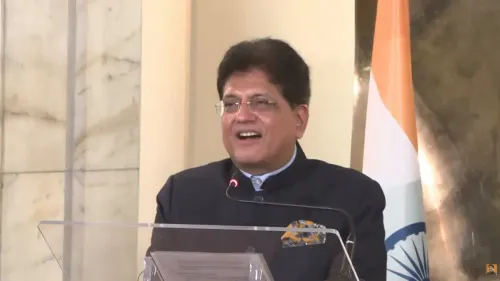
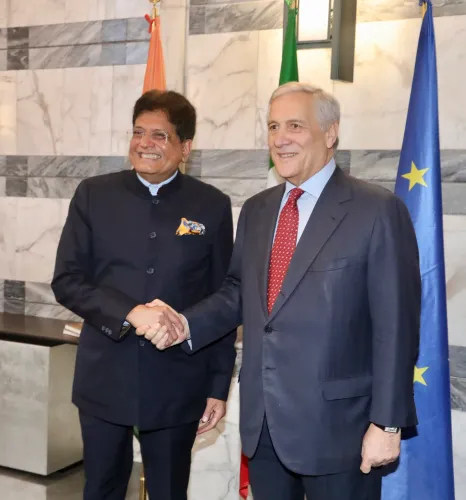
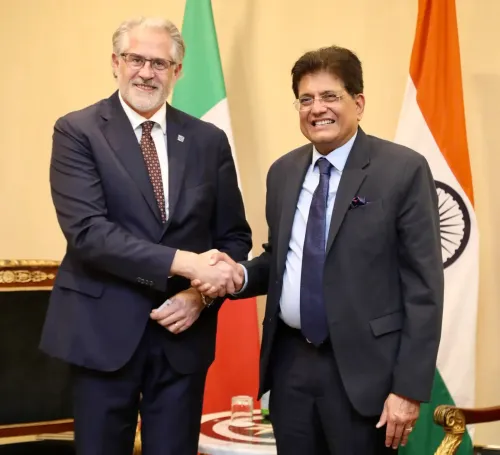
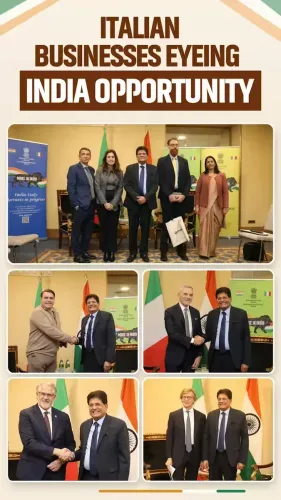
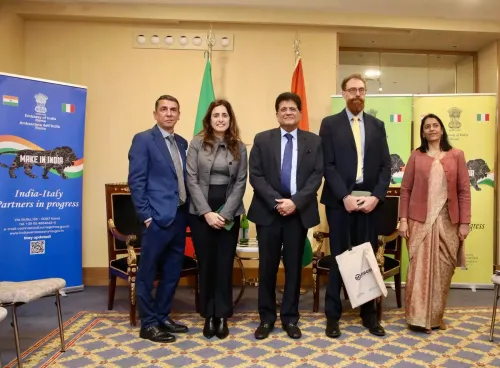
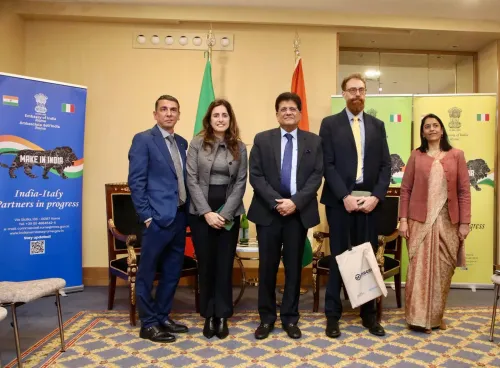
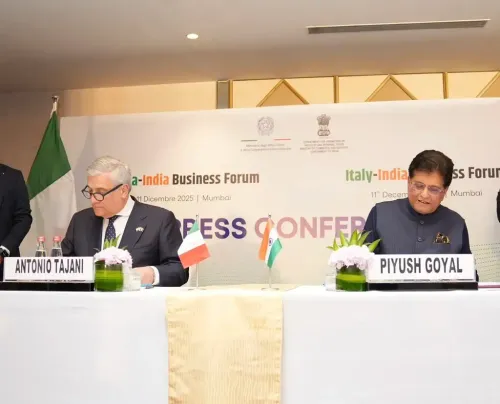
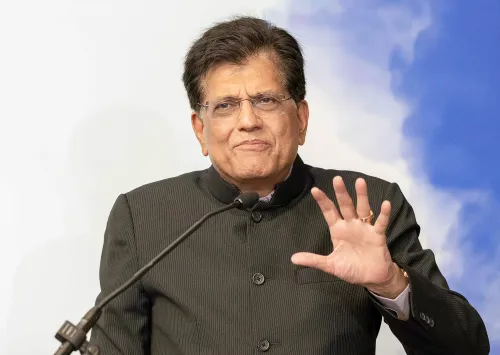
Goyal: India-Italy Joint Working Groups push sectoral ties forward
Synopsis
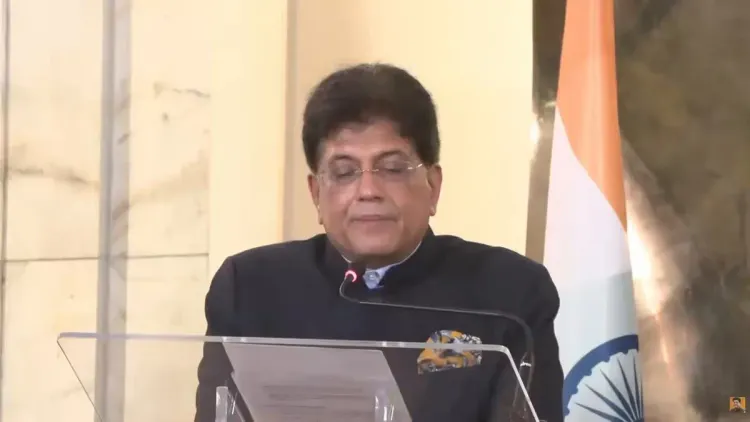
Commerce Minister Piyush Goyal announced on 18 November 2026 that India and Italy are advancing cooperation through Joint Working Groups across five sectors — renewable energy, critical minerals, commercial space, hydrogen, and food processing — with time-bound industry partnerships aimed at boosting bilateral trade.
Key Takeaways
Five Joint Working Groups between India and Italy cover Tourism and Renewable Energy, Critical Minerals and Automobiles, Commercial Space, Biofuels, Hydrogen and Energy Storage, and Food Processing.
Minister Piyush Goyal confirmed the framework on 18 November 2026 , emphasising time-bound action and stronger industry partnerships.
India and Italy established a Strategic Partnership in 2021 , which laid the foundation for these sector-specific bilateral mechanisms.
India-EU trade and investment talks relaunched in 2022 provide a broader multilateral framework supporting the Italy-specific dialogues.
The sectors reflect India's strategic priorities: supply-chain diversification, green energy transition, and high-technology industry access.
Implementation progress is expected to be reviewed at the next India-Italy bilateral meeting or at an upcoming EU-India summit.
Five concrete pillars — from critical minerals to commercial space — now anchor the India-Italy economic partnership, as Union Commerce and Industry Minister Piyush Goyal confirmed on Wednesday, 18 November 2026 that both nations are advancing cooperation through structured Joint Working Groups with time-bound deliverables.
Five sectors, one framework
The Joint Working Groups span Tourism and Renewable Energy, Critical Minerals and Automobiles, Commercial Space, Biofuels, Hydrogen and Energy Storage, and Food Processing. That is not a wishlist — it is a mapped architecture. Each group carries a mandate for action plans and industry partnerships, moving both governments past ceremonial declarations into measurable outcomes.
Minister Goyal framed the initiative in terms of 'greater trade and shared prosperity,' signalling that the emphasis falls squarely on economic delivery rather than diplomatic optics.
From 2021 strategic partnership to sector-by-sector execution
India and Italy elevated their bilateral relationship to a Strategic Partnership in 2021, laying the political groundwork for precisely this kind of technical cooperation. The relaunch of India-EU trade and investment talks in 2022 then widened the scaffolding, giving Italy-specific dialogues a broader multilateral frame to draw momentum from.
The five sectors are not arbitrary. Critical minerals sit at the heart of India's supply-chain diversification strategy. Commercial space reflects the post-ISRO liberalisation opening India's launch and satellite services to foreign industrial players. Hydrogen and biofuels align with both countries' net-zero commitments. Automobiles — where Italian design and Indian manufacturing scale each have something the other wants — represent a natural complementarity that structured dialogue can accelerate.
Why 'time-bound' is the operative word
India's recent economic diplomacy with European partners has increasingly stressed accountability — not just signing frameworks but attaching timelines to them. The explicit mention of 'time-bound action' in Goyal's post is consistent with how New Delhi has approached similar joint mechanisms with other EU members, turning goodwill into trackable trade flows.
For Indian exporters and industry players in renewable energy, space technology, and food processing, the operational health of these working groups will determine whether the partnership translates into contracts, joint ventures, and market access — or remains a diplomatic formality. The next India-Italy bilateral meeting or an EU-India summit will be the natural checkpoint.
Five sectors. Two democracies. The architecture is built — now comes the hard part of filling it.
Point of View
Accountability-driven diplomacy — a playbook being replicated across multiple EU bilateral tracks. The choice of sectors is revealing: critical minerals and commercial space address strategic supply-chain vulnerabilities, while hydrogen and food processing align with domestic industrial policy goals under Make in India and green transition mandates. For Minister Goyal, this announcement reinforces his portfolio's centrality to India's foreign economic policy at a moment when New Delhi is actively courting European capital and technology. The 'time-bound' framing is a soft but pointed message to industry on both sides that this is execution-mode, not aspiration mode.
NationPress
18 Nov 2026
Frequently Asked Questions
What are the India-Italy Joint Working Groups announced by Piyush Goyal?
They are five bilateral mechanisms covering Tourism and Renewable Energy, Critical Minerals and Automobiles, Commercial Space, Biofuels, Hydrogen and Energy Storage, and Food Processing — designed to advance sector-specific cooperation with time-bound action plans.
When did India and Italy form their Strategic Partnership?
India and Italy elevated their bilateral ties to a Strategic Partnership during a virtual summit held in 2021 , which created the political foundation for the current sectoral working groups.
Why is India partnering with Italy on critical minerals and commercial space?
Critical minerals are central to India's supply-chain diversification strategy, while commercial space cooperation follows India's liberalisation of its space sector to foreign industrial players — both areas where Italian industry offers complementary capabilities.
How does the India-Italy partnership fit into the broader India-EU trade framework?
India-EU trade and investment talks were relaunched in 2022 , providing a wider multilateral framework that supports and amplifies Italy-specific sectoral dialogues like these Joint Working Groups.
What is the significance of 'time-bound action' in India's bilateral economic diplomacy?
India has increasingly attached timelines and accountability mechanisms to joint economic frameworks with European partners, shifting the emphasis from political declarations to measurable trade and investment outcomes.