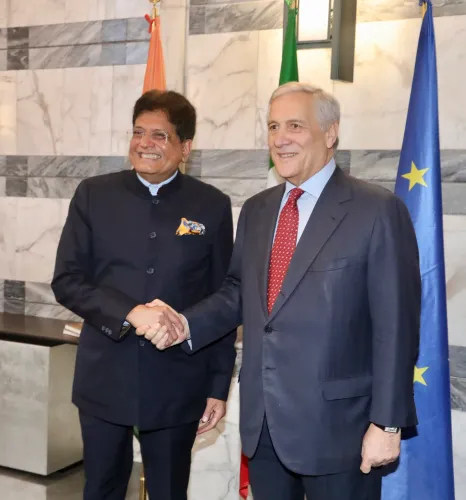
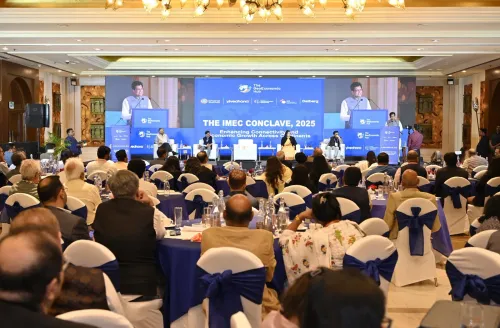
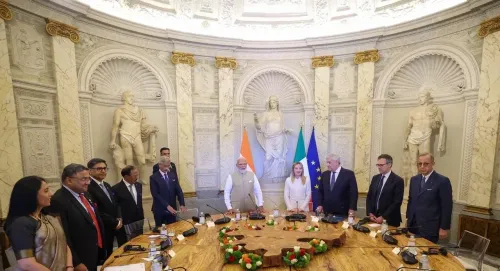
Goyal pitches India-Italy axis on IMEC, eyes 2027 EU trade deal
Synopsis
Commerce Minister Piyush Goyal has outlined a five-pillar India-Italy partnership under IMEC — spanning logistics, co-manufacturing, startups, talent mobility, and culture — and flagged the India-EU FTA for operationalisation by early 2027, marking a significant push to connect Indo-Pacific and Mediterranean trade routes.
Key Takeaways
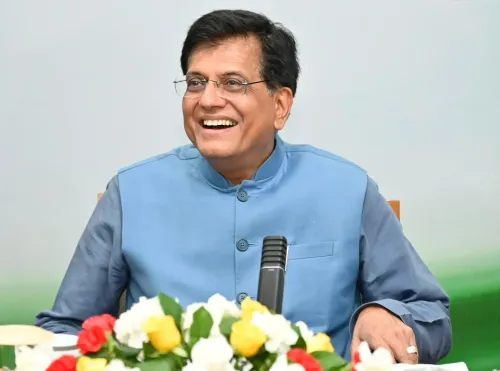
Union Commerce Minister Piyush Goyal outlined a five-pillar India-Italy agenda on 18 November 2026 .
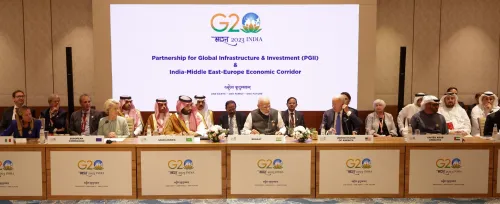
Both nations are positioned as founding members of IMEC , the India-Middle East-Europe Economic Corridor launched at the 2023 G20 Summit in New Delhi.
The five focus areas are: connectivity and logistics, co-manufacturing in technology, startup collaboration, skilled-talent mobility, and tourism, design, fashion, and cultural heritage.
Goyal flagged the India-EU FTA for operationalisation in early 2027 — a deal whose talks were relaunched in June 2022 after a nine-year suspension.
The agenda reflects India's broader strategy of pairing multimodal corridor diplomacy with bilateral and plurilateral FTAs to diversify trade routes and partners.
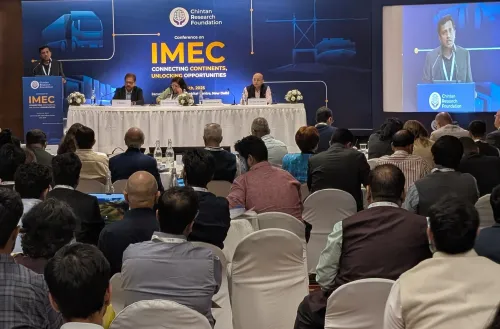
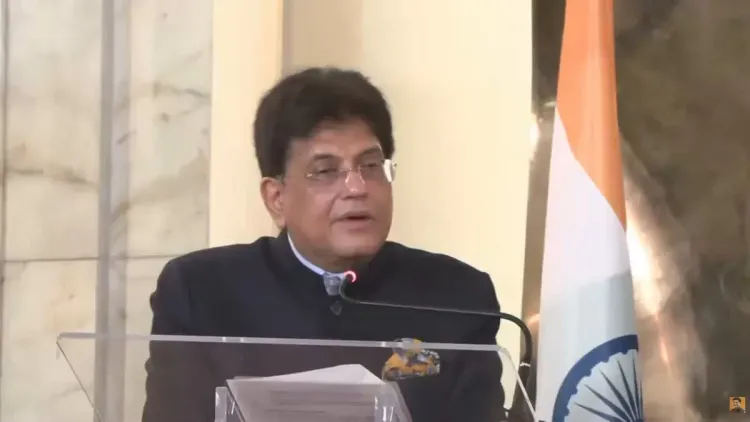
A corridor stretching from the Indo-Pacific to the Mediterranean — that is the strategic canvas Union Commerce and Industry Minister Piyush Goyal painted on Wednesday, 18 November 2026, laying out a sweeping India-Italy agenda anchored in the India-Middle East-Europe Economic Corridor (IMEC) and a bilateral partnership that spans chips to couture.
IMEC as the backbone of a new trade artery
Formally launched at the G20 Leaders' Summit in New Delhi in September 2023, IMEC was designed to stitch together Indo-Pacific supply chains with European markets through a multi-country, multimodal connectivity spine. Goyal positioned India and Italy as 'uniquely placed' founding members who can serve as the two anchoring ends of that corridor — Mumbai on one side, the Mediterranean ports on the other.
The minister spelled out five concrete focus areas: stronger connectivity and lower logistics costs; co-manufacturing and co-creation in technology; startup collaboration and innovation; mobility of skilled talent; and a cultural and creative economy cluster spanning tourism, design, fashion, and heritage. The list is deliberate — it maps precisely onto Italy's global strengths in design and advanced manufacturing, and India's hunger for technology co-creation and services exports.
The 2027 FTA deadline and what it unlocks
The highest-stakes line in Goyal's post is the one pegged to a date: 'With the India-EU FTA set to be operationalised in early 2027, we are committed to turning our shared vision into tangible opportunities.' India-EU Broad-based Trade and Investment Agreement talks had been suspended since 2013 before being relaunched in June 2022. If the 2027 timeline holds, it would represent one of the most significant trade architecture shifts for Indian exporters in a generation — slashing tariff and non-tariff barriers across a bloc that is among India's largest trading partners.
For Italian firms, the corridor and the FTA together represent a twin unlock: preferential market access into India, combined with an IMEC-enabled logistics route that could reduce shipping times and costs compared with traditional Suez-routed trade. Indian tech startups and skilled professionals, in turn, stand to gain structured mobility pathways into the EU's fourth-largest economy.
India's corridor diplomacy in full stride
Goyal's statement is the latest signal that New Delhi is treating IMEC not as a summit declaration but as an operational project to be built partnership by partnership. India has pursued a multi-track strategy — advancing plurilateral corridors while simultaneously closing bilateral and regional FTAs — to diversify its trade partners, reduce dependence on any single route, and position itself as both a manufacturing base and a high-skill services hub.
The Italy chapter is particularly textured: beyond the hard infrastructure of ports and rail, the agenda Goyal outlined threads in the soft economy — design collaboration, cultural tourism, heritage — signalling that this is not merely a supply-chain play but an attempt to integrate Indian and Italian creative industries into a shared commercial ecosystem.
The next milestones to watch are concrete IMEC infrastructure commitments from participating governments and any formal ratification steps on the India-EU FTA ahead of the cited 2027 operationalisation window. The corridor's promise is vivid; the construction schedule will determine whether it delivers.
Point of View
Signalling that New Delhi wants partner capitals to see these tracks as mutually reinforcing rather than parallel. Anchoring the pitch to a concrete 2027 FTA deadline injects political urgency and creates a performance benchmark that both governments will be held to. The inclusion of design, fashion, and cultural heritage alongside technology and logistics is a strategic signal: India is reaching for a creative-economy partnership, not just a supply-chain one. If the FTA timeline slips or IMEC infrastructure commitments stall, this high-visibility framing risks becoming a liability rather than a credential.
NationPress
18 Nov 2026
Frequently Asked Questions
What is IMEC and why does it matter for India?
IMEC — the India-Middle East-Europe Economic Corridor — was launched at the G20 Summit in New Delhi in September 2023 to connect Indo-Pacific supply chains with European markets via a multimodal route through the Middle East. For India, it offers lower logistics costs, faster access to European markets, and an alternative to traditional sea routes through the Suez Canal.
When is the India-EU FTA expected to come into effect?
Commerce Minister Piyush Goyal has stated that the India-EU Free Trade Agreement is set to be operationalised in early 2027. The talks, which were suspended in 2013, were relaunched in June 2022.
What are the five focus areas Piyush Goyal outlined for India-Italy cooperation?
Goyal listed five areas: stronger connectivity and lower logistics costs under IMEC; co-manufacturing and co-creation in technology; startup collaboration and innovation; mobility of skilled talent; and cooperation in tourism, design, fashion, heritage, and culture.
Is Italy a member of IMEC?
Italy has been part of IMEC discussions and Goyal referred to both India and Italy as founding members of the corridor, though the full list of founding signatories as finalised cannot be independently confirmed from current available data.
How does the India-Italy trade partnership fit into India's broader trade strategy?
India has pursued a dual strategy of building multimodal economic corridors such as IMEC while simultaneously concluding bilateral and plurilateral FTAs. The Italy partnership exemplifies this approach by combining hard infrastructure connectivity with market-access negotiations under the India-EU FTA.