IMEC corridor urgently needed as Middle East conflict disrupts trade routes
Synopsis
IMEC was meant to redraw the India-Europe trade map — then the Middle East caught fire. The same conflict that froze the corridor has also made the case for it more urgent: Red Sea disruptions, Europe's post-Ukraine supply chain anxiety, and India's rising economic weight are converging to push IMEC back to the top of the geopolitical agenda.
Key Takeaways
IMEC was launched at the G20 summit in New Delhi in 2023 as a democratic alternative to China's Belt and Road Initiative .
The corridor links India to Europe via Saudi Arabia , Jordan , Israel's Haifa port , bypassing volatile maritime chokepoints.
Middle East conflict has put IMEC in cold storage, but simultaneously made it more urgently needed, according to the analysis.
Studies estimate IMEC could cut India-Europe transit times by 40% and logistics costs by 30% , reducing container shipping costs from $6,000 to $4,200 .
At 1.5 million containers annually , the corridor could save approximately $2.7 billion per year in freight costs alone.
Israel's Haifa port could become the eastern Mediterranean's primary logistics hub if IMEC is fully operationalised.
The India-Middle East-Europe Economic Corridor (IMEC), unveiled at the G20 summit in New Delhi in 2023, has emerged as an increasingly urgent geopolitical and commercial priority as Middle East conflict continues to disrupt maritime trade across the Persian Gulf and the Red Sea, according to an analysis published by the Jewish Telegraphic Agency. Widely regarded as the democratic world's strategic counter to China's Belt and Road Initiative, IMEC now finds itself simultaneously stalled and more necessary than ever.
The Original Vision
IMEC was conceived as an integrated network of ports, railways, energy infrastructure, fibre-optic cables and logistics links stretching from India through the Arabian Peninsula — via Saudi Arabia and Jordan — into Israel and onward through Haifa to Europe. The design was deliberate: bypass volatile maritime chokepoints and unstable transit states including Iraq, Syria, and Lebanon, creating a more resilient east-west supply chain.
Why the Conflict Has Deepened the Case for IMEC
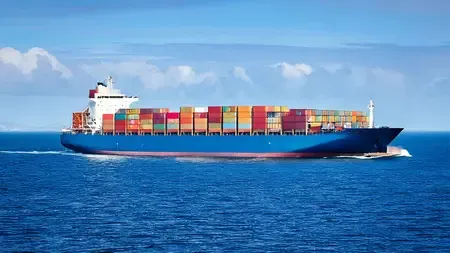
The ongoing Middle East conflict has placed the corridor effectively in cold storage, according to the report. Yet the same conflict has simultaneously exposed the fragility of existing trade routes. Houthi attacks on Red Sea shipping and broader regional instability have forced cargo to longer, costlier detours — precisely the disruptions IMEC was designed to pre-empt. This is the central contradiction: the crisis that paused IMEC is the same crisis that validates it.
Notably, India is described in the analysis as the world's principal engine of economic growth, while Europe — still recalibrating its energy and trade relationships after Russia's invasion of Ukraine in 2022 — is actively seeking to diversify critical supply chains. Governments across both regions, according to the report, increasingly treat supply chain architecture as a matter of national security, not merely commercial logistics.
Israel's Strategic Role and Economic Upside
If IMEC reaches full operationalisation with Israel at its centre, the country's Haifa port could develop into the eastern Mediterranean's primary logistics hub, the analysis argues. Beyond physical transit, Israel's established capabilities in artificial intelligence, cybersecurity, semiconductors, desalination, and energy technology would become embedded in supply chains running from Bengaluru to Berlin. The corridor, in this framing, would export Israeli services, innovation, and capital alongside physical goods.
The Numbers: Transit Time and Cost Savings
Recent studies cited in the analysis estimate that a fully operational IMEC could reduce India-Europe transit times by up to 40 per cent and cut logistics costs by approximately 30 per cent. The cost of shipping a standard container would fall from around $6,000 to roughly $4,200. At modest volumes of 1.5 million containers annually, the corridor could generate freight savings of approximately $2.7 billion per year — in addition to creating an ecosystem for new business activity along its length.
What Comes Next
The corridor's future hinges on regional de-escalation, particularly the resolution — or at least stabilisation — of the Israel-Gaza conflict and broader Gulf tensions. With India, Saudi Arabia, the UAE, Jordan, Israel, and key European nations all formally committed to the framework, the political architecture exists. What remains is the geopolitical window to activate it. Analysts suggest that every month of delay extends the cost advantage enjoyed by alternative routes — including those championed by Beijing under the Belt and Road framework.
Point of View
But that window will not stay open indefinitely. Every month IMEC remains on paper, China's Belt and Road deepens its physical and institutional foothold across the same geography. The $2.7 billion annual freight saving figure is real, but the larger prize — embedding India and Israel into European supply chain architecture before Beijing does — is the one that geopolitical planners are actually watching.
NationPress
28 Sept 2026
Frequently Asked Questions
What is the India-Middle East-Europe Economic Corridor (IMEC)?
IMEC is a proposed network of ports, railways, energy infrastructure, fibre-optic cables, and logistics links connecting India to Europe via Saudi Arabia, Jordan, and Israel's Haifa port. It was formally announced at the G20 summit in New Delhi in 2023 and is widely viewed as a democratic-world alternative to China's Belt and Road Initiative.
Why has the Middle East conflict affected IMEC?
The ongoing Middle East conflict has placed IMEC effectively in cold storage by making transit through the region diplomatically and operationally complex. Paradoxically, the same conflict — through Houthi attacks on Red Sea shipping and broader Gulf instability — has also intensified the need for a reliable overland-and-port alternative.
How much could IMEC save in freight costs?
Studies cited in the analysis estimate IMEC could reduce India-Europe transit times by up to 40 per cent and cut logistics costs by roughly 30 per cent, bringing the cost of a standard container from around $6,000 to approximately $4,200. At modest volumes of 1.5 million containers annually, that translates to freight savings of about $2.7 billion per year.
What role would Israel play in IMEC?
Israel's Haifa port is envisioned as the corridor's western anchor and potentially the eastern Mediterranean's principal logistics hub. Beyond physical transit, Israel's capabilities in AI, cybersecurity, semiconductors, desalination, and energy technology would be integrated into supply chains stretching from Bengaluru to Berlin.
Why is IMEC seen as urgent now?
India is emerging as a leading global growth engine, Europe is diversifying supply chains following Russia's 2022 invasion of Ukraine, and governments increasingly treat trade route architecture as a national security matter. These converging pressures, combined with Red Sea disruptions, have made IMEC's completion more strategically critical than at any point since its 2023 launch.