IMEC gets bipartisan US backing as India-Europe trade game changer
Synopsis
US lawmakers gave IMEC its clearest bipartisan endorsement yet, calling it a generational infrastructure project that could halve India-Europe transit times and directly counter China's BRI. But the corridor's viability still hinges on one unresolved fault line: Saudi Arabia's refusal to allow Israeli-linked goods across its territory.
Key Takeaways
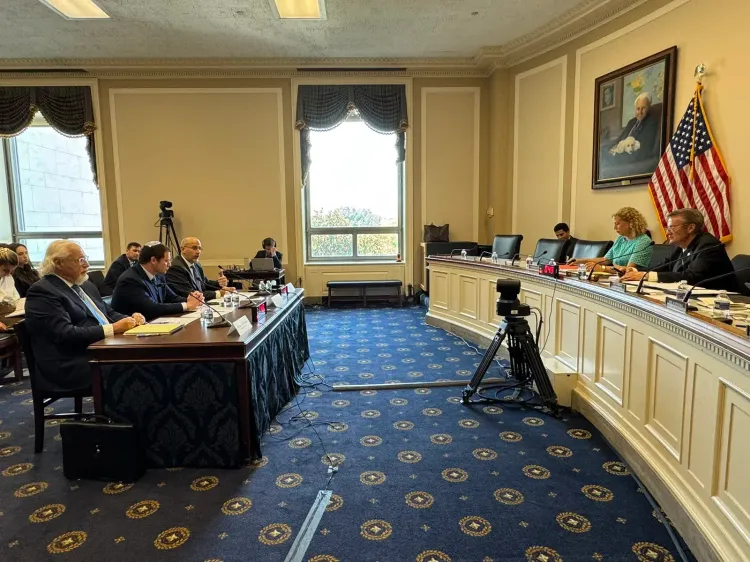
The House Foreign Affairs Subcommittee on the Middle East and North Africa heard bipartisan testimony backing IMEC on 24 July .
Experts said IMEC could cut India-Europe transit times by approximately 51 percent and serve as a direct alternative to China's Belt and Road Initiative .
Asher Fredman called for a US-convened IMEC leaders forum and a standing secretariat, plus studies by the US International Trade Commission and Department of Commerce .
Subcommittee Chairman Mike Lawler warned against removing Israel from IMEC plans and wrote to Secretary of State Marco Rubio on the matter.
Saudi Arabia's current ban on Israeli-linked cargo crossing its territory remains a key political and logistical obstacle to operationalising the corridor.
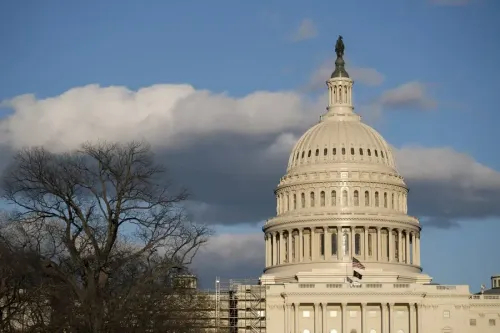
The proposed India-Middle East-Europe Economic Corridor (IMEC) secured strong bipartisan support at a US congressional hearing on 24 July, with lawmakers and policy experts unanimously framing the corridor as a strategic counterweight to China's Belt and Road Initiative (BRI) that could cut transit times between India and Europe by more than 51 percent. The hearing, convened by the House Foreign Affairs Subcommittee on the Middle East and North Africa, centred on the future of the Abraham Accords and placed IMEC at the heart of the regional integration debate.
Key Testimony and What Witnesses Said
Asher Fredman, Executive Director of the Misgav Institute for National Security and a visiting fellow at The Heritage Foundation, described IMEC as 'one of the most consequential infrastructure projects of this generation.' He told lawmakers the corridor would shorten transit times between India and Europe by approximately 51 percent, support strategic east-west natural gas and digital infrastructure, and create a US-aligned zone of economic growth as a direct alternative to the Chinese BRI.
Fredman urged Congress to direct the US International Trade Commission and the Department of Commerce to study the corridor's economic impact and prepare an actionable roadmap covering investment opportunities, commercially viable projects, and customs harmonisation measures. He also called on Washington to 'convene an IMEC leaders forum and establish a standing secretariat to enhance accountability.'
Former US Ambassador to Israel Daniel Shapiro described IMEC as one of the key regional initiatives to emerge from the Abraham Accords framework, noting it remained strategically relevant despite ongoing instability across the Middle East. He pointed to repeated disruptions in the Strait of Hormuz since March as fresh evidence of why alternative trade and energy routes were urgently needed. 'The repeated closure of the Strait of Hormuz since March reinforces the value of alternative energy routes and expanded infrastructure, a core pillar of IMEC,' Shapiro said.
Israel's Role: A Point of Contention
Subcommittee Chairman Mike Lawler raised concern over reports that some officials were considering removing Israel from IMEC's design, warning that Israel had been 'a critical piece of the puzzle connecting Saudi Arabia and Greece.' Lawler disclosed he had written to Secretary of State Marco Rubio urging the administration to ensure Israel remained part of the initiative.
Former US Ambassador to Israel David Friedman echoed that view, calling IMEC and similar connectivity projects 'integral to a more peaceful and cooperative Middle East.' He argued that Congress, as 'the keeper of the purse,' had a direct role to play in advancing such economic linkages, adding: 'That is, of course, in most cases, how peace is born.'
Political Hurdles Remain
Fredman acknowledged that significant political obstacles still stood between the current concept and full operationalisation. He noted that as of the hearing, Saudi Arabia would not permit goods originating in or destined for Israel to cross its territory — a fundamental logistical barrier. However, he argued that Riyadh's stated ambition to become 'a global logistics and transportation hub' could eventually create the conditions to remove those restrictions.
He suggested the United States could help finance new rail infrastructure linking Saudi Arabia and Israel, saying such investments 'would be good for American companies, for American technologies, and it would be good for making IMEC a reality.'
What IMEC Means for India
For India, IMEC is regarded as a flagship strategic connectivity initiative with the potential to dramatically reduce shipping times to European markets, diversify supply chains, and deepen economic ties with West Asia and Europe. The corridor has also emerged as a central pillar of the expanding India-US strategic partnership and is widely positioned as a rules-based, transparent alternative to China's BRI. Congressional momentum, if it translates into executive action and funding commitments, could significantly accelerate IMEC's timeline from blueprint to ground-level infrastructure.
Point of View
But enthusiasm is not infrastructure. The corridor has been announced, re-announced, and celebrated at summits since 2023, yet no shovel has broken ground. The Saudi-Israel cargo restriction — openly acknowledged at the hearing — is not a minor procedural gap; it is a structural block that no amount of US financing can resolve without a political breakthrough that remains distant. For India, the risk is that IMEC becomes a strategic talking point that flatters the India-US partnership narrative while delivering little in actual trade infrastructure. The real test will be whether Congress follows testimony with appropriations, and whether the administration can move Riyadh and Tel Aviv closer to the normalisation that IMEC implicitly requires.
NationPress
22 Oct 2026
Frequently Asked Questions
What is IMEC and why does it matter for India?
IMEC, or the India-Middle East-Europe Economic Corridor, is a proposed multimodal trade route connecting India to Europe via the Middle East. For India, it could cut shipping times to European markets by approximately 51 percent, diversify supply chains, and strengthen economic ties with West Asia — making it a flagship element of India's strategic connectivity agenda and its partnership with the United States.
What did the US congressional hearing on 24 July conclude about IMEC?
The House Foreign Affairs Subcommittee on the Middle East and North Africa heard bipartisan testimony describing IMEC as one of the most consequential infrastructure projects of this generation. Witnesses urged Congress to fund studies, establish a standing secretariat, and ensure the US takes a more active implementation role rather than leaving the corridor at the concept stage.
Why is Israel's inclusion in IMEC controversial?
Reports emerged ahead of the hearing that some officials were considering redesigning IMEC to exclude Israel. Subcommittee Chairman Mike Lawler pushed back strongly, noting that Israel was originally conceived as a critical link between Saudi Arabia and Greece. He disclosed he had written to Secretary of State Marco Rubio urging the administration to keep Israel in the corridor's design.
What is the biggest obstacle to IMEC becoming operational?
The most significant political hurdle is Saudi Arabia's current refusal to allow goods originating in or destined for Israel to cross its territory. Witness Asher Fredman acknowledged this at the hearing but argued that Saudi Arabia's ambition to become a global logistics hub could eventually create conditions to remove the restriction.
How does IMEC compare to China's Belt and Road Initiative?
IMEC is widely positioned as a rules-based, transparent alternative to China's Belt and Road Initiative (BRI). Unlike BRI, which critics argue locks partner countries into opaque debt arrangements, IMEC is designed as a US-aligned corridor with open investment frameworks. Experts at the hearing argued that a fully operational IMEC would directly compete with BRI for influence over Eurasian trade flows.