IMEC trade corridor will stabilise region, say Greek and Israeli envoys
Synopsis
Two senior European and Middle Eastern diplomats have put their weight behind IMEC — framing it not just as a trade route but as the most credible long-term answer to China's Belt and Road dominance in Eurasia. With Greece and Israel both publicly championing the corridor, IMEC is fast becoming a diplomatic litmus test for the 'values-based' alternative to Beijing's infrastructure model.
Key Takeaways
Greek Deputy Foreign Minister Alexandra Papadopoulou called IMEC 'the real long-term certificate for stability in the region'.
Israeli Deputy Foreign Minister Sharren Haskel highlighted Israel's interest in IMEC-linked collaboration on infrastructure and energy .
IMEC is positioned as a 'values-based' alternative to China's Belt and Road Initiative (BRI) , aiming to reduce Beijing's leverage over Eurasian trade.
Papadopoulou confirmed the project has the backing of the majority of Greek political leaders .
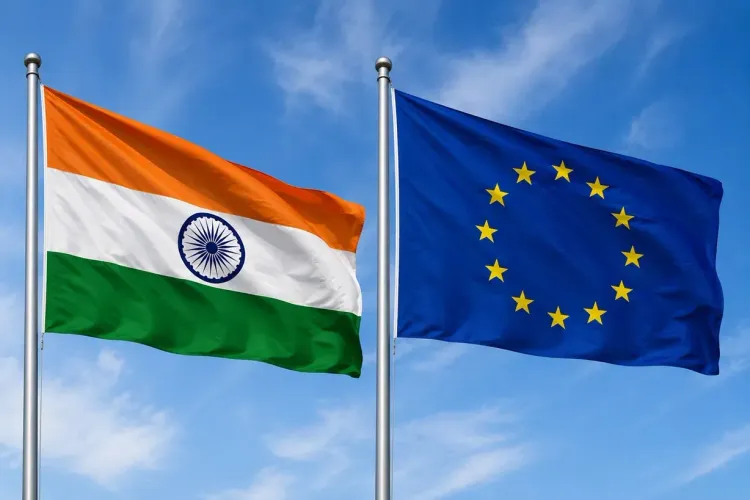
IMEC was formally announced at the G20 Summit in New Delhi in September 2023 , with nine signatories including India , the US , and the EU .
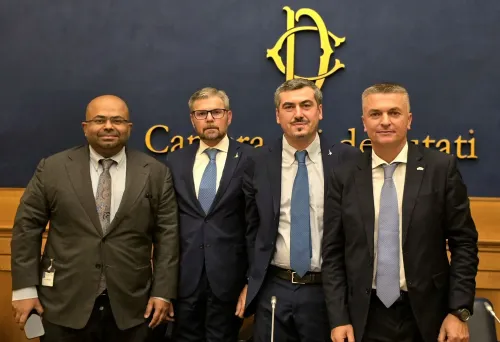
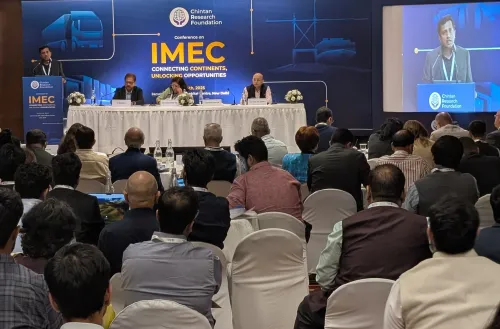
Senior Greek and Israeli diplomats have voiced strong support for the India-Middle East-Europe Economic Corridor (IMEC), describing the proposed trade route as a transformative project that could unlock significant economic opportunities and bring lasting stability to a region long marked by conflict. Their remarks, cited in a recent report, come as IMEC gains renewed diplomatic momentum.
What the Diplomats Said
Greek Deputy Foreign Minister Alexandra Papadopoulou called IMEC 'the real long-term certificate for stability in the region', adding that the project 'would change the whole region from India all the way to Europe'. She noted that the corridor has the backing of the majority of Greek political leaders — a signal of rare cross-party consensus on a foreign policy initiative.
Israeli Deputy Foreign Minister Sharren Haskel said Israel sees considerable scope for collaboration in security and economic connectivity, with a particular focus on infrastructure and energy. 'I think our relationship goes back thousands of years. These are two ancient civilisations that have shared so much with the world as well,' Haskel said, framing the corridor as an extension of deep civilisational ties between India and Israel.
IMEC as a Strategic Counterweight to China's BRI
The India-Middle East-Europe Economic Corridor is designed to offer a 'values-based' alternative to China's Belt and Road Initiative (BRI), according to the report, with the explicit aim of reducing Beijing's leverage over Eurasian trade and energy flows. Over the past decade, China has deployed large-scale investments in transportation, energy, and telecommunications to establish a commanding presence across the Middle East, South Asia, and Europe.
This has, according to the report, created a structural interdependence in which economic relationships are inextricably linked to Chinese strategic interests. IMEC, the report argues, represents a normative counterweight — favouring decentralised, market-driven financing over the state-centric, top-down model that characterises BRI.
Greece's Role and Regional Significance
Papadopoulou positioned Greece as a model of close bilateral cooperation in pursuit of shared goals. 'We can serve as a good example of close cooperation between two countries that share similar goals and similar objectives about stability, peace, and prosperity in the entire region,' she said. Greece's role as a key European maritime gateway makes it a critical node in the IMEC architecture, connecting sea lanes from the Indian Ocean through the Mediterranean into continental Europe.
What Comes Next
IMEC was formally announced on the sidelines of the G20 Summit in New Delhi in September 2023, signed by India, the United States, the European Union, Saudi Arabia, the UAE, France, Germany, Italy, and others. Implementation timelines and detailed infrastructure agreements remain under negotiation. With both Greece and Israel now publicly championing the corridor, diplomatic pressure on participating governments to accelerate planning is likely to grow.
Point of View
A complication neither diplomat addressed directly. The corridor's framing as a BRI alternative is strategically sound, but the gap between its normative appeal and its implementation reality remains the story mainstream coverage consistently underplays.
NationPress
24 Sept 2026
Frequently Asked Questions
What is the India-Middle East-Europe Economic Corridor (IMEC)?
IMEC is a proposed multimodal trade and infrastructure corridor linking India to Europe via the Middle East , announced at the G20 Summit in New Delhi in September 2023. It is designed as a values-based alternative to China's Belt and Road Initiative, connecting rail, shipping, and energy networks across nine signatory nations.
Why are Greece and Israel supporting IMEC?
Greek Deputy Foreign Minister Alexandra Papadopoulou described IMEC as a 'long-term certificate for stability' that would transform the region from India to Europe, while Israeli Deputy Foreign Minister Sharren Haskel cited major opportunities in infrastructure and energy collaboration. Both countries stand to benefit as key geographic nodes in the corridor.
How does IMEC challenge China's Belt and Road Initiative?
IMEC is explicitly framed as a normative counterweight to China's BRI, favouring decentralised, market-driven financing over state-centric, top-down investment. According to a recent report, China's BRI has created structural economic dependencies tied to Chinese strategic interests across the Middle East, South Asia, and Europe — dependencies IMEC aims to reduce.
Who has signed on to IMEC?
IMEC was signed by nine parties at the G20 in September 2023: India, the United States, the European Union, Saudi Arabia, the UAE, France, Germany, Italy, and others. Implementation details and infrastructure agreements remain under active negotiation.
What is the current status of IMEC implementation?
As of mid-2025, IMEC remains in the planning and negotiation phase. Detailed infrastructure agreements have not yet been finalised, and progress has been complicated by regional geopolitical developments. Diplomatic support from countries like Greece and Israel is seen as adding momentum to the process.