I2U2 and IMEC cement India's strategic pivot in the Middle East
Synopsis
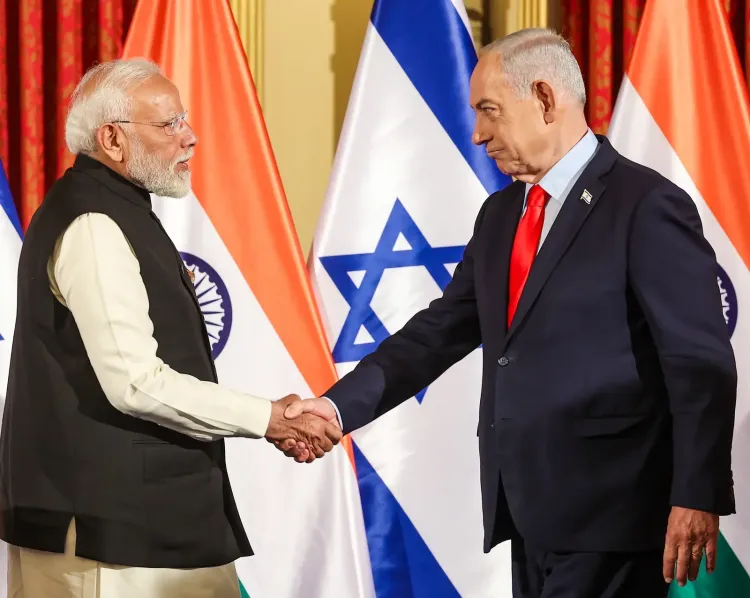
A report in The Jerusalem Post argues that India has quietly emerged as the indispensable bridge in a reshaping Middle East — linking Israeli innovation, Gulf capital, and American strategic interests through I2U2 and IMEC. As Washington pulls back militarily, India's ability to engage across political divides without demanding ideological alignment is fast becoming its most valuable geopolitical currency.
Key Takeaways
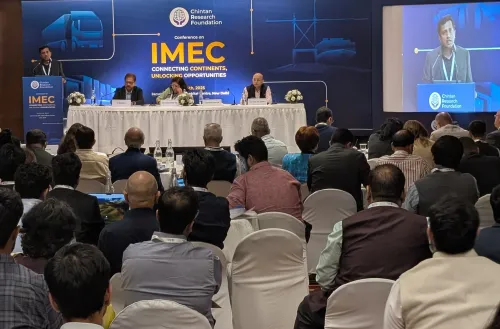
A Jerusalem Post report identifies India as a central strategic actor in the Middle East , anchored by the I2U2 grouping and the India-Middle East-Europe Economic Corridor (IMEC) .
India-Israel cooperation over three decades now spans cybersecurity, AI, space technology, agriculture, and start-up ecosystems — well beyond defence.
The UAE and Saudi Arabia view India as a long-term strategic partner, not merely an energy market, as Riyadh pursues Vision 2030 .
India is investing in the Andaman and Nicobar Islands as a maritime hub overlooking the Strait of Malacca , complementing IMEC's Mediterranean-to-Southeast Asia vision.
As the US reduces direct military involvement, India has positioned itself as a trusted regional actor capable of engaging across political divides.
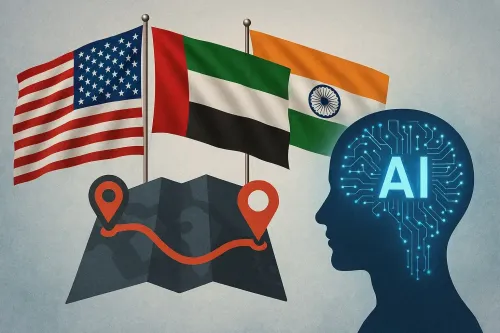
India's expanding role in the Middle East is being anchored by two landmark frameworks — the India-Israel-United Arab Emirates-United States (I2U2) grouping and the India-Middle East-Europe Economic Corridor (IMEC) — which together signal a decisive shift from military-centric regional diplomacy toward economic integration and strategic connectivity, according to a report published by The Jerusalem Post.
India as the Region's Strategic Bridge
The report argues that the Middle East's geopolitical architecture is being redrawn not by military alliances alone, but by economic corridors, technological partnerships, and resilient supply chains. At the centre of this transformation, it notes, stands India — described as 'one of the few countries capable of linking the United States, Israel, the UAE, and, increasingly, Saudi Arabia.'
As Washington seeks dependable partners to preserve regional stability while scaling back direct military involvement, India has positioned itself as a trusted actor capable of engaging across political divides without demanding ideological alignment, the report states.
India-Israel Ties: Beyond Defence Procurement
According to the report, the India-Israel partnership has evolved well beyond defence procurement over the past three decades. Cooperation now spans counterterrorism, intelligence sharing, cybersecurity, agriculture, water management, artificial intelligence, space technology, healthcare innovation, and start-up ecosystems.
For Israel, the report argues, this evolution 'represents far more than another diplomatic milestone.' It presents an opportunity to anchor itself within a broader strategic framework that combines Israeli innovation, Gulf investment, American leadership, and India's economic weight.
Gulf States See India as Long-Term Strategic Partner
The UAE and Saudi Arabia increasingly regard India not merely as a key energy market but as a long-term strategic partner, the report notes. India offers a fast-growing large economy, an expanding investment destination, a dependable food-security partner, and a large pool of skilled professionals contributing to Gulf economies.
As Riyadh pursues its Vision 2030 agenda and Abu Dhabi accelerates ambitions in advanced manufacturing and technology, India's industrial growth offers what the report calls 'natural economic complementarity.' This convergence, it adds, has positioned India as 'the bridge connecting Israeli innovation, Gulf capital, and American strategic interests.'
IMEC and the Andaman-Mediterranean Arc
The report also highlights India's investment in the Andaman and Nicobar Islands as a strategic maritime hub overlooking the Strait of Malacca. Taken together with IMEC, this reflects what the report describes as a broader vision linking the Mediterranean to Southeast Asia through secure and resilient trade corridors.
A stronger India-US partnership, the report adds, would further reinforce the foundations of both I2U2 and IMEC, while India's deepening ties with Saudi Arabia and the UAE are opening diplomatic channels that could eventually facilitate wider regional cooperation involving Israel.
As the strategic landscape continues to evolve, India's ability to simultaneously engage Israel, the Gulf states, and the United States without being bound to any single bloc may prove to be its most durable geopolitical asset in the region.
Point of View
Not transactional. Unlike past episodes of Indian engagement driven by oil dependency or diaspora remittances, the I2U2-IMEC architecture is explicitly about supply chains, technology, and security architecture. The more interesting question is whether India can sustain this balancing act as the Gaza conflict and Iran-Israel tensions continue to strain Gulf-Israel normalisation. India's value to all parties rests on its studied neutrality; any forced alignment could erode the very credibility that makes it indispensable. The Andaman-Malacca investment is the clearest signal yet that New Delhi is thinking in decades, not diplomatic cycles.
NationPress
30 Sept 2026
Frequently Asked Questions
What is the I2U2 grouping and why does it matter for India?
I2U2 is a strategic grouping comprising India, Israel, the United Arab Emirates, and the United States, focused on economic integration, technology, and regional security. It matters for India because it formalises New Delhi's role as a bridge between Israeli innovation, Gulf capital, and American strategic interests in the Middle East.
What is the India-Middle East-Europe Economic Corridor (IMEC)?
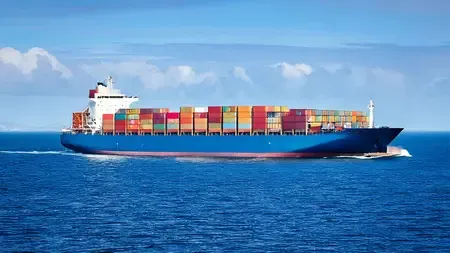
IMEC is a proposed trade and connectivity corridor linking India to Europe via the Middle East, designed to create resilient supply chains and reduce dependence on existing maritime chokepoints. Together with India's investments in the Andaman and Nicobar Islands, it forms part of a broader vision connecting the Mediterranean to Southeast Asia.
How has the India-Israel partnership evolved beyond defence?
Over the past three decades, the India-Israel partnership has expanded to cover counterterrorism, intelligence sharing, cybersecurity, agriculture, water management, artificial intelligence, space technology, healthcare innovation, and start-up ecosystems, according to the report.
Why are the UAE and Saudi Arabia deepening ties with India?
The UAE and Saudi Arabia increasingly view India as a long-term strategic partner rather than just an energy market. India offers a fast-growing economy, investment opportunities, food security, and a large skilled workforce — factors that align with Riyadh's Vision 2030 and Abu Dhabi's advanced manufacturing ambitions.
What role does India play as the US reduces its military presence in the Middle East?
As Washington seeks to scale back direct military involvement, India has emerged as a trusted regional actor capable of engaging across political divides without demanding ideological alignment, according to the report. This positions India as a stabilising partner for both the US and regional states.