How is the Eastern Mediterranean Bill with India-connectivity focus progressing in the US Congress?
Synopsis
A bipartisan US bill emphasizes the Eastern Mediterranean's pivotal role in enhancing connectivity with India. With significant support in Congress, the Eastern Mediterranean Gateway Act aims to strengthen US partnerships and energy security along the India-Middle East-Europe Economic Corridor (IMEC).
Key Takeaways
Bipartisan support for the Eastern Mediterranean Gateway Act is evident in Congress.
This legislation aims to enhance energy security and regional cooperation.
The act is integral to the India-Middle East-Europe Economic Corridor (IMEC) .
US partnerships with Greece, Cyprus, Israel, and Egypt are strengthened through this bill.
IMEC offers an alternative to China's Belt and Road Initiative.
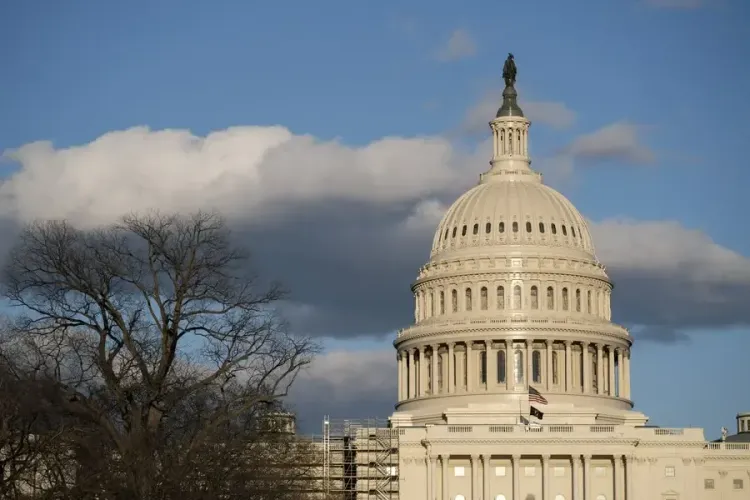
Washington, Jan 22 (NationPress) A bipartisan bill in the US Congress has successfully advanced, placing the Eastern Mediterranean at the forefront of American foreign policy, with a specific focus on India-linked connectivity.
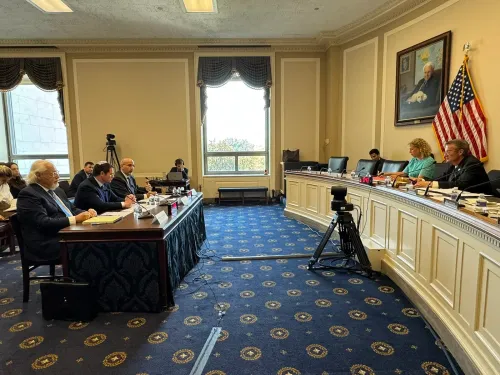
The Eastern Mediterranean Gateway Act received overwhelming support from the House Foreign Affairs Committee, passing with a vote of 45–2. This significant endorsement propels the bill to the next phase of deliberation, paving the way for a potential full House vote.
Led by Congressman Brad Schneider, this legislation enjoys backing from members across the political spectrum.
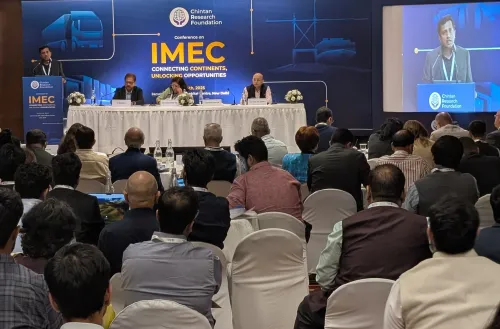
Proponents argue that it enhances the Eastern Mediterranean's role as a crucial link between India, the Middle East, and Europe, aligning with the India–Middle East–Europe Economic Corridor, commonly referred to as IMEC.
“The Eastern Mediterranean is becoming a pivotal hub for energy and infrastructure, connecting Europe, the Middle East, and India,” Schneider stated.
The Congressman emphasized that the bill ensures US diplomatic efforts adapt to this evolving landscape while reinforcing partnerships with Greece, Cyprus, Israel, and Egypt.
Schneider expressed optimism that the full House will soon consider the bill, which aims to bolster global energy supply chains and enhance defense collaboration in the region.
This committee vote represents a crucial milestone for IMEC, which India views as a strategic corridor aimed at connecting the subcontinent to Europe via the Gulf and the Eastern Mediterranean.
Lawmakers supporting the bill highlighted the corridor's importance for energy security, trade, and regional cooperation.
Congressman Gus Bilirakis, a co-sponsor and co-chair of the Hellenic Caucus, remarked that endorsing IMEC is essential for improving energy security, economic integration, and regional collaboration.
He noted that the bill promotes an initiative that will diversify energy routes and fortify global supply chains.
Bilirakis also pointed out that IMEC provides “a transparent and sustainable alternative to China’s Belt and Road Initiative,” a sentiment shared by other supporters of the legislation.
Congressman Chris Pappas stated that the bill strengthens US relationships with allies in the Eastern Mediterranean and beyond.
“This bipartisan legislation will improve our coordination with Greece, Cyprus, and other allies regarding regional security, energy, and infrastructure,” he said.
Congresswoman Nicole Malliotakis added that the bill solidifies America’s partnerships with Greece, Cyprus, Israel, and Egypt, enhancing cooperation on energy security, economic connectivity, and long-term strategic collaboration.
Congresswoman Dina Titus emphasized that supporting IMEC is vital for safeguarding American interests internationally, asserting that recognizing the Eastern Mediterranean as a fundamental part of the corridor will bolster US energy security and defense partnerships.
The bill aims to elevate the Eastern Mediterranean's significance in US foreign policy, institutionalizing strategic dialogues with IMEC and regional allies while supporting cross-border infrastructure projects and energy interconnectors.
Furthermore, the legislation instructs US agencies to explore the expansion of existing US–Israel innovation initiatives to encompass the broader area and evaluate multilateral coordination frameworks, including Cyprus’s CYCLOPS centre, as noted in the bill.
IMEC was introduced during the G20 summit in 2023, garnering support from the United States and other partners.
The corridor’s vision is to connect India to Europe through comprehensive rail, port, energy, and digital networks across the Middle East, with the Eastern Mediterranean serving as a vital gateway into Europe.
Point of View
I believe that the Eastern Mediterranean Gateway Act reflects a proactive approach to enhancing international relationships and securing energy routes. This bill is crucial not only for US interests but also for fostering greater cooperation among regional allies in a rapidly changing geopolitical landscape.
NationPress
11 Oct 2026
Frequently Asked Questions
What is the Eastern Mediterranean Gateway Act?
The Eastern Mediterranean Gateway Act is a bipartisan US bill aimed at strengthening connections between the US, India, the Middle East, and Europe, particularly through the India–Middle East–Europe Economic Corridor (IMEC).
Who is leading the Eastern Mediterranean Gateway Act?
The bill is led by Congressman Brad Schneider and has garnered support from lawmakers across both political parties.
What are the main objectives of this legislation?
The main objectives include enhancing energy security, supporting regional cooperation, and institutionalizing strategic dialogues between the US and its allies in the Eastern Mediterranean.