Tripura minister demands higher central funds for agriculture, PMFBY reform
Synopsis
Tripura's Agriculture Minister used the national Rabi Campaign conference to push for a structural fix in India's crop insurance framework — demanding that localised floods be recognised as insurable calamities under PMFBY, a gap that routinely leaves paddy farmers in the Northeast without payouts despite documented losses. Alongside that, he laid out a wide-ranging ask covering mechanisation, soil health, exotic horticulture, and natural farming — positioning Tripura as a Northeast agriculture front-runner seeking resources to match its ambition.
Key Takeaways
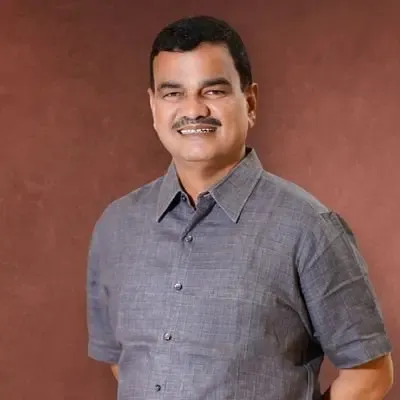
Tripura Agriculture Minister Ratan Lal Nath addressed the National Agriculture Conference – Rabi Campaign 2026 in New Delhi on 30 September 2026 .
He sought inclusion of 'local natural calamities' in PMFBY guidelines to cover localised flooding losses that currently leave farmers uncompensated.
Demands included higher allocations under SMAM and PDMC schemes, 45,000 additional soil health cards , and raising MIDH Area Expansion Programme allocation from 20% to 35% .
Tripura has 16,400 hectares under natural farming involving 38,000 farmers ; the state exports organic produce to Germany , Dubai , and Bangladesh .
Current Kharif season saw 37,500 hectares covered under the CM's Integrated Crop Management Programme, including 2,000 hectares of aromatic rice.
The minister also proposed a Natural Seed Grower Consortium and greater support for exotic fruit cultivation including avocado and rambutan .
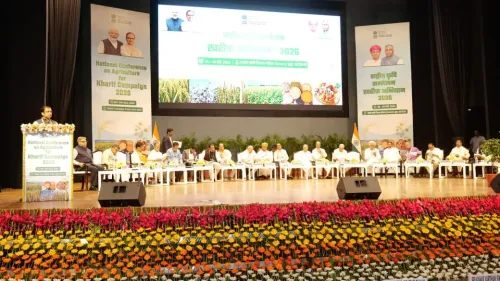
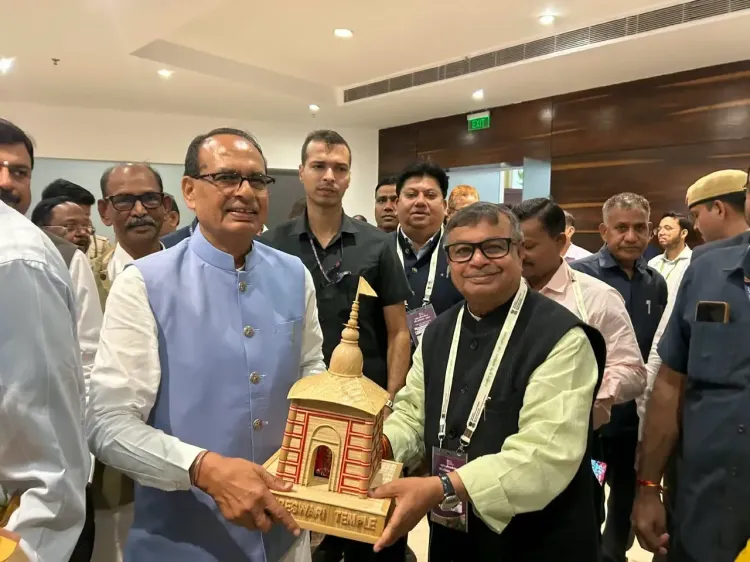
Tripura Agriculture and Farmers' Welfare Minister Ratan Lal Nath on Tuesday, 30 September 2026 urged the Centre to increase allocations for agriculture and horticulture, and pressed for changes in the Pradhan Mantri Fasal Bima Yojana (PMFBY) guidelines to cover crop losses from localised natural calamities. The demands were placed before Union Agriculture Minister Shivraj Singh Chouhan at the National Agriculture Conference – Rabi Campaign 2026 in New Delhi.
Key Demands Placed Before the Centre
Minister Nath sought higher allocations under the Sub Mission on Agricultural Mechanisation (SMAM) and the Per Drop More Crop (PDMC) schemes, citing the need to strengthen farm mechanisation and micro-irrigation in the state. He also called for 45,000 additional soil health cards for Tripura's farmers and an increase in the minimum allocation under the Mission for Integrated Development of Horticulture (MIDH)'s Area Expansion Programme — from 20 per cent to 35 per cent.
On post-harvest infrastructure, Nath sought a revision in the central share for the Post Harvest Management component from 50 per cent to 75 per cent from the reserve fund, arguing it would encourage greater private investment in cold-chain and storage facilities.
PMFBY Gap: Localised Floods Leave Farmers Uninsured
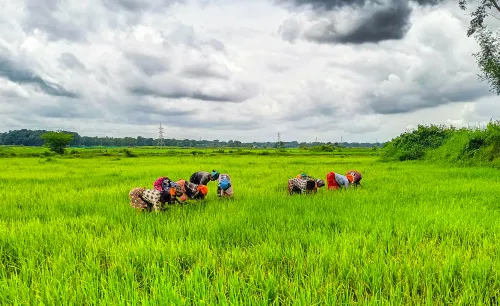
A key grievance raised at the conference was the structural gap in the PMFBY framework. Nath pointed out that paddy-growing areas in Tripura routinely suffer crop losses due to inundation during heavy rains, yet farmers frequently fail to receive insurance payouts because localised flooding does not meet existing eligibility thresholds under the scheme. He sought the formal inclusion of 'local natural calamities' in the PMFBY guidelines to plug this gap. This is a recurring concern for small and marginal farmers in the Northeast, where rainfall patterns and flood cycles differ markedly from the national average.
Tripura's Agricultural Footprint This Season
Nath outlined progress made on the ground. During the previous Rabi season, hybrid paddy was cultivated across 25,000 hectares, while Rabi pulses and oilseeds covered 9,500 hectares and 9,700 hectares, respectively. In the current Kharif season, a total of 37,500 hectares were brought under the Chief Minister's Integrated Crop Management Programme, including 27,500 hectares of hybrid paddy, 2,000 hectares of aromatic rice, 15,000 hectares of pulses, 8,000 hectares of oilseeds, and 1,000 hectares of summer vegetables.
The minister also apprised the conference that Tripura was advancing on digital agriculture infrastructure, including the Farmer's Registry, Digital Crop Survey, and the National Framework for Fertiliser Sale.
Natural Farming and Horticulture: Northeast's Untapped Edge
Tripura currently has approximately 16,400 hectares under natural farming, involving around 38,000 farmers. Nath stressed the need to mainstream bio-formulations as demonstration inputs under central schemes and sought dedicated support for Bio Input Resource Centres (BRCs) covering marketing, packaging, and branding. He also proposed the formation of a Natural Seed Grower Consortium to bolster seed sovereignty in the region.
On horticulture, Nath highlighted Tripura's potential for cultivating exotic fruits such as avocado and rambutan, noting that inadequate availability of quality planting material remained a bottleneck. He called for greater central investment in research stations and recognised nurseries. Notably, the Mission Organic Value Chain Development for North Eastern Region (MOVCD-NER) scheme has already delivered results — Tripura now exports organic produce to Germany, Dubai, and Bangladesh.
Conference Backdrop
The two-day National Agriculture Conference – Rabi Campaign 2026 was chaired by Union Agriculture Minister Shivraj Singh Chouhan and attended by Union Ministers of State Ram Nath Thakur and Bhagirath Choudhary, along with Agriculture Ministers and senior officials from states across the country. Nath acknowledged that the Centre had provided funds to Tripura as per its state action plan this year and appreciated the support extended to farmers — framing his demands as a push for deeper, more targeted investment rather than a critique of existing allocations.
With the Rabi sowing window approaching, the outcome of these representations could directly shape resource flows to one of India's smaller but agriculturally ambitious northeastern states.
Point of View
Yet the scheme's unit-area approach means individual farmers whose fields are submerged often fall outside the compensation net because adjacent plots were unaffected. Until the Centre disaggregates loss assessment to the field or village level, insurance penetration in states like Tripura will remain statistical rather than real. The exotic horticulture push — avocado, rambutan — is strategically sound given climate suitability, but without guaranteed access to quality planting material and cold-chain logistics, it risks the same fate as several previous Northeast crop-diversification programmes: good intent, poor last-mile delivery.
NationPress
30 Sept 2026
Frequently Asked Questions
What did Tripura's Agriculture Minister demand at the Rabi Campaign 2026 conference?
Tripura Agriculture Minister Ratan Lal Nath sought higher central allocations under multiple schemes including SMAM, PDMC, and MIDH, and called for an amendment to PMFBY guidelines to cover crop losses from localised natural calamities such as small-scale flooding. He also requested 45,000 additional soil health cards and increased central funding for post-harvest management and horticulture research.
Why does Tripura want changes to the PMFBY crop insurance scheme?
Paddy-growing areas in Tripura frequently experience crop losses due to localised flooding during heavy rains, but the current PMFBY framework does not classify such events as insurable calamities, leaving farmers without compensation. The minister has sought the inclusion of 'local natural calamities' in the scheme's guidelines to address this gap.
What is Tripura's natural farming coverage?
Tripura currently has around 16,400 hectares under natural farming involving approximately 38,000 farmers. The state has also successfully implemented the MOVCD-NER scheme and exports organic produce to Germany, Dubai, and Bangladesh.
What is the National Agriculture Conference – Rabi Campaign 2026?
It is a two-day national conference held in New Delhi, chaired by Union Agriculture Minister Shivraj Singh Chouhan, where Agriculture Ministers and senior officials from states across India discuss priorities for the upcoming Rabi crop season and seek central support for state-specific agricultural initiatives.
What exotic crops is Tripura planning to cultivate with central support?
Tripura has significant agro-climatic potential for cultivating exotic fruits including avocado and rambutan. However, the availability of quality planting material remains inadequate, and the state has sought greater central investment in research stations and recognised nurseries to develop this sector.