Tripura agri minister pitches hybrid paddy, organic farming push at Kharif 2026 meet
Synopsis
Tripura's Agriculture Minister Ratan Lal Nath used the national Kharif 2026 conference to press the Centre on multiple fronts — from classifying floods as a local calamity under crop insurance, to restoring a withdrawn potato-research scheme and doubling bio-fencing support. With 96 per cent of Tripura's farmers being small and marginal, the stakes for each of these demands are unusually high.
Key Takeaways
Ratan Lal Nath presented proposals to Union Minister Shivraj Singh Chouhan at the National Conference on Agriculture for Kharif Campaign 2026 in New Delhi on 29 May .
Tripura plans to bring 50,000 hectares under hybrid paddy cultivation in 2025–26 , backed by a state outlay of ₹10 crore ; central support sought under PM‑RKVY .
Organic farming under MOVCD‑NER has reached 26,600 areas with 26,800 additional farmers ; minister demands statewide and regional expansion.
Over 15 lakh farmers enrolled in PMFBY ; minister demands floods be recognised as a 'local natural calamity' under the scheme.
Bio-fencing assistance for oil palm sought to be doubled from ₹4,000 to ₹8,000 .
ARC method has nearly tripled potato output; minister urges restoration of RKWY‑DPR consultation fee for continued CIP (Lima, Peru) collaboration.
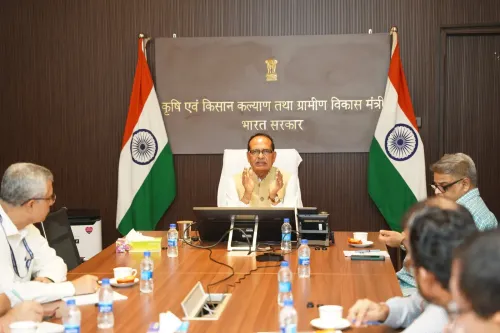
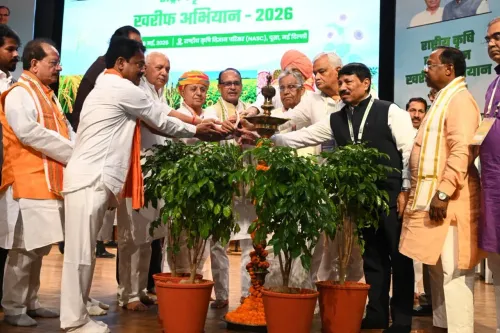
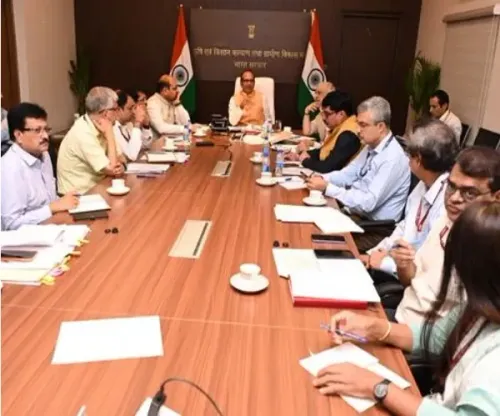
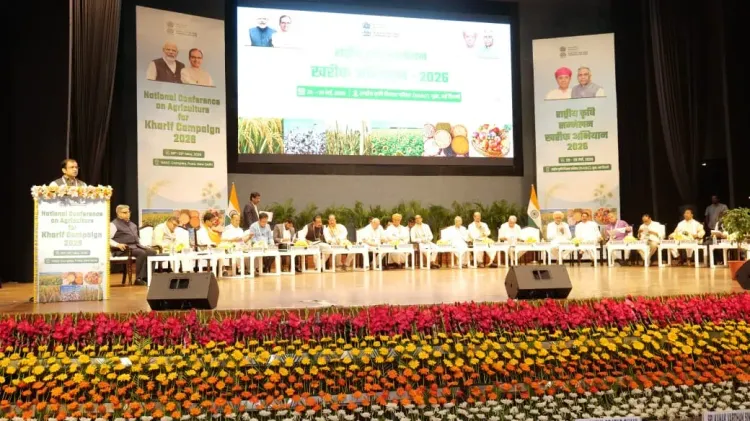
Tripura Agriculture and Farmers' Welfare Minister Ratan Lal Nath on 29 May placed a comprehensive set of proposals before Union Agriculture and Farmers' Welfare Minister Shivraj Singh Chouhan, seeking greater central support for the state's farming sector at the National Conference on Agriculture for Kharif Campaign 2026 in New Delhi. The conference, organised by the Ministry of Agriculture and Farmers' Welfare, was attended by agriculture ministers from 19 states and senior central government officials.
Hybrid Paddy and Food Security
Paddy is Tripura's dominant crop, accounting for nearly 49 per cent of the state's total gross cropped area. Nath informed the conference that approximately 50,000 hectares are being brought under hybrid paddy cultivation during 2025–26, with the state budget already earmarking ₹10 crore for the initiative.
Seeking central backing for a further expansion, Nath said: 'This year, we want to further increase the area under hybrid paddy cultivation. Therefore, I request the Union Agriculture Minister to consider the issue of food security and make provisions under the PM‑RKVY scheme to support the expansion of hybrid paddy cultivation.'
Organic Farming Expansion Demand
Nath highlighted the performance of the Mission Organic Value Chain Development for North Eastern Region (MOVCD‑NER) scheme, which has already been rolled out across 26,600 areas in Tripura, with around 26,800 additional farmers adopting organic cultivation practices.
Since 96 per cent of Tripura's farmers are small and marginal farmers, he demanded the scheme be extended across all northeastern states and cover the entire state. He also urged Brahmaputra Valley Fertilizer Corporation Limited (BVFCL) to ensure uninterrupted urea supply, and called on the Fertilizer Ministry to provide additional financial support for chemical inputs, citing the state's large area under oil palm cultivation.
Crop Insurance Gaps and Flood Losses
More than 15 lakh farmers in Tripura have been enrolled under the Pradhan Mantri Fasal Bima Yojana (PMFBY) over the past eight years. However, Nath flagged a critical gap: paddy farmers in low-lying areas regularly suffer heavy losses from flooding caused by intense rainfall but remain inadequately covered under the existing insurance framework.
He formally requested that flooding be classified as a 'local natural calamity' under PMFBY guidelines, which would unlock compensation for extensive crop damage. He also demanded that the bio-fencing assistance for oil palm cultivation be doubled from the current ₹4,000 to ₹8,000.
Potato Innovation and International Collaboration
Nath drew attention to the Apical Rooted Cuttings (ARC) method adopted in Tripura over recent years, which has resulted in a nearly threefold increase in potato production. He stressed the importance of continuing consultation support under the memorandum of understanding signed with the International Potato Centre (CIP) in Lima, Peru.
However, he noted that the RKWY‑DPR scheme has been withdrawn this year, and requested that the consultation fee component be restored to sustain the gains made in potato cultivation. The conference was also attended by Agriculture Secretary to the Government of India, Atish Chandra, along with several senior central government officials.
Point of View
Flooding, outside the compensable category. The withdrawal of the RKWY‑DPR scheme mid-cycle, just as the ARC potato method was showing a threefold yield gain, illustrates how scheme discontinuity can undercut on-ground progress. With 96 per cent of Tripura's farmers being small and marginal, even incremental policy gaps translate into disproportionate household-level distress.
NationPress
23 Sept 2026
Frequently Asked Questions
What did Tripura Agriculture Minister Ratan Lal Nath demand at the Kharif 2026 conference?
Nath placed six key demands before Union Minister Shivraj Singh Chouhan at the National Conference on Agriculture for Kharif Campaign 2026 in New Delhi on 29 May. These included central support for hybrid paddy expansion under PM‑RKVY, extension of the MOVCD‑NER organic farming scheme, recognition of floods as a local natural calamity under PMFBY, doubled bio-fencing assistance for oil palm, uninterrupted urea supply from BVFCL, and restoration of the RKWY‑DPR consultation fee for potato research.
Why are Tripura's paddy farmers not adequately covered under PMFBY?
Paddy farmers in Tripura's low-lying areas frequently suffer heavy crop losses due to flooding from heavy rainfall, but flooding is currently not classified as a 'local natural calamity' under the Pradhan Mantri Fasal Bima Yojana guidelines. This exclusion means affected farmers cannot claim compensation for flood-related damage. Nath formally requested that the guidelines be amended to include flooding in that category.
What is the MOVCD-NER scheme and why does Tripura want it expanded?
The Mission Organic Value Chain Development for North Eastern Region (MOVCD‑NER) is a central scheme promoting organic farming in the northeast. In Tripura, it has already reached 26,600 areas and brought around 26,800 additional farmers into organic cultivation. Since 96 per cent of Tripura's farmers are small and marginal, the minister argued that the scheme should be extended to cover the entire state and all northeastern states.
How has the Apical Rooted Cuttings method changed potato farming in Tripura?
The Apical Rooted Cuttings (ARC) method, adopted in Tripura over the past few years in collaboration with the International Potato Centre (CIP) in Lima, Peru, has led to a nearly threefold increase in potato production in the state. However, the RKWY‑DPR scheme that funded the CIP consultation has been withdrawn this year, prompting the minister to request its restoration.
How many farmers in Tripura are covered under PMFBY?
More than 15 lakh farmers in Tripura have been enrolled under the Pradhan Mantri Fasal Bima Yojana over the past eight years, according to the state's agriculture minister. Despite this coverage, the minister flagged that flood-affected paddy farmers in low-lying areas remain outside the effective compensation framework.