Maharashtra seeks ₹1,000 crore Central aid for Rabi season amid drought stress
Synopsis
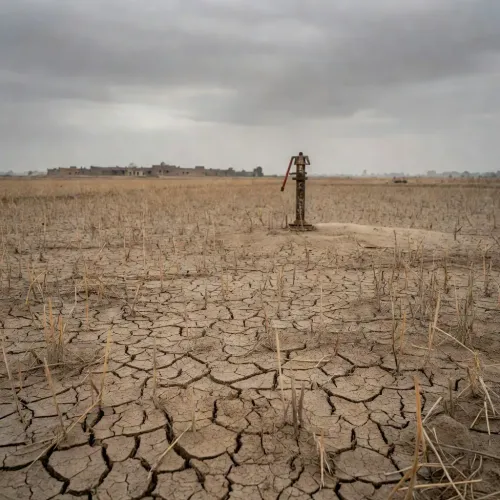
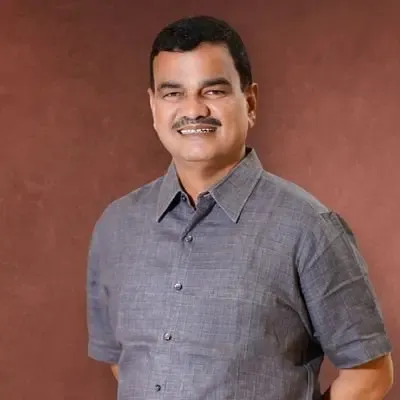
With Maharashtra's rain-fed farmers facing a drought-stressed Rabi season, Agriculture Minister Dattatray Bharane pressed New Delhi for ₹1,000 crore in targeted relief, jowar seed kits for 10 lakh farmers, and a fundamental overhaul of how crop insurance losses are measured — arguing that green-looking but yield-starved crops are slipping through the satellite-imagery net.
Key Takeaways
Maharashtra Agriculture Minister Dattatray Bharane demanded ₹1,000 crore in special Central aid at the National Agriculture Conference, Rabi Campaign 2026 on 29 September 2026 . ₹500 crore sought for Broad Bed Furrow (BBF) machinery and another ₹500 crore for drip and sprinkler irrigation in water-stressed regions.
10 lakh sorghum (jowar) seed kits requested to protect grain output and livestock fodder supply.
Maharashtra called for physical ground assessments under PMFBY , challenging sole reliance on satellite imagery for crop loss calculations.
Union Minister Shivraj Singh Chouhan announced monthly state- and district-level coordination meetings and reaffirmed 100% MSP procurement of arhar, urad, and masoor with 48-hour payment clearance.
India's agricultural growth rate reportedly rose from 3% to 4.5% ; Rabi foodgrain output up by 205 lakh tonnes between 2023 and 2026 .
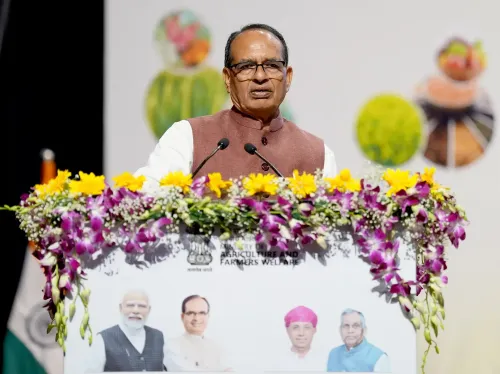
Maharashtra Agriculture Minister Dattatray Bharane on Tuesday, 29 September 2026 urged the Centre for special financial interventions during the National Agriculture Conference, Rabi Campaign 2026 in New Delhi, citing widespread crop stress from deficient and erratic rainfall across the state. The appeal, made before Union Agriculture and Farmers Welfare Minister Shivraj Singh Chouhan, underscores the scale of agrarian distress threatening the upcoming Rabi season.
Maharashtra's Key Demands
Minister Bharane formally requested ₹500 crore to scale up distribution of Broad Bed Furrow (BBF) machinery, which enables efficient planting under low-moisture soil conditions. A further ₹500 crore allocation was sought to expand drip irrigation and sprinkler systems in water-stressed regions across the state.
To offset anticipated yield losses in gram, wheat, safflower, and oilseeds, Maharashtra also requested 10 lakh sorghum (jowar) seed kits to secure both grain production and fodder availability for livestock ahead of the lean season.
Crop Insurance Assessment Under Scrutiny
A pointed demand from Maharashtra concerns the Pradhan Mantri Fasal Bima Yojana (PMFBY) — the national crop insurance scheme. Bharane urged the Centre not to rely solely on satellite imagery for loss calculations, arguing that prolonged dry spells have left crops appearing visually green despite severely reduced yields. He called for mandatory physical ground assessments and yield-testing experiments to ensure farmers receive fair compensation.
This concern is not new: agricultural experts have long flagged that remote-sensing data can mask ground-level crop stress, particularly in rain-shadow zones. Maharashtra's formal objection at a national forum adds institutional weight to the demand for reform.
Centre's Response: 'Team Agriculture' Approach
Responding to the states, Union Agriculture Minister Shivraj Singh Chouhan called for a unified 'Team Agriculture' approach between the Centre and states to ensure national food security. He announced multi-tiered review mechanisms, including monthly virtual coordination meetings at both state and district levels, involving state ministers, agricultural universities, Indian Council of Agricultural Research (ICAR) scientists, Krishi Vigyan Kendras (KVKs), Farmer Producer Organisations (FPOs), and exporters.
The Centre also reiterated its commitment to 100% procurement of arhar (pigeon pea), urad (black gram), and masoor (lentil) at the Minimum Support Price (MSP), with payments to be cleared within 48 hours — a timeline that, if implemented at scale, would represent a significant improvement over past disbursement delays.
Agricultural Growth and the Rabi Outlook
Chouhan highlighted that India's agricultural growth rate had risen from 3% post-2015 to 4.5%, and that Rabi foodgrain production had climbed by 205 lakh tonnes during the 2023–2026 period. He also announced a nationwide soil health campaign to promote balanced fertiliser use based on Soil Health Cards, improve pest management, and preserve long-term soil fertility.
The conference concluded with directions to states to finalise Rabi sowing schedules strictly based on local water availability and soil moisture data — an instruction that carries added urgency for Maharashtra, where depleted soil moisture levels now define the ground reality. The Centre's field visit sought by Bharane is yet to be confirmed.
Point of View
However sophisticated, cannot capture the difference between a green crop and a productive one. The Centre's 'Team Agriculture' framing is politically astute but the real test will be whether the proposed monthly review meetings translate into faster ground-level action, or become another layer of coordination theatre. With Rabi sowing windows narrow and soil moisture already depleted, the timeline for relief matters as much as its quantum. The 48-hour MSP payment pledge, if honoured, would be genuinely transformative — but similar commitments have historically run aground on procurement infrastructure gaps in interior Maharashtra.
NationPress
30 Sept 2026
Frequently Asked Questions
Why is Maharashtra seeking special Central aid for the Rabi season?
Maharashtra is seeking special Central aid because deficient and erratic rainfall has severely depleted soil moisture levels across the state, threatening rain-fed farmers ahead of the Rabi sowing season. Agriculture Minister Dattatray Bharane raised the issue at the National Agriculture Conference, Rabi Campaign 2026, on 29 September 2026.
How much financial assistance has Maharashtra requested from the Centre?
Maharashtra has requested a total of ₹1,000 crore — ₹500 crore for scaling up Broad Bed Furrow (BBF) machinery distribution and ₹500 crore to expand drip irrigation and sprinkler systems in water-stressed regions.
What is Maharashtra's objection to the PMFBY crop insurance process?
Maharashtra has urged the Centre not to rely solely on satellite imagery for Pradhan Mantri Fasal Bima Yojana (PMFBY) loss calculations, arguing that prolonged dry spells can leave crops appearing green while actual yields remain severely reduced. The state has called for mandatory physical ground assessments and yield-testing experiments.
What did Union Agriculture Minister Shivraj Singh Chouhan announce in response?
Chouhan announced a 'Team Agriculture' approach with monthly virtual coordination meetings at both state and district levels, involving ministers, ICAR scientists, KVKs, FPOs, and exporters. He also reaffirmed 100% MSP procurement of arhar, urad, and masoor with payments cleared within 48 hours.
What are sorghum seed kits and why has Maharashtra requested them?
Sorghum (jowar) seed kits are packages of drought-tolerant grain crop seeds distributed to farmers facing moisture-deficient conditions. Maharashtra requested 10 lakh such kits to offset potential yield losses in gram, wheat, safflower, and oilseeds, while also securing fodder availability for livestock through the Rabi season.