India as Middle East linchpin: I2U2, IMEC and the strategic case
Synopsis
A Jerusalem Post analysis makes the case that India is no longer just a regional observer in the Middle East — it is the connective tissue. Anchoring I2U2 and IMEC while maintaining ties with both Israel and Arab states, India's multi-alignment posture is being recast from diplomatic ambiguity into a structural strategic advantage that Washington, Tel Aviv, Riyadh, and Abu Dhabi are all beginning to rely on.
Key Takeaways
A Jerusalem Post analysis identifies India as a key connector linking the US , Israel , the UAE , and Saudi Arabia in the Middle East .
The I2U2 grouping and the India-Middle East-Europe Economic Corridor (IMEC) are cited as frameworks reflecting India's strategic potential.
The India-Israel partnership spans defence, cybersecurity, AI, space technology, agriculture, and startup ecosystems — well beyond arms procurement.
The UAE and Saudi Arabia now view India as a long-term strategic and investment partner, not merely an energy consumer.
As the US reduces its direct military footprint, India is described as a 'trusted actor' capable of maintaining ties across political divides without demanding ideological alignment.
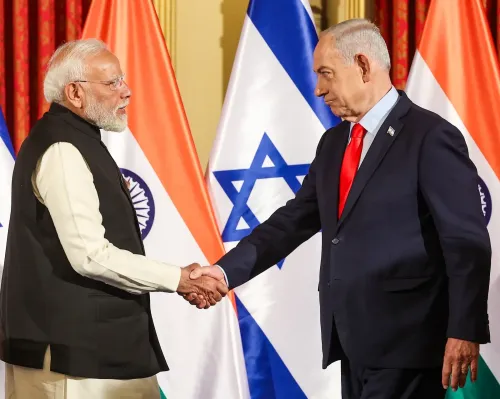
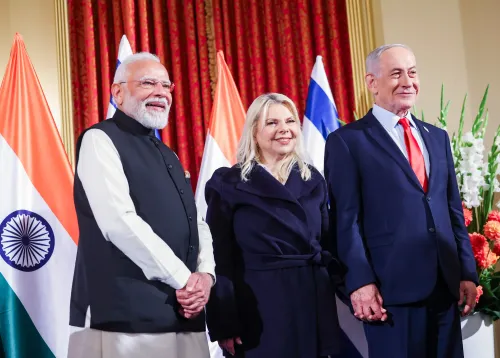
India has emerged as a pivotal connector capable of linking the United States, Israel, the UAE, and Saudi Arabia through economic corridors, technological partnerships, resilient supply chains, and strategic connectivity across the Middle East, according to an analysis published in the Jerusalem Post. The piece argues that India's ability to maintain strong relationships across political divides — without demanding ideological alignment — gives it a distinct and increasingly valuable strategic role in the region.
The I2U2 and IMEC Framework
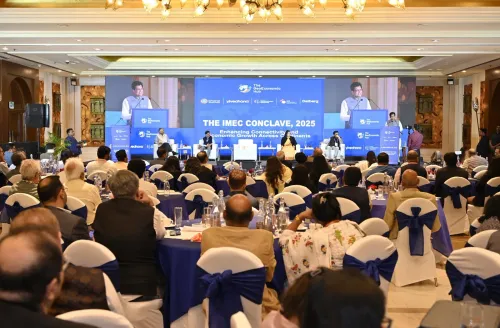
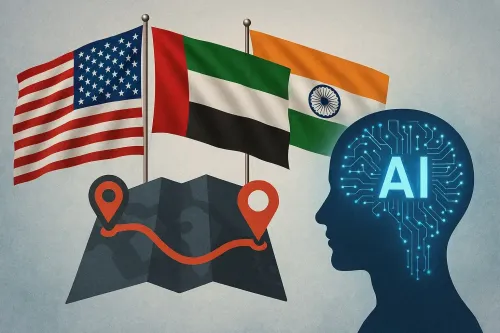
The Jerusalem Post article cites the rise of the India-Israel-United Arab Emirates-United States grouping, known as I2U2, alongside the India-Middle East-Europe Economic Corridor (IMEC), as concrete expressions of this emerging potential. Together, these frameworks reflect a broader realignment in which India is positioned not as a peripheral player but as a structural anchor.
'For Israel, this evolution represents far more than another diplomatic milestone. It presents an opportunity to anchor itself within a broader strategic framework that brings together Israeli innovation, Gulf investment, American leadership, and India's economic weight,' the article observes.
India-Israel Ties Beyond Defence
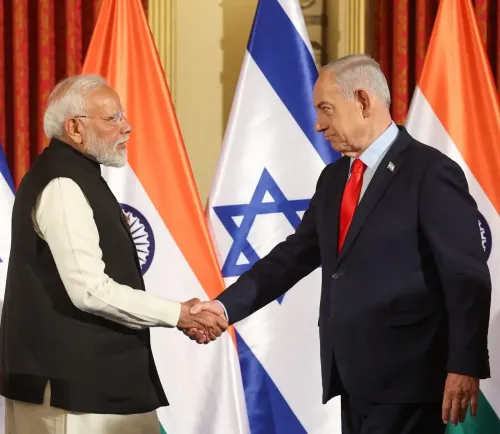
The analysis highlights that the India-Israel partnership has expanded well beyond defence procurement. It now encompasses counterterrorism cooperation, intelligence sharing, cybersecurity, agriculture, water management, artificial intelligence, space technology, healthcare innovation, and startup ecosystems.
India remains one of Israel's largest defence partners. Notably, Israeli companies increasingly view India's technology sector as a co-development platform rather than simply an export destination — a shift that signals deeper industrial integration.
Gulf States See India as Long-Term Partner
The UAE and Saudi Arabia, the article states, no longer view India merely as a major energy consumer. India now represents a long-term strategic partner — one of the world's fastest-growing large economies, an expanding investment destination, a dependable food-security partner, and a vast source of skilled professionals who contribute significantly to Gulf economies.
As Riyadh pursues its Vision 2030 agenda and Abu Dhabi accelerates ambitions in advanced manufacturing and technology, India's industrial growth offers what the article describes as natural economic complementarity.
India as Washington's Trusted Regional Actor
The piece also addresses India's value to Washington specifically. As the United States seeks dependable partners to uphold regional stability while reducing its direct military footprint, India has reportedly emerged as a trusted actor. The article underscores that India's willingness to engage across political divides — maintaining ties with both Israel and Arab states — makes it uniquely suited to this bridging role.
This comes amid a broader recalibration of US engagement in the Middle East, where Washington is increasingly looking to regional partners to share the burden of stability. India's multi-alignment posture, long a source of diplomatic friction, is now being reframed as a strategic asset.
What This Means Going Forward
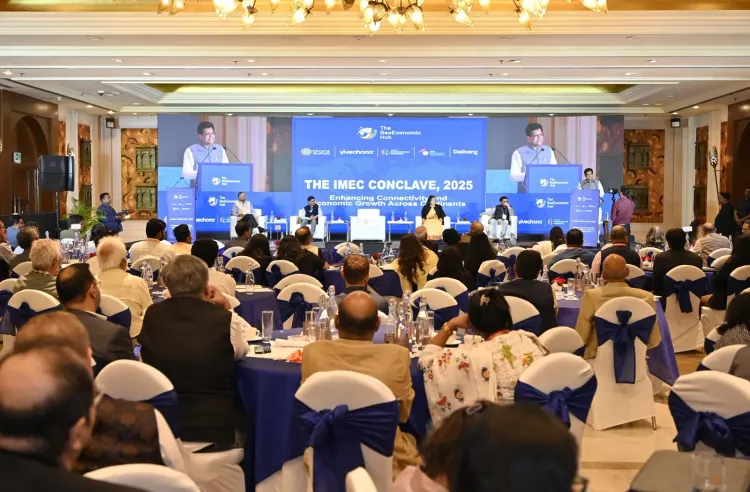
The convergence of I2U2, IMEC, and bilateral partnerships with each of these nations positions India at the centre of a new connectivity architecture in the Middle East. Whether this potential translates into durable institutional frameworks will depend on execution — particularly on IMEC, which remains in early stages. Analysts will be watching whether the corridor gains the political momentum needed to move from blueprint to infrastructure on the ground.
Point of View
Not from New Delhi's own diplomatic messaging. India's multi-alignment — long treated with suspicion in Western capitals — is now being actively embraced as a feature, not a bug. The real question is whether I2U2 and IMEC develop the institutional depth to match the rhetoric: IMEC in particular remains a corridor on paper, and the Gaza conflict has complicated Gulf-Israel normalisation that the corridor partly depends on. India's bridging role is genuine, but it is also fragile — contingent on a regional stability that is far from guaranteed.
NationPress
26 Sept 2026
Frequently Asked Questions
What is India's strategic role in the Middle East according to the Jerusalem Post?
According to a Jerusalem Post analysis, India has emerged as a connector capable of linking the US, Israel, the UAE, and Saudi Arabia through economic corridors, technology partnerships, and strategic connectivity. India's ability to maintain ties across political divides without demanding ideological alignment is cited as its key advantage.
What is the I2U2 grouping?
I2U2 is a multilateral grouping comprising India, Israel, the United Arab Emirates, and the United States. It focuses on joint investment in water, energy, transportation, space, health, and food security, and is highlighted in the Jerusalem Post piece as a concrete expression of India's emerging Middle East role.
What is the India-Middle East-Europe Economic Corridor (IMEC)?
IMEC is a proposed economic corridor aimed at linking India to Europe via the Middle East through rail, shipping, and infrastructure networks. It was announced on the sidelines of the G20 Summit in New Delhi in 2023 and is seen as a strategic alternative to China's Belt and Road Initiative.
How does the India-Israel partnership go beyond defence?
The India-Israel partnership now spans counterterrorism, intelligence sharing, cybersecurity, agriculture, water management, artificial intelligence, space technology, healthcare innovation, and startup ecosystems. Israeli companies increasingly view India's technology sector as a co-development platform rather than an export market.
Why do Saudi Arabia and the UAE see India as a long-term partner?
Saudi Arabia and the UAE view India as a long-term strategic partner because it offers one of the world's fastest-growing large economies, a large pool of skilled professionals, investment opportunities, and food-security reliability. As Riyadh pursues Vision 2030 and Abu Dhabi expands in advanced manufacturing, India's industrial growth offers natural economic complementarity.