Modi and Netanyahu Forge Ahead on IMEC to Boost Regional Connectivity
Synopsis
In a significant meeting, PM Modi and PM Netanyahu discussed the India-Middle East-Europe Economic Corridor (IMEC), focusing on regional cooperation and stability. Their talks emphasize a commitment to combating terrorism and fostering trade between nations.
Key Takeaways
IMEC Initiative: Aims to enhance regional connectivity and trade.
Collaboration: Modi and Netanyahu stress bilateral mechanisms for sustained cooperation.
Terrorism Condemnation: Both leaders emphasize a unified stance against terrorism.
Strategic Partnership: Focus on mutual aspirations for peace and prosperity.
Global Engagement: Discussion on the role of the US in regional peace efforts.
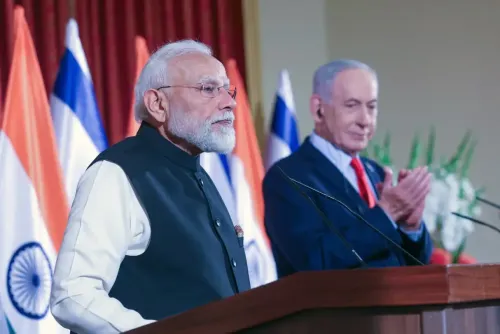
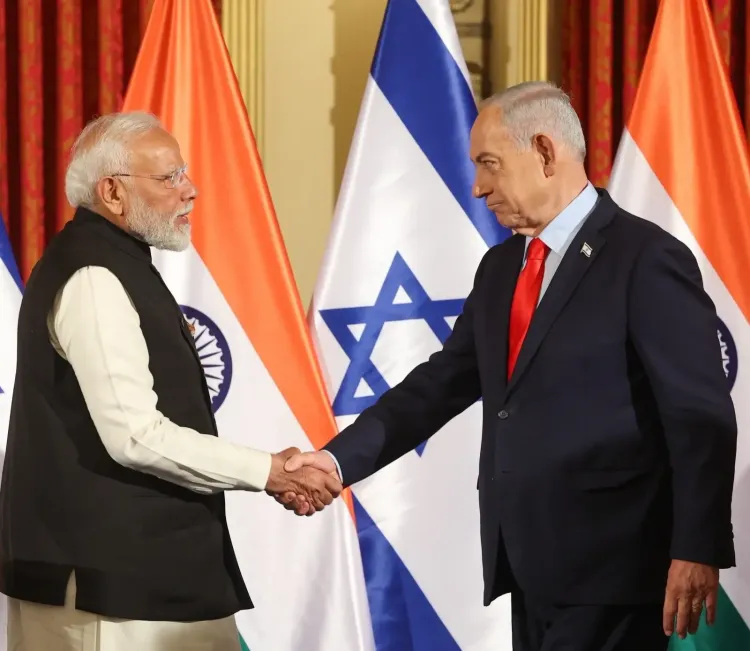
Jerusalem, Feb 26 (NationPress) Prime Minister Narendra Modi and Israeli Prime Minister Benjamin Netanyahu engaged in discussions on the India-Middle East-Europe Economic Corridor (IMEC) on Thursday, highlighting their commitment to enhance cooperation aimed at fostering regional connectivity, stability, and shared prosperity through this initiative. They also explored the potential role of Israel within the corridor's frameworks.
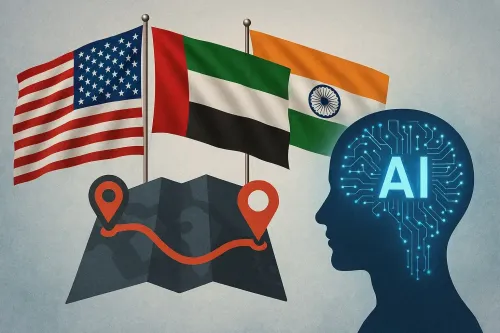
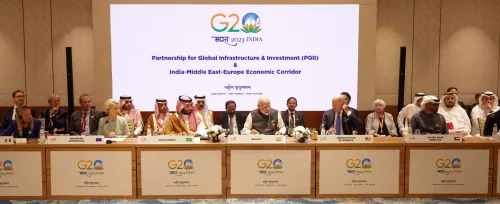
This dialogue took place during the G20 Leaders' Summit in New Delhi in 2023, where leaders from India, the European Union, France, Germany, Italy, Saudi Arabia, UAE, and the US signed a Memorandum of Understanding to collaboratively develop the new India-Middle East Europe Economic Corridor (IMEEC).
The IMEEC will feature two distinct corridors: the eastern corridor linking India to the Gulf and the northern corridor connecting the Gulf to Europe. This initiative aims to improve connectivity, enhance efficiency, lower costs, secure supply chains, boost trade accessibility, and create job opportunities, ultimately leading to a transformative integration of Asia, Europe, and the Middle East.
During their meeting, PM Modi and Netanyahu reiterated their mutual vision for a strong strategic partnership, which is founded on shared aspirations for peace, security, and prosperity through technological advancements and entrepreneurship.
Both leaders stressed the significance of establishing institutionalized bilateral mechanisms in areas such as Government-to-Government, business-to-business, and people-to-people interactions to ensure ongoing collaboration and impactful results, as outlined in the Joint Statement released after their discussions.
Amidst global uncertainties, Prime Minister Modi and Prime Minister Netanyahu reaffirmed their commitment to transformative initiatives like the I2U2 quadrilateral partnership, which plays a crucial role in enhancing engagement, trade, investment, and innovation by capitalizing on the complementary strengths of both nations.
Both leaders condemned all forms of terrorism, including cross-border terrorism, emphasizing the need for decisive international collaboration to combat this issue comprehensively. They expressed grave concern over this shared challenge, reaffirming their resolve as leaders of two dynamic democracies. They strongly denounced the horrific October 7, 2023, terrorist attack in Israel, the brutal attack on Indian tourists in Pahalgam, Jammu & Kashmir, on April 22, 2025, and the terrorist incident near the Red Fort in New Delhi on November 10, 2025, as noted in the Joint Statement.
The leaders reiterated their dedication to promoting global peace and security, expressing support for US President Donald Trump's 'Comprehensive Plan to End the Gaza Conflict.' They also discussed regional developments, including the peace process, stressing the need to establish a just and lasting peace, ensuring security and freedom of navigation and trade in the region through dialogue and mutual understanding.
Point of View
Particularly in light of rising global uncertainties. Their combined efforts to address terrorism and promote regional stability resonate with the aspirations of both nations, reflecting a shared commitment to a secure and prosperous future.
NationPress
30 Sept 2026
Frequently Asked Questions
What is the India-Middle East-Europe Economic Corridor?
The IMEC is a collaborative initiative aimed at enhancing connectivity between India, the Middle East, and Europe through two distinct corridors, facilitating trade and boosting economic growth in the region.
What are the key goals of the IMEC?
The IMEC aims to improve regional connectivity, increase trade efficiency, reduce costs, secure supply chains, and generate job opportunities across Asia, Europe, and the Middle East.
How do Modi and Netanyahu plan to combat terrorism?
Both leaders condemned terrorism in all its forms and emphasized the need for decisive international collaboration to effectively address this challenge.
What was discussed in the meeting regarding US involvement?
The leaders expressed support for US President Donald Trump's 'Comprehensive Plan to End the Gaza Conflict' during their discussions on regional peace and security.
Why is the bilateral partnership important?
The strategic partnership between India and Israel is vital for promoting peace, security, and prosperity through technological innovation and strengthened economic ties.